Posted on

Mabon: A Time of Harvest and Balance

By Ivyjaded Wyldfyre  at Pagan Essentials

As the Wheel of the Year turns, we arrive at Mabon, the Autumn Equinox, a time of balance, gratitude, and the second harvest. For those of us in the Northern Hemisphere, this Sabbat marks the official start of autumn, when day and night stand in perfect equilibrium before the nights begin to lengthen.

When is Mabon 2025?

In 2025, Mabon in the Northern Hemisphere will occur on Monday, September 22nd.

The History of Mabon

While the name “Mabon” itself is a modern invention coined by Aidan Kelly in the 1970s, the celebration of the Autumn Equinox is ancient and deeply rooted in agricultural societies. Across various cultures, this time of year has always been dedicated to giving thanks for the bounty of the harvest, preparing for the colder months ahead, and acknowledging the changing seasons. It was a time of feasting, community gathering, and honoring the generous Earth.

Correspondences of Mabon

​Mabon is rich with symbolic correspondences that reflect its themes of harvest, balance, and gratitude.

  • Colors: Red, orange, yellow, brown, gold, deep greens, maroon.
  • Symbols: Cornucopia, baskets, sickles, acorns, pinecones, leaves, grapes, apples, pomegranates, squash, pumpkins, gourds, wine, bread.
  • Deities: Mabon Ap Modron (Welsh God of Light), Persephone, Demeter, John Barleycorn, Dionysus, Ceres, Inanna, Modron.
  • Herbs & Plants: Mugwort, rue, sage, yarrow, rosemary, frankincense, myrrh, oak, hazel, pine, cypress, cedar.
  • Crystals: Sapphire, amber, citrine, aventurine, carnelian, jasper, topaz, Lapis lazuli, agate, tiger’s eye
  • Animals: Deer, owl, wolf, bear, salmon.
  • Themes: Gratitude, balance, reflection, harvesting, abundance, protection, preparation, letting go, equality.

An Example Mabon Altar

Creating a Mabon altar is a wonderful way to honor the Sabbat and bring its energy into your home. Here’s an idea for inspiration:

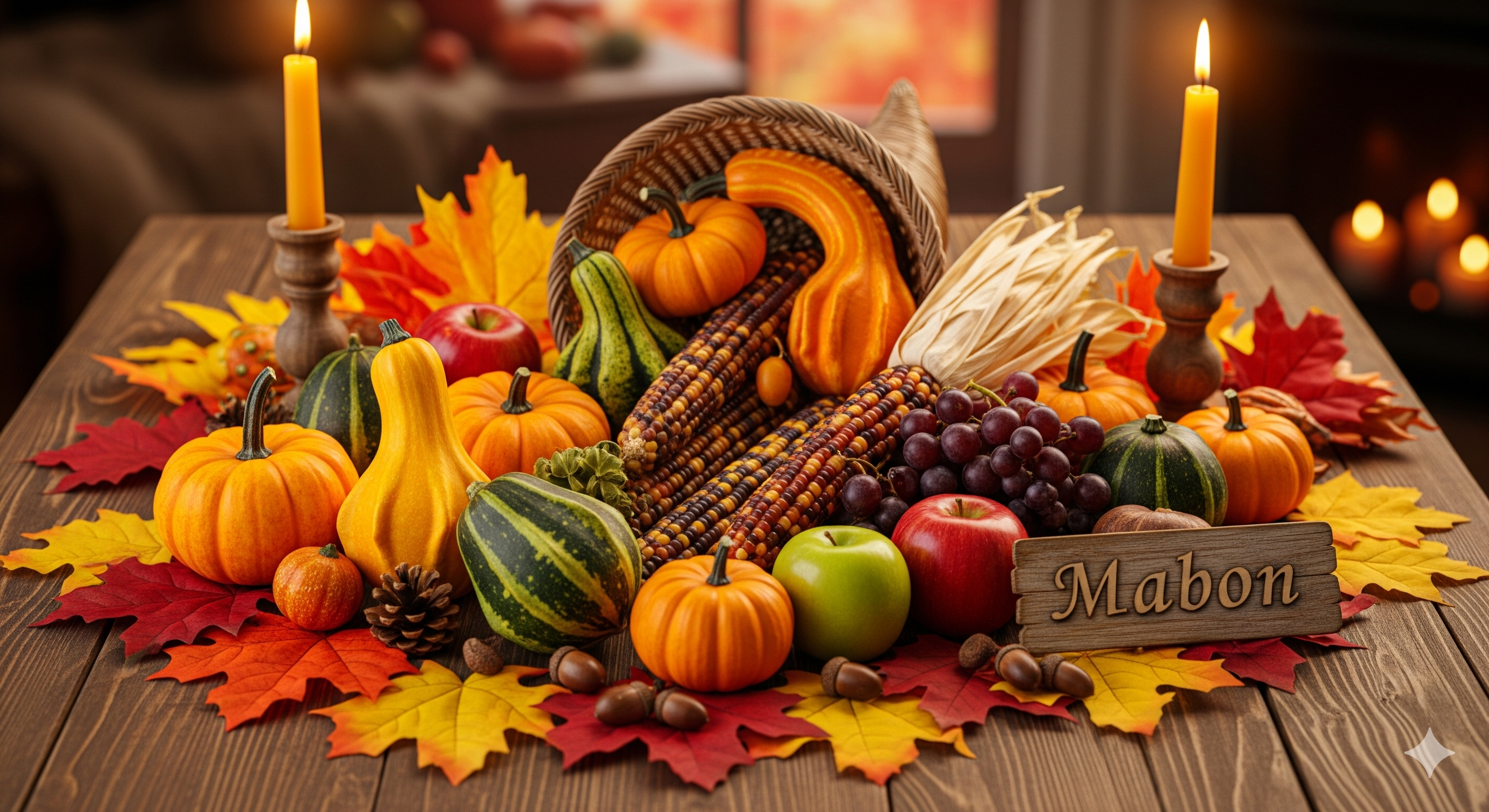
Set out a rich, autumnal-colored cloth, perhaps in deep red or orange. In the center, place a cornucopia overflowing with small gourds, miniature pumpkins, apples, and ears of corn. Add candles in colors like gold, brown, or deep green. You might include representations of deities associated with Mabon, such as a statue of Demeter or a symbol of the Horned God. Scatter fallen leaves, acorns, and pinecones around the base. Include any crystals that resonate with Mabon’s energy, and perhaps a small chalice for offerings of cider or wine.

Mabon Activities to Participate In

There are many ways to celebrate Mabon and connect with its energies:

  1. Harvesting & Foraging: If possible, gather late-season herbs, fruits, or nuts. Even a trip to a local apple orchard or pumpkin patch can be a wonderful way to connect with the harvest.
  2. Feasting: Prepare a special meal using seasonal ingredients like apples, squash, corn, and root vegetables. Share it with loved ones as an act of gratitude for abundance.
  3. Nature Walks: Spend time in nature, observing the changing leaves and feeling the shift in the air. Collect fallen leaves, acorns, and other natural treasures.
  4. Autumn Decorating: Adorn your home with natural elements like gourds, pumpkins, dried corn, and colorful leaves.
  5. Gratitude Practice: Take time to reflect on the blessings and harvests in your life, both tangible and intangible. Keep a gratitude journal.
  6. Canning & Preserving: Engage in the traditional act of preserving food for the winter months, symbolizing preparation and self-sufficiency.
  7. Sabbat Cleaning: Just as nature is letting go, consider decluttering and cleansing your home to make space for new energies.
  8. Baking: Bake apple pies, pumpkin bread, or corn muffins as offerings or to share.

An Example Mabon Ritual: A Simple Gratitude Offering

This simple ritual can be performed alone or with others.

Supplies Needed:

  • ​A small piece of bread (homemade if possible)
  • ​A cup of cider, wine, or water
  • ​A quiet space, preferably outdoors or near your altar
  • A candle (optional)

The Ritual:

  1. Center Yourself: Find a comfortable position. Take a few deep breaths, grounding yourself to the Earth. If using a candle, light it now.
  2. Acknowledge the Season: Say aloud: “The wheel turns, and day and night stand in perfect balance. We welcome Mabon, the time of the second harvest, a moment of gratitude and reflection.”
  3. Offer the Bread: Hold the piece of bread in your hands. Reflect on the bounty it represents – the sun, rain, earth, and labor that brought it forth. Say: “For the gifts of the Earth, for the abundance in my life, for the nourishment of body and spirit, I am thankful.” Break off a piece and place it outside (if safe for wildlife) or on your altar as an offering.
  4. Offer the Drink: Hold the cup. Reflect on the sustenance and joy it brings. Say: “For the flowing waters, for the fruits of the vine, for health and vitality, I give thanks.” Pour a small amount outside or on your altar.
  5. Personal Gratitude: Take a moment to silently or audibly list specific things you are grateful for in your life right now.
  6. Release and Balance: Acknowledge the balance of Mabon. Say: “As light and dark find equilibrium, I seek balance within myself. I release what no longer serves me and embrace the wisdom of the changing seasons.”
  7. Closing: Thank the spirits of the season, your guides, or the divine as you understand them. Take a final deep breath. If you lit a candle, safely extinguish it.

May your Mabon be filled with abundance, gratitude, and perfect balance!

Do you have any specific Mabon traditions you’d like to share, or would you like to see an image of a Mabon altar?

Mabon Altar
Posted on 5 Comments

Samhain 2024

Embracing Samhain: The Witch’s New Year

As the days grow shorter and the air becomes crisp with the scent of fallen leaves, we find ourselves approaching one of the most significant celebrations in the pagan calendar—Samhain. This ancient festival, which marks the transition from the harvest season to winter, is not just a time to celebrate the bounty of the earth, but also to honor our ancestors and invite the magic of the beyond into our lives.


What is Samhain?

Samhain, pronounced “sow-in” or “sah-wen,” originates from the Gaelic word for “summer’s end.” Celebrated on the night of October 31st to November 1st, it is a pivotal time in the Wheel of the Year for many practitioners of witchcraft and paganism. In Celtic culture, Samhain was traditionally seen as a moment when the veil between the worlds of the living and the dead was at its thinnest, allowing spirits, ancestors, and otherworldly beings to traverse freely.


Historical Significance

Historically, Samhain signified the end of the harvest season and the beginning of winter. Communities would gather to celebrate the abundance of the land, inviting spirits and deities to join in their feasting. It was also a time for divination, as people sought insight into the coming year and beyond. Rituals often included lighting bonfires, making offerings, and preparing specific foods to nourish the spirits.


Modern Practices

Today, Samhain is celebrated by witches and those who embrace the pagan traditions with a blend of old customs and contemporary interpretations. Here are some ways to honor this magnificent season:


1. **Create an Ancestor Altar**:

Dedicate a space to honor your lineage. Decorate it with photos, heirlooms, and meaningful items that connect you to your ancestors. Light candles and offer food or drink as a way to invite their presence.


2. **Ritual Bonfire**:

While it might not be practical for everyone, if possible, gather around a bonfire with friends or family. Use this opportunity to reflect on the past year, share stories, and let go of things you no longer wish to carry by tossing them into the flames.


3. **Divination Practices**:

Samhain is an excellent time to practice divination. Whether using tarot cards, runes, or scrying, take this opportunity to seek guidance from the spiritual realm. Write your questions down, set your intentions, and listen to the messages that come through.


4. **Crafting Jack-o’-Lanterns**:

Carving pumpkins is a fun activity that has its roots in ancient rituals. Use the jack-o’-lantern as a way to ward off negative spirits, and consider placing it on your doorstep to greet visitors with warmth and protection.


5. **Nature Walks**:

As nature begins to fade into dormancy, take a moment to connect with the land. Gather fallen leaves, acorns, and other treasures to use in your rituals or decorations. Reflect on the cycles of life, death, and rebirth.

,

Honoring the Spirits

During Samhain, it’s essential to express gratitude and respect toward the spirits. Whether you believe in the afterlife or simply appreciate the lessons learned from those who have passed, acknowledging their influence can provide comfort and guidance. You might choose to hold a simple ceremony where you light a candle for each ancestor, sharing a memory or a blessing for them.


A Time for Reflection

 This festival also encourages personal reflection. As the year winds down, consider journaling about your experiences, your growth, and what you hope to manifest in the future. Embracel0 the energy of transformation as you make space for new beginnings.


Conclusion

Samhain is a deeply powerful and meaningful time in the witch’s calendar. By embracing its rich traditions, honoring the past, and welcoming the energies of the unseen, we can fully experience the magic it brings. As we gather  with loved ones and open our hearts to the mysteries of life and death, let us celebrate the blessings of our ancestors and prepare for the cycles ahead. Whether through solitary practice or community gatherings, may your Samhain be filled with light, love, and profound connection to the spirit world. Blessed be!

Posted on

Mabon


Mabon, also known as the Fall Equinox, is a significant Pagan holiday celebrated during the autumn season. This year it will be celebrated on September 23rd. This holiday holds great importance for those who follow Pagan or Wiccan traditions.

Mabon marks the time when day and night are in perfect balance, symbolizing the transition from summer to fall. It is a time to honor and give thanks for the abundance of the harvest season.

Rituals associated with Mabon vary among different pagan traditions. Some may choose to perform ceremonies outdoors, while others prefer indoor rituals within sacred spaces such as altars or shrines. Druids and other nature-based spiritual practices often connect with the natural world during this time by spending time in forests or near bodies of water.

The origins of Mabon can be traced back to ancient cultures such as the Romans and Druids who celebrated their own versions of harvest festivals during this time of year. These celebrations were centered around gratitude for nature’s bounty and preparing for the darker days ahead.

Creating an altar is a common practice during Mabon rituals. Altars are typically adorned with symbols of autumn such as colorful leaves, acorns, pumpkins, and other seasonal items that represent abundance and gratitude.

During Mabon rituals, participants may engage in activities like meditation, reflection, candle lighting, offering prayers or blessings to deities associated with this season, sharing meals with loved ones, or performing specific spells or divination practices related to harvest blessings.

Overall, Mabon serves as a reminder to appreciate nature’s cycles and express gratitude for all that we have received throughout the year. It is a time for reflection and connection with both us and the natural world around us.


Correspondence

Colors: Red (Dark), Maroon, Burgundy, Gold, Yellow, Orange (Dark), Brown

Incense/Plants: Almond leaves, Chamomile, Marigold, Passionflower, Rosemary, Rue, Saffron, Sage, Walnut leaves and husks, Yarrow

Elements: Water

Symbols/Decorations: Autumn Leaves, Cornucopia, Pinecones, Acorns, Nuts, Berries, Vines, Grapes, Wine, Baskets, Apples


Mabon Rituals

During Mabon, many pagans perform rituals and ceremonies to celebrate the holiday. These rituals often involve the use of symbols, such as apples, pumpkins, and corn. They may also include the lighting of candles, the burning of incense, and the casting of spells. One of the most important aspects of Mabon is the concept of balance.

Here is an example of a Mabon Ritual:

  • Cleanse the area of negative energy.
  • Cast your Circle.
  • Call the Quarters.
  • Invite the God and Goddess (or Deity(ies) of your choosing).
  • Take a few moments to think about the blessings in your life. Give thanks, either aloud or in your head; if you are in a group, feel free to go around the circle and have everyone share what they are thankful for.
  • Cakes and Ale
  • Thank the God and Goddess (Or Deity(ies) of your choosing).
  • Thank the Quarters.
  • Release the Circle.
  • Ground yourself.
  • Then, cast a Mabon spell. Here is an example of one but feel free to write your own.

Balance Spell

As Autumn brings balance to night and day,
Let there be balance between work and play.
May we live our lives harmoniously,
And in tune with Nature’s melody.

As Sun is to Moon
And midnight is to noon,
Let there be balance in all that we do.
May we know our inner light, and our inner darkness, too.

As I will it, so mote it be!


If you do not want to cast a spell for balance, you can try writing a blessing.

Here is an example:

“During this time of abundance and plenty,
I send my love and blessings to my family.
May you be blessed by the Lord and the Lady,
With Their Love and Light embracing thee.
Blessed be!”

I hope you enjoy this ritual. Have a blessed Mabon!