Posted on

Candle Flame Behavior Meanings

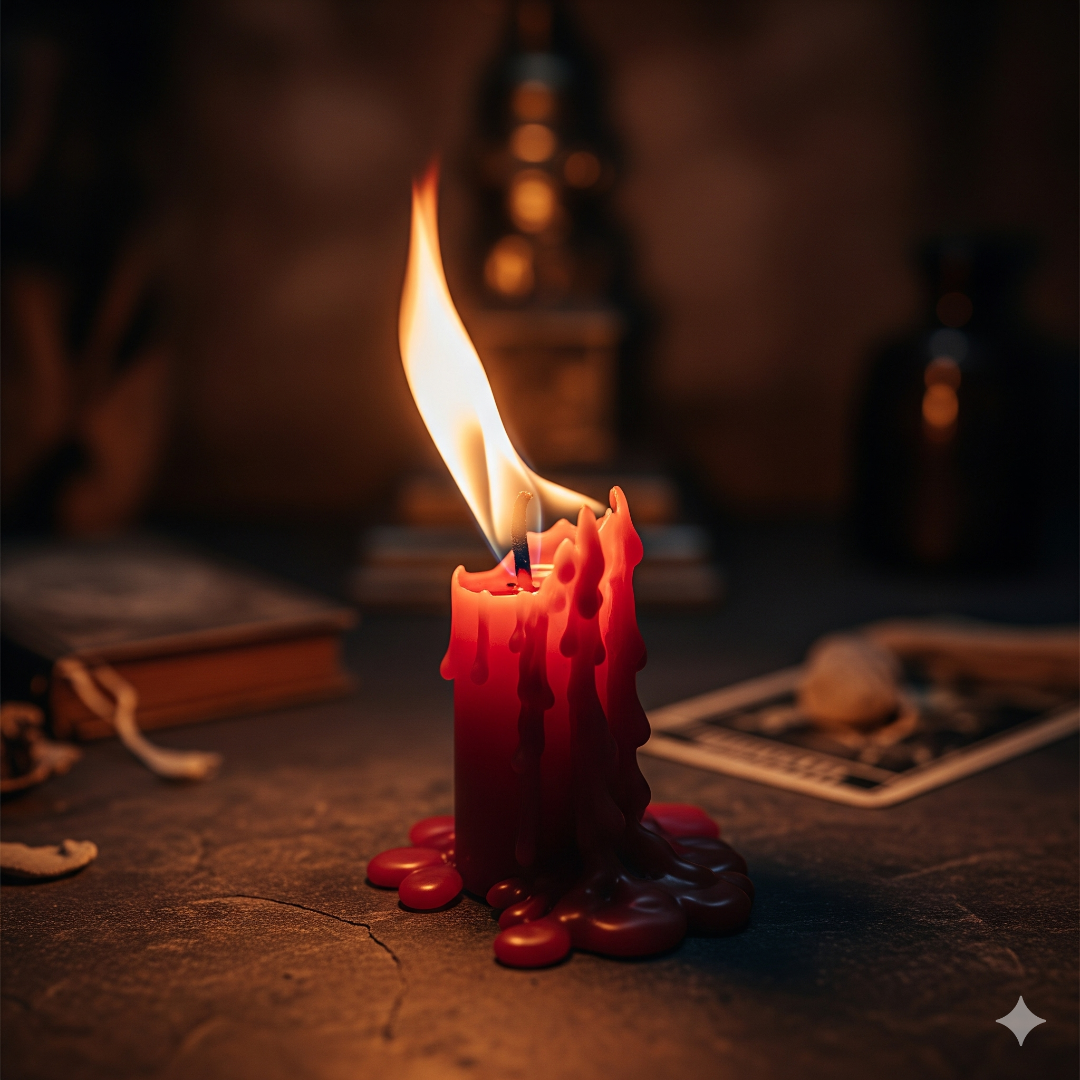
In witchcraft and other magical practices, the way a candle flame behaves can be a form of divination, offering insights into the energy of a spell, ritual, or a message from the spirit world. While a witch’s intuition is always the most important factor, here are some common interpretations of candle flame movements:

General Interpretations

* Steady and Strong Flame:

This is generally a positive sign. A tall, bright, and unwavering flame suggests that your intentions are clear, your energy is focused, and your spell is working effectively. It indicates success and a smooth path forward.

* Weak or Short Flame:

A low, weak flame can indicate obstacles or resistance. It may mean that your intention is facing blockages or that more energy is needed for the spell to be successful. It could also suggest a need for more focused intention or personal introspection. If the flame is small but steady, it may still be successful but will likely take longer to manifest.

* Fast Burning:

A candle that burns quickly and cleanly can mean that your intentions are not being met with much resistance and are likely to manifest swiftly. However, if it burns too fast, it could also mean that the result will be temporary. * Slow Burning: If a candle takes a long time to burn, it may signify that there are challenges or a long-term process involved in reaching your goal.

Specific Movements and Sounds

* Dancing or Jumping Flame:

A flame that moves erratically, jumps, or dances can represent high, intense, and often chaotic energy. This is usually a sign that the spell is working and a lot of energy is being released. It can also signify that the spell’s success may come with some complications. A jumping flame, in particular, can suggest a lot of energy is being released and that your magic will manifest quickly.

* Flickering Flame:

If a flame flickers, it can be a sign that a spirit, guide, or deity is present and trying to communicate with you. The direction of the flickering can also be significant. * Crackling or Popping Flame: A noisy flame that sizzles, crackles, or pops is often interpreted as communication from the spirit realm. The louder the sound, the stronger the message or the will of a spirit to communicate. It can also indicate spiritual discord.

* Sputtering Flame:

A sputtering flame can suggest low energy or a lack of focus in the spell. It may be a sign to re-energize your intention.

* Dual Flames:

If a single candle flame splits into two, it can represent duality, a partnership, or the presence of two different energies. This could mean two opposing forces are at play, or it could signal that two different spirits or guides have joined your ritual.

* Sudden Extinguishing:

A candle flame that suddenly goes out without a clear reason (like a draft) can be interpreted as a sign that the spell or intention is not aligned with your highest good or that the ritual has been completed. It may be a signal to stop and re-evaluate your work.

* Sooty or Black Flame/Smoke:

If a flame produces a lot of black soot or smoke, it can be a warning sign of negative energy, blockages, or spiritual resistance that needs to be cleared. It may indicate a need for cleansing or purification of the space or yourself.

Important Considerations

While these are common interpretations, it’s crucial to remember that they are not absolute rules. The most important thing is to trust your own intuition. A flame’s behavior can also be influenced by mundane factors such as drafts, impurities in the wax, or the length of the wick. Always rule out these physical explanations before jumping to a magical conclusion.

Posted on

Mabon: A Time of Harvest and Balance

By Ivyjaded Wyldfyre  at Pagan Essentials

As the Wheel of the Year turns, we arrive at Mabon, the Autumn Equinox, a time of balance, gratitude, and the second harvest. For those of us in the Northern Hemisphere, this Sabbat marks the official start of autumn, when day and night stand in perfect equilibrium before the nights begin to lengthen.

When is Mabon 2025?

In 2025, Mabon in the Northern Hemisphere will occur on Monday, September 22nd.

The History of Mabon

While the name “Mabon” itself is a modern invention coined by Aidan Kelly in the 1970s, the celebration of the Autumn Equinox is ancient and deeply rooted in agricultural societies. Across various cultures, this time of year has always been dedicated to giving thanks for the bounty of the harvest, preparing for the colder months ahead, and acknowledging the changing seasons. It was a time of feasting, community gathering, and honoring the generous Earth.

Correspondences of Mabon

​Mabon is rich with symbolic correspondences that reflect its themes of harvest, balance, and gratitude.

  • Colors: Red, orange, yellow, brown, gold, deep greens, maroon.
  • Symbols: Cornucopia, baskets, sickles, acorns, pinecones, leaves, grapes, apples, pomegranates, squash, pumpkins, gourds, wine, bread.
  • Deities: Mabon Ap Modron (Welsh God of Light), Persephone, Demeter, John Barleycorn, Dionysus, Ceres, Inanna, Modron.
  • Herbs & Plants: Mugwort, rue, sage, yarrow, rosemary, frankincense, myrrh, oak, hazel, pine, cypress, cedar.
  • Crystals: Sapphire, amber, citrine, aventurine, carnelian, jasper, topaz, Lapis lazuli, agate, tiger’s eye
  • Animals: Deer, owl, wolf, bear, salmon.
  • Themes: Gratitude, balance, reflection, harvesting, abundance, protection, preparation, letting go, equality.

An Example Mabon Altar

Creating a Mabon altar is a wonderful way to honor the Sabbat and bring its energy into your home. Here’s an idea for inspiration:

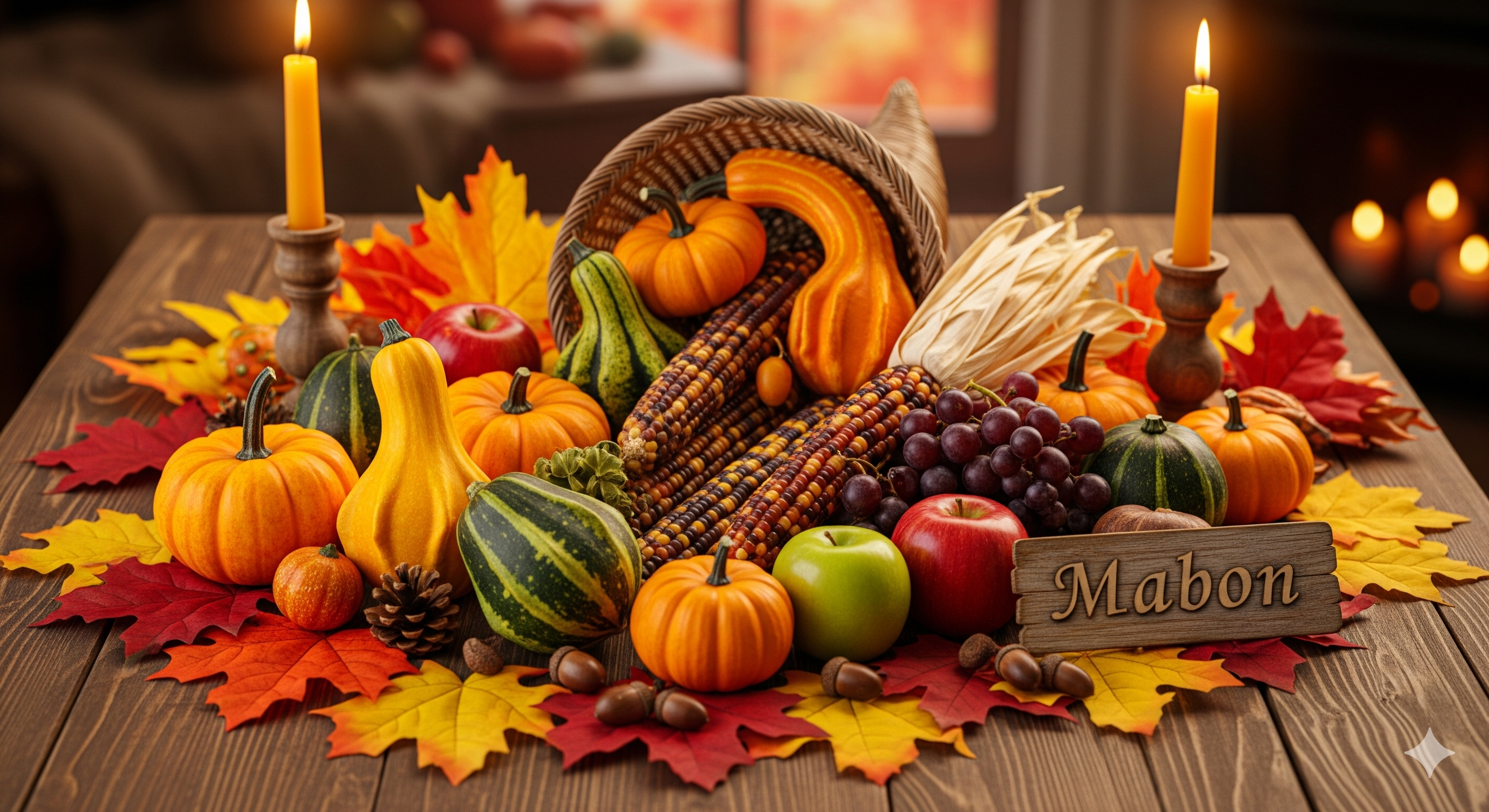
Set out a rich, autumnal-colored cloth, perhaps in deep red or orange. In the center, place a cornucopia overflowing with small gourds, miniature pumpkins, apples, and ears of corn. Add candles in colors like gold, brown, or deep green. You might include representations of deities associated with Mabon, such as a statue of Demeter or a symbol of the Horned God. Scatter fallen leaves, acorns, and pinecones around the base. Include any crystals that resonate with Mabon’s energy, and perhaps a small chalice for offerings of cider or wine.

Mabon Activities to Participate In

There are many ways to celebrate Mabon and connect with its energies:

  1. Harvesting & Foraging: If possible, gather late-season herbs, fruits, or nuts. Even a trip to a local apple orchard or pumpkin patch can be a wonderful way to connect with the harvest.
  2. Feasting: Prepare a special meal using seasonal ingredients like apples, squash, corn, and root vegetables. Share it with loved ones as an act of gratitude for abundance.
  3. Nature Walks: Spend time in nature, observing the changing leaves and feeling the shift in the air. Collect fallen leaves, acorns, and other natural treasures.
  4. Autumn Decorating: Adorn your home with natural elements like gourds, pumpkins, dried corn, and colorful leaves.
  5. Gratitude Practice: Take time to reflect on the blessings and harvests in your life, both tangible and intangible. Keep a gratitude journal.
  6. Canning & Preserving: Engage in the traditional act of preserving food for the winter months, symbolizing preparation and self-sufficiency.
  7. Sabbat Cleaning: Just as nature is letting go, consider decluttering and cleansing your home to make space for new energies.
  8. Baking: Bake apple pies, pumpkin bread, or corn muffins as offerings or to share.

An Example Mabon Ritual: A Simple Gratitude Offering

This simple ritual can be performed alone or with others.

Supplies Needed:

  • ​A small piece of bread (homemade if possible)
  • ​A cup of cider, wine, or water
  • ​A quiet space, preferably outdoors or near your altar
  • A candle (optional)

The Ritual:

  1. Center Yourself: Find a comfortable position. Take a few deep breaths, grounding yourself to the Earth. If using a candle, light it now.
  2. Acknowledge the Season: Say aloud: “The wheel turns, and day and night stand in perfect balance. We welcome Mabon, the time of the second harvest, a moment of gratitude and reflection.”
  3. Offer the Bread: Hold the piece of bread in your hands. Reflect on the bounty it represents – the sun, rain, earth, and labor that brought it forth. Say: “For the gifts of the Earth, for the abundance in my life, for the nourishment of body and spirit, I am thankful.” Break off a piece and place it outside (if safe for wildlife) or on your altar as an offering.
  4. Offer the Drink: Hold the cup. Reflect on the sustenance and joy it brings. Say: “For the flowing waters, for the fruits of the vine, for health and vitality, I give thanks.” Pour a small amount outside or on your altar.
  5. Personal Gratitude: Take a moment to silently or audibly list specific things you are grateful for in your life right now.
  6. Release and Balance: Acknowledge the balance of Mabon. Say: “As light and dark find equilibrium, I seek balance within myself. I release what no longer serves me and embrace the wisdom of the changing seasons.”
  7. Closing: Thank the spirits of the season, your guides, or the divine as you understand them. Take a final deep breath. If you lit a candle, safely extinguish it.

May your Mabon be filled with abundance, gratitude, and perfect balance!

Do you have any specific Mabon traditions you’d like to share, or would you like to see an image of a Mabon altar?

Mabon Altar
Posted on 1 Comment

Moon Phases and Magick: Working with Lunar Energies for Enhanced Spells

Welcome, fellow seekers, to Pagan Essentials! I’m Ivyjaded Wyldfyre, and today we’ll delve into the enchanting connection between the moon’s celestial dance and the potency of our magickal workings. The moon, our luminous neighbor, doesn’t just illuminate the night sky; it casts a subtle yet powerful influence upon our world and, most importantly, our spells. Understanding and aligning your craft with the lunar cycle can significantly amplify your intentions and bring forth more potent results.

Just as the tides ebb and flow with the moon’s pull, so too do the energetic currents that weave through our existence. Each phase of the moon carries its own unique vibrational signature, making certain phases more conducive to specific types of magick. Let’s explore the primary lunar phases and how to harness their energy:

  • New Moon (Dark Moon): This is the phase of introspection, new beginnings, and planting seeds of intention. The energy is subtle, inward-focused, and perfect for shadow work, banishing unwanted influences, and conceiving new projects or goals. Spells for setting intentions, breaking bad habits, and seeking clarity are particularly potent now.
  • Waxing Crescent: As a sliver of light begins to grow, so does the energy around your intentions. This phase is ideal for attracting positive influences, setting goals in motion, and nurturing new ventures. Spells for growth, attraction, and inspiration thrive during this time.
  • First Quarter: This phase brings a surge of dynamic energy and a push to take action on the intentions set during the New Moon. It’s a time for courage, overcoming obstacles, and making decisive moves. Spells focused on strength, motivation, and taking action are well-suited here.
  • Waxing Gibbous: The light continues to expand, and the energy builds towards fullness. This is a time for refinement, growth, and bringing your intentions closer to fruition. Spells for abundance, prosperity, healing, and manifestation are particularly effective.
  • Full Moon: The peak of lunar energy! The veil between worlds is thin, making this the most potent time for almost any form of magick. Emotions are heightened, and energy is abundant. Spells for charging tools, divination, love, healing, protection, and manifestation are incredibly powerful. Be mindful of the amplified energy and ground yourself.
  • Waning Gibbous: As the light begins to recede, the energy shifts towards releasing and banishing. This is a time for gratitude for what has manifested and for gently letting go of what no longer serves you. Spells for releasing negativity, breaking ties, and diminishing unwanted influences are favored.
  • Third Quarter (Last Quarter): The energy continues to decline, making it a potent time for banishing, releasing, and cleansing. This phase supports inner reflection, letting go of burdens, and preparing for a new cycle. Spells for banishing, protection, and breaking hexes are effective now.
  • Balsamic Moon (Darkening Moon): The final phase before the New Moon, this is a time for deep rest, reflection, and releasing the last vestiges of the previous cycle. It’s not typically a time for casting new spells but rather for inner work and preparation for the new beginnings to come.

To effectively work with lunar energies, start by observing the moon’s phases. Many calendars and lunar apps can help you track its cycle. Once you know the current phase, consider how its energetic qualities align with your magickal intentions.

  • Match Your Intentions: Choose spellwork that resonates with the energy of the current moon phase. For example, don’t try to banish something on the Waxing Crescent, as the energy is geared towards growth and attraction.
  • Charge Your Tools: Place your crystals, tarot decks, and other magickal tools under the light of the Full Moon to cleanse and charge them with potent lunar energy.
  • Time Your Rituals: If possible, schedule your rituals to coincide with the most appropriate lunar phase for your desired outcome.
  • Incorporate Lunar Symbolism: Use moon imagery, colors associated with the moon (silver, white, grey), and lunar deities in your spells and rituals.

By consciously aligning your magickal practices with the cycles of the moon, you tap into a powerful and consistent source of energy, enhancing the effectiveness and flow of your spells. May your craft be illuminated by the wisdom of the lunar light!

Posted on

Litha 2025


Published: June 5, 2025

The celebration of the Summer Solstice dates back thousands of years, long before the rise of organized religions. Ancient cultures across the globe recognized and revered this pivotal point in the solar year. From the megalithic structures of Stonehenge, precisely aligned with the solstice sunrise, to the sun worship of the Egyptians and the fire festivals of the Celts, humanity has always acknowledged the sun’s vital role in sustaining life.
Many Litha traditions stem from these ancient practices. Bonfires were lit to honor the sun and offer protection, herbs were gathered for their potent magical properties, and feasts were held to celebrate the bounty of the earth.
The Meaning of Litha
Litha is a time of profound meaning for Pagans:

Litha is a time of profound meaning for Pagans:

  • Peak of Solar Power: It represents the sun at its most powerful, a time of warmth, energy, and vitality.
  • Abundance and Fertility: The earth is fertile, crops are growing, and life is flourishing. It’s a time to acknowledge and appreciate this abundance.
  • Celebration of Light: With the longest daylight hours, Litha is a powerful reminder to embrace light in all its forms – illumination, joy, and spiritual clarity.
  • Balance: While it’s the peak of the sun’s power, it also marks the turning point where the days will begin to shorten. This subtle shift reminds us of the continuous cycle of life, death, and rebirth.
  • Joy and Merriment: Litha is a time for feasting, dancing, and general revelry, embracing the joyous energy of the season.

To enrich your Litha celebrations, here are some common correspondence:

  • Colors: Gol, yellow, orange, red, green, blue (sky and sea).
  • Deities: Sun gods and goddesses (e.g., Ra, Apollo, Lugh, Sol, Amaterasu), fertility goddesses, mother goddesses.
  • Crystals: Sunstone, Citrine, Carnelian, Amber, Peridot.
  • Herbs & Flowers: Oak, Mistletoe, Lavender, Chamomile, St. John’s Wort, Sunflower, Rose, Daisy.
  • Foods: Seasonal fruits and vegetables, honey, mead, bread, anything sun-shaped.
  • Animals: Bees, butterflies, eagles, lions, horses.
  • Symbols: Sun, fire, oak leaves, circles, wheels.

This ritual can be adapted for solitary practice or a small group.

What you’ll need:

  • A comfortable outdoor space, ideally where you can see the sun (or a window if indoors).
  • A yellow or gold candle.
  • A small offering of fresh fruit, flowers, or a handmade sun symbol.
  • A bowl of water
  • Incense (optional, but a good choice would be frankincense or lemon verbena). * A lighter or matches.
  • Preparation: Cleanse your space, perhaps by sweeping or smudging. Center yourself with a few deep breaths.
  • Cast a Circle (Optional): If you usually cast a circle, do so now.
  • Light the Candle: Light your yellow or gold candle, saying: “Great Sun, at your zenith you stand, Bringing life and warmth to this land. I light this flame to honor your might, And welcome your radiant, abundant light.”
  • Connect with the Sun: Close your eyes and visualize the sun’s warm rays washing over you. Feel its energy filling you with vitality and joy. Imagine the earth beneath you, vibrant and fertile.
  • Offer Gratitude: Hold your offering in your hands and, either aloud or silently, express your gratitude for the sun’s blessings, the abundance of nature, and the joy of the season. You might say: “Blessed be the sun, the bringer of life, Blessed be the earth, bursting with life. I give thanks for this season’s embrace, For abundance, joy, and sacred space.”
  • Offer to the Earth: Place your offering gently on the earth (if outdoors) or near your candle (if indoors).
  • Water Blessing: Dip your fingers into the bowl of water and sprinkle a few drops around your space, saying: “Water of life, flow ever free, Cleanse and refresh, bringing purity.”
  • Meditation/Reflection: Take a few moments to sit in the light of the candle, reflecting on your intentions for the coming half of the year. What do you wish to cultivate? What abundance do you seek?
  • Feast and Merriment (Optional): After your ritual, enjoy a light, seasonal snack and drink. Connect with loved ones or simply enjoy the moment.
  • Close the Ritual: Thank the sun, the earth, and any deities you worked with. Extinguish your candle safely. If you cast a circle, open it now.

Posted on 4 Comments

Beltane 2025: Embracing the Fires of Life

(By Ivyjaded Wyldfyre)

Welcome, dear seekers, to the vibrant heart of spring! As the days lengthen and the earth bursts forth in a riot of color, we arrive at Beltane, a Sabbat brimming with life, passion, and the promise of summer’s bounty. Here at Pagan Essentials, we delve into the essence of this joyous festival, exploring its rich tapestry of correspondences, practices, altar inspiration, and a sample ritual to ignite your own Beltane celebrations.

Beltane, also sometimes called May Day, marks the halfway point between the Spring Equinox (Ostara) and the Summer Solstice (Litha). It’s a time when the veil between the worlds thins, and the potent energies of fertility and growth are at their peak. Our ancestors celebrated this fiery festival with bonfires, dances, and rituals honoring the burgeoning life force of nature. Today, we carry that spirit forward, weaving our own magic into this ancient tapestry.

Unveiling the Correspondences of Beltane

Understanding the energies and symbols associated with Beltane can deepen our connection to the Sabbat. Consider incorporating these correspondences into your celebrations:

 * Themes: Fertility, passion, love, joy, vitality, blossoming, new beginnings, the union of the God and Goddess, protection.

 * Deities: The May Queen and the Green Man (or their local equivalents), Flora, Pan, Cernunnos, any deities associated with love, fertility, and the sun.

 * Colors: Green (for growth and abundance), red (for passion and vitality), white (for purity and new beginnings), yellow (for the sun’s energy).

 * Symbols: Maypoles, bonfires, flowers (especially hawthorn, primrose, and marigolds), ribbons, phallic symbols, yoni symbols, dew.

 * Herbs & Flowers: Hawthorn, gorse, rowan, primrose, elderflower, daisies, all spring blossoms.

 * Incense & Oils: Frankincense, sandalwood, rose, jasmine, ylang-ylang.

 * Stones & Crystals: Rose quartz (for love), carnelian (for passion), emerald (for growth), citrine (for joy and abundance).

 * Animals: Bees (for community and sweetness), rabbits (for fertility), cattle (representing prosperity).

Embracing Beltane Practices

Beltane offers a multitude of ways to connect with its vibrant energy:

 * Dance the Maypole: This iconic tradition symbolizes the union of the God and Goddess and the intertwining of energies. Weave ribbons around a pole, infusing it with your intentions for the season.

 * Leap the Bonfire: Historically a purification and fertility rite, jumping over a small bonfire (with safety as your utmost priority, of course!) can symbolize letting go of the old and embracing new possibilities. Even gazing into the flames can be a powerful meditative practice.

 * Gather May Dew: Collect dew from plants and flowers at dawn on Beltane morning. It’s said to bring beauty, luck, and healing.

 * Create Flower Crowns and Garlands: Adorn yourself and your sacred space with the vibrant blossoms of the season. This act honors the beauty of the earth and connects you to its life force.

 * Feast and Celebrate: Share a meal with loved ones, incorporating seasonal foods like fresh greens, dairy products, and honey. Raise a toast to the abundance of life.

 * Handfasting Rituals: Beltane is a traditional time for handfastings, a commitment ritual that can last for a year and a day or for eternity.

 * Decorate Your Home: Bring the spirit of Beltane indoors with fresh flowers, green foliage, and colorful ribbons.

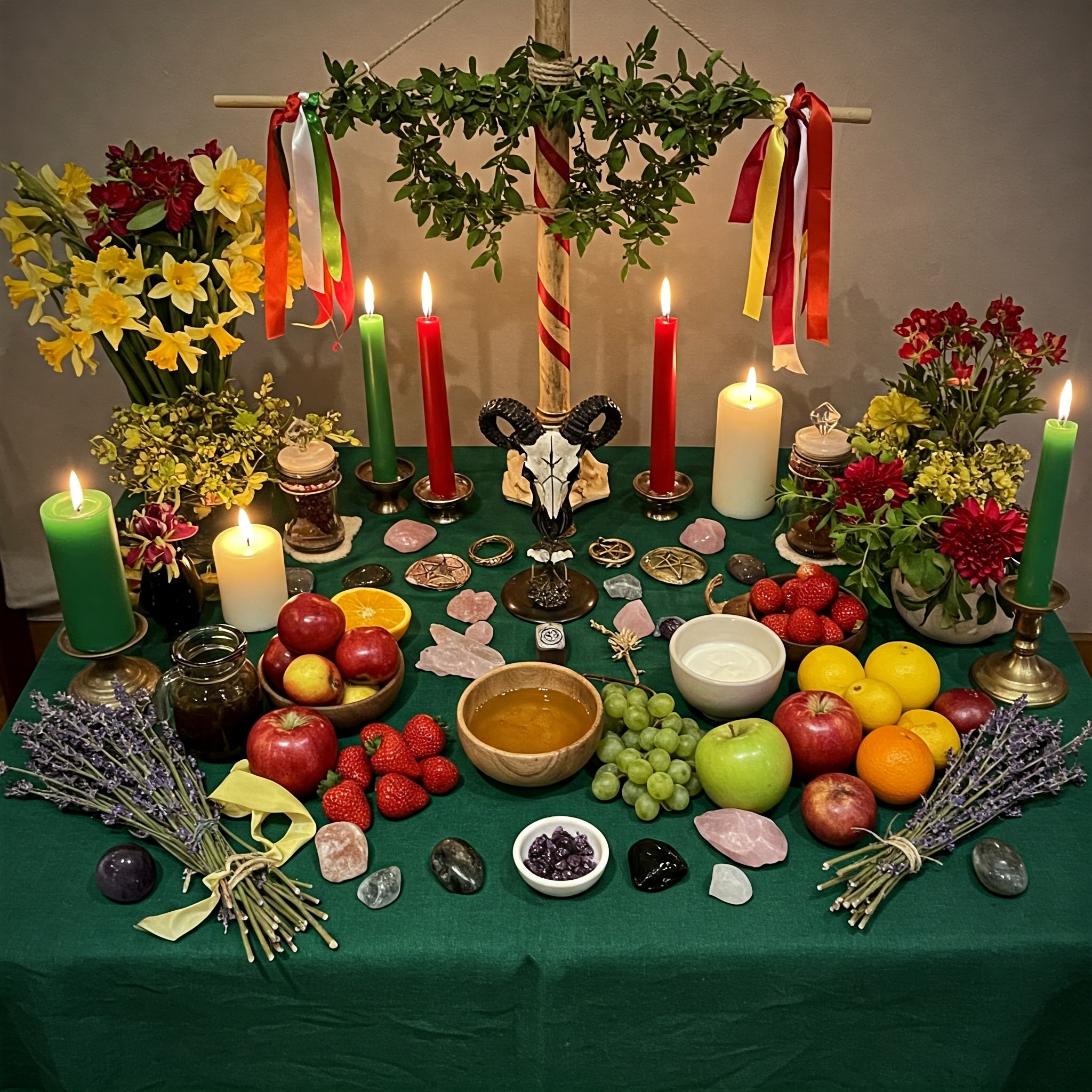
Crafting Your Beltane Altar

Your altar serves as a focal point for your Beltane workings. Consider these elements when setting it up:

 * A Green or Floral Altar Cloth: To represent the lushness of the season.

 * Candles in Beltane Colors: Green, red, white, and yellow to embody the Sabbat’s energies.

 * Flowers and Greenery: Freshly gathered blossoms, leaves, and branches.

 * Symbols of the God and Goddess: A small statue or representation of the May Queen and the Green Man, or symbols like a wand and a chalice.

 * Offerings: Honey, milk, spring fruits, flower petals, or a small craft you’ve made.

 * Beltane Correspondences: Incorporate stones, herbs, and other symbolic items from the list above.

 * Ribbons: Drape colorful ribbons across your altar or tie them to branches.

 * A Maypole (Miniature or Drawn): If space allows, a small Maypole can be a beautiful addition. Alternatively, draw or print an image of one.

Beltane Ritual

This is a simple ritual you can adapt to your own needs and traditions.

You will need:

 * Your Beltane altar set up.

 * A red candle (representing passion and vitality).

 * A green candle (representing growth and abundance).

 * Incense (frankincense or a floral blend).

 * A bowl of water and a bowl of salt (representing the elements).

 * Flowers or a flower crown.

The Ritual:

* Prepare Your Space: Cast your circle if you usually do so. Take a few deep breaths to center yourself and connect with the energy of the season.

 * Opening: Stand before your altar. Say:

    “The wheel turns, and the vibrant energies of Beltane awaken the land. The earth is fertile, the sun is strong, and life bursts forth in glorious abundance.”

 * Honoring the Elements:

   – Sprinkle a little salt into the bowl of water. Say:

     “I honor the element of Water, the flow of emotions, the wellspring of life.”

   – Light your incense. Say:

     “I honor the element of Air, the breath of inspiration, the winds of change.”


 * Invoking the Deities (Optional): If you feel called to, invoke the deities of Beltane. For example:

   “Great Goddess, in your guise as the May Queen, radiant and fertile, I welcome your life-giving presence. Green Man, Lord of the Forest, wild and untamed, I honor your vital energy.”


 * Lighting the Candles: Light the green candle. Say:

   “With this flame, I ignite the spark of growth and abundance within and around me.”

   – Light the red candle. Say:

   “With this flame, I embrace passion, vitality, and the joy of life.”


 * Working Your Magic: This is the time for any specific workings you wish to do. You might focus on intentions related to love, fertility, creativity, or new beginnings. Visualize your desires taking root and blossoming. You can also dance, sing, or play music.

 * Connecting with Nature: If possible, step outside and connect with the natural world. Feel the sun on your skin, the earth beneath your feet, and the gentle breeze. Offer thanks for the beauty and abundance around you. You might place your flower crown upon your head as a symbol of connection to the May Queen.

 * Closing: Give thanks to the elements and any deities you invoked. Say:

   “Thank you, Water, for your nurturing flow. Thank you, Air, for your inspiring breath. Thank you, Great Goddess and Green Man, for the gifts of life and love. May the blessings of Beltane be upon us all.”


 * Grounding and Centering: Take a few moments to ground yourself. You can do this by visualizing roots extending from your feet into the earth.

 * Closing the Circle (If Cast): Release the circle in your usual manner.

Beltane is a time of joy, celebration, and embracing the vibrant energy of life. May your celebrations be filled with warmth, passion, and the blossoming of all that you desire. Blessed Be!

By Ivyjaded Wyldfyre for Pagan Essentials