Posted on 2 Comments

๐Ÿงน Starting Your Journey: Essential Tools for the New Witch (and What You Really Need)

Welcome, fledgling witch! Taking your first steps on this path is an exciting and sometimes overwhelming experience. You might be scrolling through beautiful photos of elaborate altars and feeling like you need to spend a fortune on crystal balls and fancy athames just to get started.

โ€‹Stop right there.

โ€‹The most powerful tool in your practice is you. Your intention, your intuition, and your focused will are always enough.

โ€‹At Pagan Essentials, we believe your practice should be accessible and affordable. Here is a guide to the tools often mentioned in witchcraft, and what you can use instead (or skip entirely!) when you’re just starting out.

โ€‹I. The “Essential” Tools (and the Practical Alternatives)

โ€‹These are the items you’ll see in most books, but you don’t need the specialized, expensive versions.

  • โ€‹Traditional Purpose: These are directing tools. They are used to channel and direct energy, cast a circle, and point to focus intention. They are rarely used for actual cutting.
  • โ€‹The Myth: You need a beautifully carved wand or a dagger with a specific handle.
  • โ€‹The Practical Alternative:
    • โ€‹Your Finger: Yes, simply point! Your hand is an incredible natural conduit for energy.
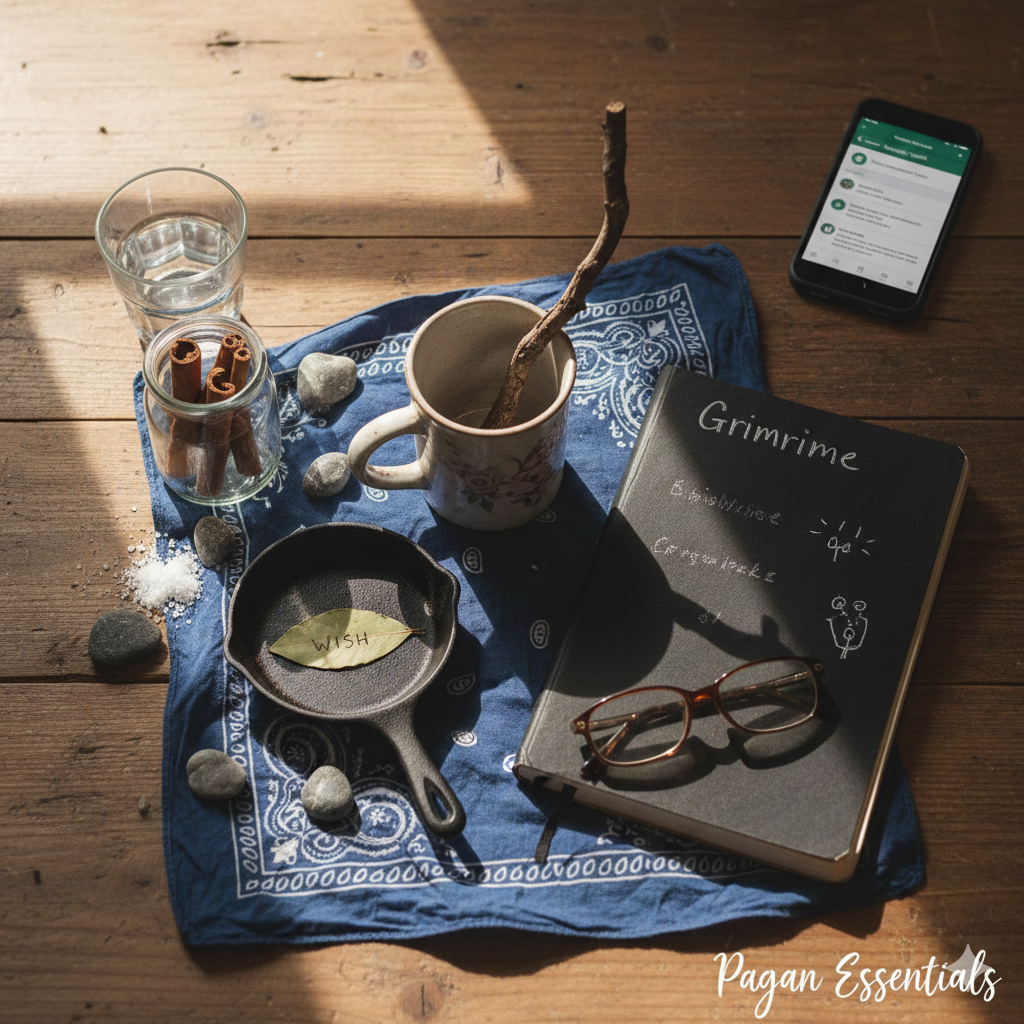
    • โ€‹A Stick: Find a beautiful, fallen branch on a nature walk. Cleanse it and you have a perfect, personalized wand.
    • โ€‹A Pencil: A new pencil (unsharpened or sharpened) can be ritually dedicated as your energy directing tool.
  • โ€‹Traditional Purpose: Holding objects for scrying, making herbal infusions, burning petition papers, or containing ingredients. It represents the element of water and the womb of the Goddess.
  • โ€‹The Myth: It must be a heavy, cast-iron pot with three legs.
  • โ€‹The Practical Alternative:
    • โ€‹Any Heat-Safe Bowl or Mug: An old ceramic mug or a small, thrifted cast-iron skillet (often $5 or less) works perfectly.
    • โ€‹A Large Sea Shell: If you only need to contain small items or hold water for a scrying mirror.
  • โ€‹Traditional Purpose: To define a dedicated, clean, and sacred space for ritual work.
  • โ€‹The Myth: You need expensive, silk fabric embroidered with complex symbols.
  • โ€‹The Practical Alternative:
    • โ€‹A Scarf or Bandana: Use an old scarf you love, or buy a $1 bandana from a craft or dollar store. The color can even correspond to your current magical work.
    • โ€‹A Clean Napkin or Hand Towel: If you don’t have a permanent altar, just laying down a clean, dedicated piece of fabric on a clear shelf or table defines your workspace just as effectively.

โ€‹II. The No-Tool Practice: What You Really Need

โ€‹If you have a zero-dollar budget, you can still practice effectively. Remember, witchcraft is about energy, visualization, and intention.

Tool (or Need)/Zero-Cost Alternative/How to Use It

  • Candles/(Light Source) Sunlight, Moonlight, or Visualization/For charging and cleansing, place items in a windowsill. /F))or ritual, visualize a strong, white light surrounding you or filling an object with energy.
  • Incense (Aroma/Air) /Fresh Air or Deep/ Breathing Open a window for a breath of fresh air, or simply focus on your breath. Your breath is the purest form of the element of Air.
  • Crystals (Energy/Grounding) Stones from the Garden or Park/ Find a naturally smooth or interesting rock while walking. /Cleanse it and hold it during meditation for grounding. Always be safe and respectful when taking from nature.
  • .Herbs (Intention/Spells) Kitchen Spices-
  • Bay leaves (for wishes),
  • salt (for cleansing /protection),
  • cinnamon (for success/prosperity), or even coffee grounds (for speed/grounding).
  • Gfimoire/ Book of Shadows~ Your Phone’s Notes App or a Composition Notebook

Take a deep breath, ground yourself, and begin. Your magic is ready when you are.

โ€‹

Posted on

Candle Flame Behavior Meanings

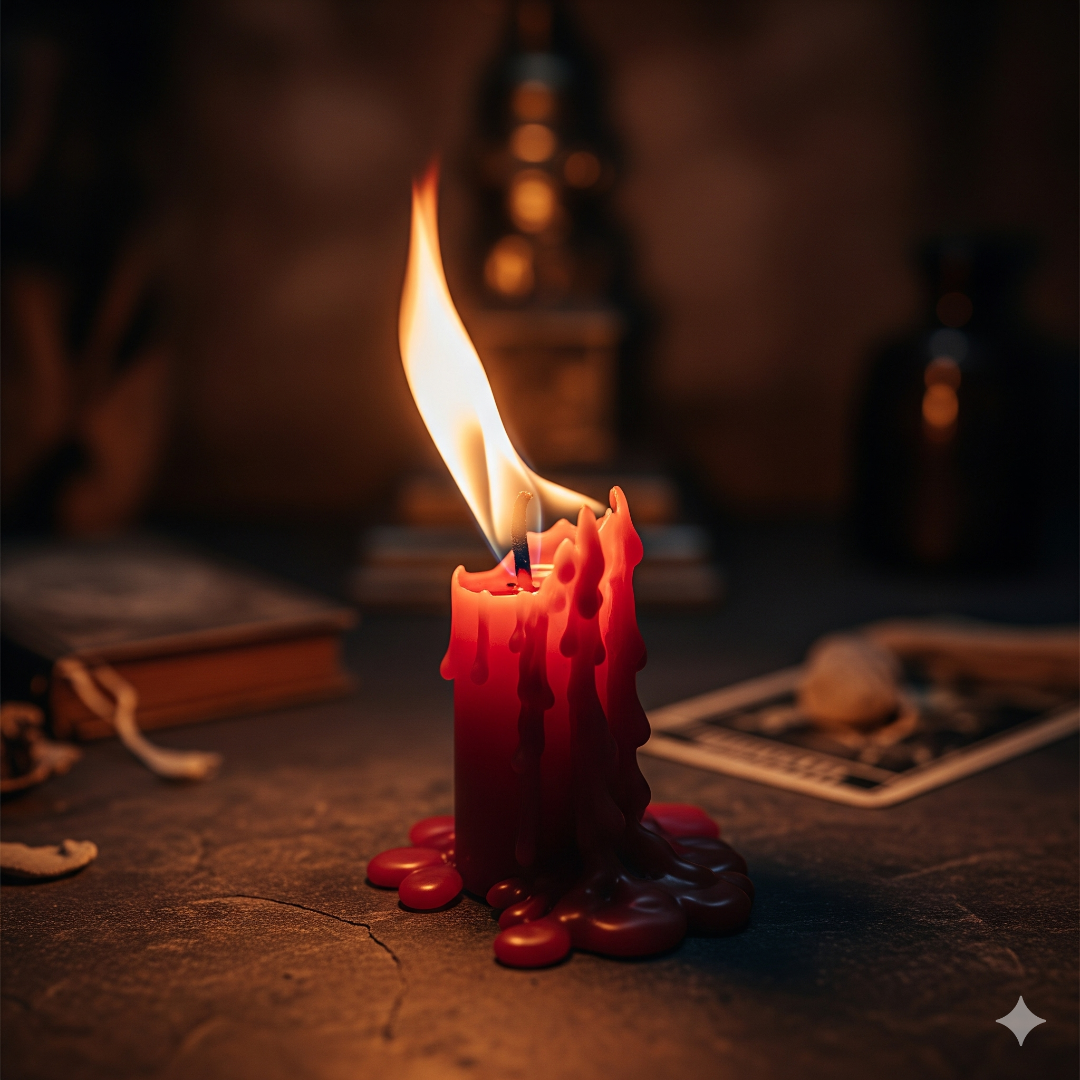
In witchcraft and other magical practices, the way a candle flame behaves can be a form of divination, offering insights into the energy of a spell, ritual, or a message from the spirit world. While a witch’s intuition is always the most important factor, here are some common interpretations of candle flame movements:

General Interpretations

* Steady and Strong Flame:

This is generally a positive sign. A tall, bright, and unwavering flame suggests that your intentions are clear, your energy is focused, and your spell is working effectively. It indicates success and a smooth path forward.

* Weak or Short Flame:

A low, weak flame can indicate obstacles or resistance. It may mean that your intention is facing blockages or that more energy is needed for the spell to be successful. It could also suggest a need for more focused intention or personal introspection. If the flame is small but steady, it may still be successful but will likely take longer to manifest.

* Fast Burning:

A candle that burns quickly and cleanly can mean that your intentions are not being met with much resistance and are likely to manifest swiftly. However, if it burns too fast, it could also mean that the result will be temporary. * Slow Burning: If a candle takes a long time to burn, it may signify that there are challenges or a long-term process involved in reaching your goal.

Specific Movements and Sounds

* Dancing or Jumping Flame:

A flame that moves erratically, jumps, or dances can represent high, intense, and often chaotic energy. This is usually a sign that the spell is working and a lot of energy is being released. It can also signify that the spell’s success may come with some complications. A jumping flame, in particular, can suggest a lot of energy is being released and that your magic will manifest quickly.

* Flickering Flame:

If a flame flickers, it can be a sign that a spirit, guide, or deity is present and trying to communicate with you. The direction of the flickering can also be significant. * Crackling or Popping Flame: A noisy flame that sizzles, crackles, or pops is often interpreted as communication from the spirit realm. The louder the sound, the stronger the message or the will of a spirit to communicate. It can also indicate spiritual discord.

* Sputtering Flame:

A sputtering flame can suggest low energy or a lack of focus in the spell. It may be a sign to re-energize your intention.

* Dual Flames:

If a single candle flame splits into two, it can represent duality, a partnership, or the presence of two different energies. This could mean two opposing forces are at play, or it could signal that two different spirits or guides have joined your ritual.

* Sudden Extinguishing:

A candle flame that suddenly goes out without a clear reason (like a draft) can be interpreted as a sign that the spell or intention is not aligned with your highest good or that the ritual has been completed. It may be a signal to stop and re-evaluate your work.

* Sooty or Black Flame/Smoke:

If a flame produces a lot of black soot or smoke, it can be a warning sign of negative energy, blockages, or spiritual resistance that needs to be cleared. It may indicate a need for cleansing or purification of the space or yourself.

Important Considerations

While these are common interpretations, it’s crucial to remember that they are not absolute rules. The most important thing is to trust your own intuition. A flame’s behavior can also be influenced by mundane factors such as drafts, impurities in the wax, or the length of the wick. Always rule out these physical explanations before jumping to a magical conclusion.

Posted on 1 Comment

How Do I Start? Resources for New Witches: A Step-by-Step Guide

Welcome, curious soul, to the path of witchcraft! If you’re feeling drawn to the ancient wisdom, the power of nature, and the magic within, you’ve come to the right place. The journey into witchcraft is deeply personal and incredibly rewarding. Here at Pagan Essentials, we’re thrilled to offer you a starting point. Let’s dive in!

The very first step on any magical path is to simply explore. There’s no single “right” way to be a witch, and the vastness of traditions and practices can be exciting!

  • โ€‹Read, Read, Read: Immerse yourself in different perspectives. Start with general introductions to witchcraft, then delve into specific traditions that pique your interest, such as Wicca, Traditional Witchcraft, Green Witchcraft, or Chaos Magic.
  • โ€‹Listen and Learn: Podcasts, documentaries, and reputable online articles can be excellent resources.
  • โ€‹Keep a Journal: As you explore, jot down your thoughts, feelings, and any concepts that resonate with you. This will become an invaluable tool on your journey.
  • โ€‹”Wicca: A Guide for the Solitary Practitioner” by Scott Cunningham (a classic, though focused on Wicca)
  • โ€‹”Psychic Witch: A Metaphysical Guide to Meditation, Magick & Manifestation” by Mat Auryn
  • โ€‹”Protection & Reversal Magick” by Jason Miller
  • โ€‹”The Inner Temple of Witchcraft” by Christopher Penczak (comprehensive and great for structured learning)

Before you cast a single spell or invoke a deity, mastering grounding and meditation is crucial. These practices will help you center yourself, manage your energy, and connect with your inner wisdom.

  • Grounding: Think of grounding as rooting yourself to the Earth, like a tree. It helps dissipate excess energy, brings you into the present moment, and provides stability. There are many techniques, but a simple one is to visualize roots extending from the soles of your feet deep into the Earth, drawing up its calm, stable energy.
  • โ€‹Meditation: This isn’t about emptying your mind, but rather observing your thoughts without judgment and focusing your awareness. Start with just 5-10 minutes a day, focusing on your breath. Meditation enhances intuition, concentration, and psychic abilities โ€“ all vital for magical work.

Magic is powerful, and with great power comes great responsibility. Before engaging in any spell work, it’s essential to consider the ethical implications.

  • The Threefold Law/Rule of Return: Many traditions adhere to the idea that whatever energy you send out (positive or negative) will return to you threefold. While not universally adopted, it’s a valuable reminder to act with intention and integrity.
  • โ€‹Do No Harm: This is a fundamental principle for many witches. Consider the potential impact of your actions on yourself, others, and the environment.
  • โ€‹Consent: Never attempt to influence someone’s free will without their explicit consent. This includes love spells, mind manipulation, or any form of coercive magic.
  • โ€‹Personal Responsibility: You are accountable for your magic. Take time to reflect on your intentions and the potential consequences of your workings.

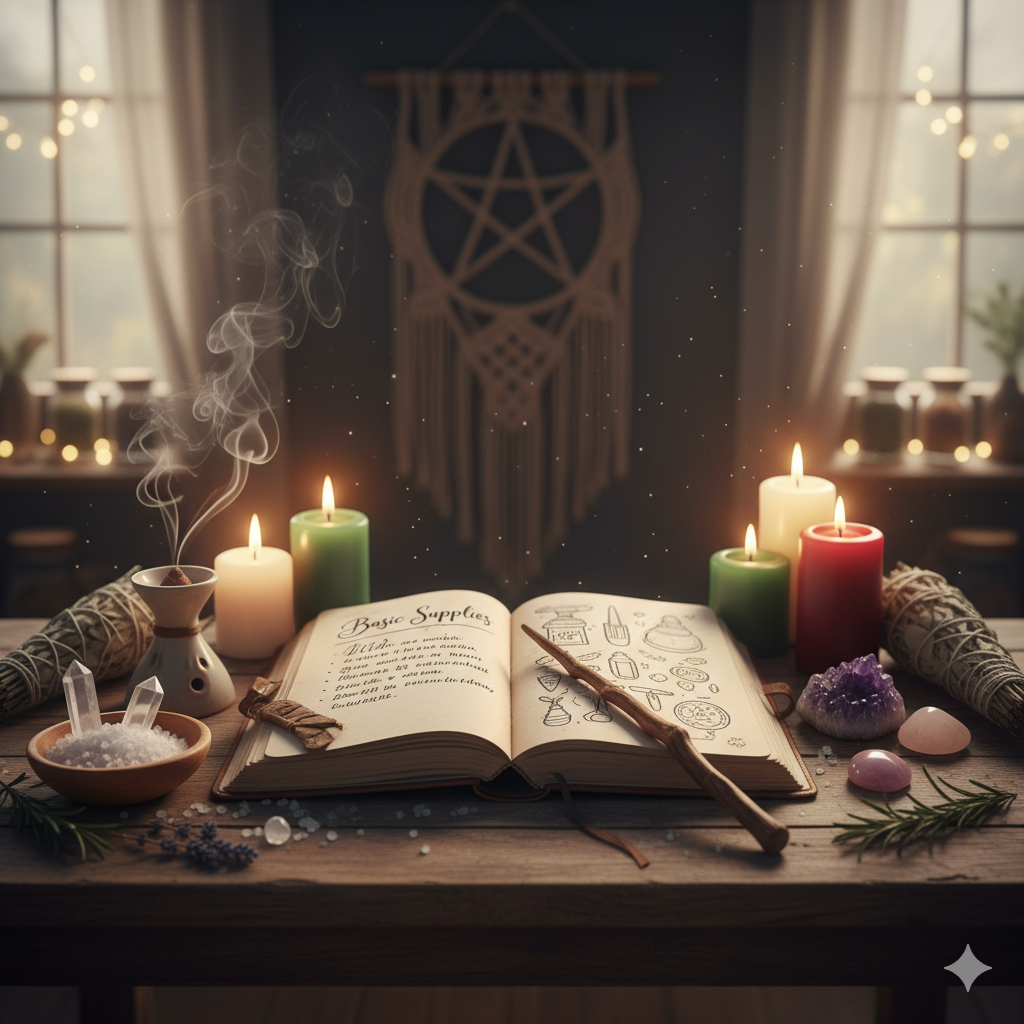
โ€‹You don’t need anything to be a witch โ€“ your most potent tools are your mind and spirit. However, certain items can enhance your practice and create a sacred atmosphere.

  • Journal/Book of Shadows: A place to record your spells, rituals, dreams, and magical insights.
  • โ€‹Candles: Different colors correspond to different intentions (e.g., white for purity, green for prosperity, red for passion).
  • โ€‹Incense/Herbs: For cleansing, offering, or setting the mood. Sage, palo santo, and frankincense are popular choices.
  • โ€‹Salt: A powerful purifier and protector.
  • โ€‹Wand or Athame: (Optional) These are tools to direct energy, not for cutting. A simple stick found in nature can serve as a powerful wand!
  • โ€‹Altar Space: A dedicated area, no matter how small, to honor your practice. It can hold your tools, natural items, and representations of what you hold sacred.
  • โ€‹Crystals: Each crystal carries unique energetic properties. Start with clear quartz, amethyst, or rose quartz for general purposes.

Posted on 1 Comment

Yuletide Magic: Celebrating the Winter Solstice

A blog post for witches and magic enthusiasts~

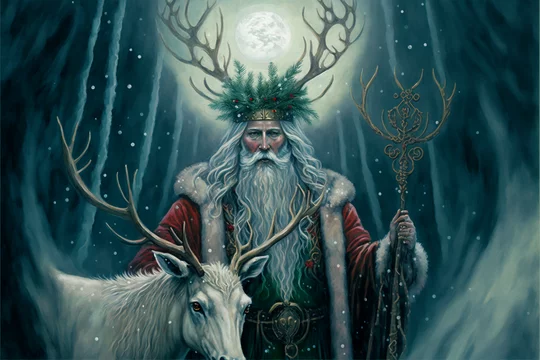
God Odin

Yule, the Winter Solstice,  marks the turning of the Wheel of the Year and is a time of renewal, rebirth, and the triumph of light over darkness. It’s a magical time to connect with the natural world and harness energy for your spells and rituals.


When is Yule?

The Winter Solstice typically falls on December 21st or 22nd in the Northern Hemisphere. It marks the shortest day and longest night of the year, symbolizing the death of the old year and birth of the new.


Yule Correspondence~

  • Colors: Red, green, gold, and white
  • Herbs: Holly, ivy, mistletoe, pine needles, rosemary, and cinnamon
  • Stones: Ruby, emerald, garnet, clear quartz
  • Deities: Freya, Odin, Sol Invictus
  • Animals: Deer, owl, bear, fox
  • Scents: Pine, cinnamon, frankincense, and myrrh

Yule Ritual Ideas:

Yule Log Ceremony ~

Purpose – to symbolize the cycle of life, death, and rebirth

  • Gather a Yule log, preferably from an Evergreen tree
  • Decorate it with ribbons, pine cones, or other natural adornments
  • As you light the log, say a prayer of intention for the coming year
  • Let the log burn slowly, symbolizing the passing of the old and the birth of the new

Winter Solstice Spell ~

Purpose – to manifest intentions for the coming year

  • Gather your Yule Correspondence – Red and green candles, a sprig of Holly, and a piece of paper
  • Write your intentions clearly and concisely for the New Year on the paper
  • Light the candles and burn the paper, visualizing your desires manifesting
  • As the papers burn, say: “Winter’s night is fading fast, A new year dawns, a hopeful cast. Let light and love now fill the air, as I release old worries and care.”

Decorate your Altar ~

  • Adorn your Altar with Yule symbols like evergreen boughs, red, green, and gold candles, and pinecones and ribbon
  • Place a Yule log or small candle in the center to represent the returning sun
  • Include offerings for the gods and spirits, such as honey, wine, and fresh fruit

Yuletide Magic Tips ~

  • Nature connection – spend time outdoors, connecting with the natural world. Take a walk in the forest or simply observe the Winter sky
  • Reflect on the blessings in your life – write down things you are grateful for in the past year, and express gratitude
  • Self-Care – practice self-care rituals like taking a warm bath, meditating, listening to music or reading a good book
  • Community – gather with friends and family to celebrate the season and share warmth and joy.

By incorporating these rituals and practices into your Yule celebrations, you can harness the powerful energy of the Winter Solstice and manifest your intentions for the coming year

Happy Yule!

Pagan Essentials Llc

Subscribe to continue reading

Subscribe to get access to the rest of this post and other subscriber-only content.

Posted on

Litha: The Midsummer Sabbat Soltice Celebration

Welcome to the radiant zenith of the Sun’s journey, as we embrace the longest day and the shortest night of the year. Litha, also known as Midsummer or the Summer Solstice, is a time of intense power, magic, and celebration. As witches, pagans, and followers of the old ways, we gather to honor the full strength of the Sun, revel in the abundance of the Earth, and acknowledge the fleeting nature of light and darkness.

In this sacred season, we stand at the threshold of two worlds, where the veil between the seen and unseen is as thin as the new moon’s crescent. The fires of Litha ignite our passions, fuel our dreams, and cleanse our spirits. Join us as we delve into the ancient traditions, modern practices, and the enchanting lore of this sabbat. Whether you’re dancing around the bonfire, crafting sun-infused charms, or simply soaking in the warmth of the season, Litha is a time to celebrate life’s bounty and the fire within us all.

Let’s explore the mysteries and the joy of Litha together, as we turn the Wheel of the Year and bask in the Sun’s glorious light. ๐Ÿ”ฎโœจ


Welcome to Pagan Essentials, where we explore and celebrate the rich traditions of modern witchcraft and Paganism. As the Wheel of the Year turns, we now find ourselves approaching Litha, also known as the Summer Solstice. This powerful Sabbat marks the longest day and the shortest night of the year, a time of abundant energy, growth, and celebration.


Litha, typically celebrated around June 20th to 23rd in the Northern Hemisphere, is a time to honor the sun at its peak. The word “Litha” is believed to derive from the Anglo-Saxon term for the months of June and July. This Sabbat is a celebration of light, warmth, and life. It’s a time to acknowledge the power of the sun and its role in nourishing the Earth.

In many traditions, Litha is seen as a time when the Oak King, who reigns from Yule to Litha, is overthrown by the Holly King, who will rule from Litha to Yule. This symbolic battle represents the shifting balance between light and dark as the days begin to shorten once more.


Litha is a vibrant and joyous Sabbat, and there are many ways to celebrate its energies. Here are some popular traditions and rituals:

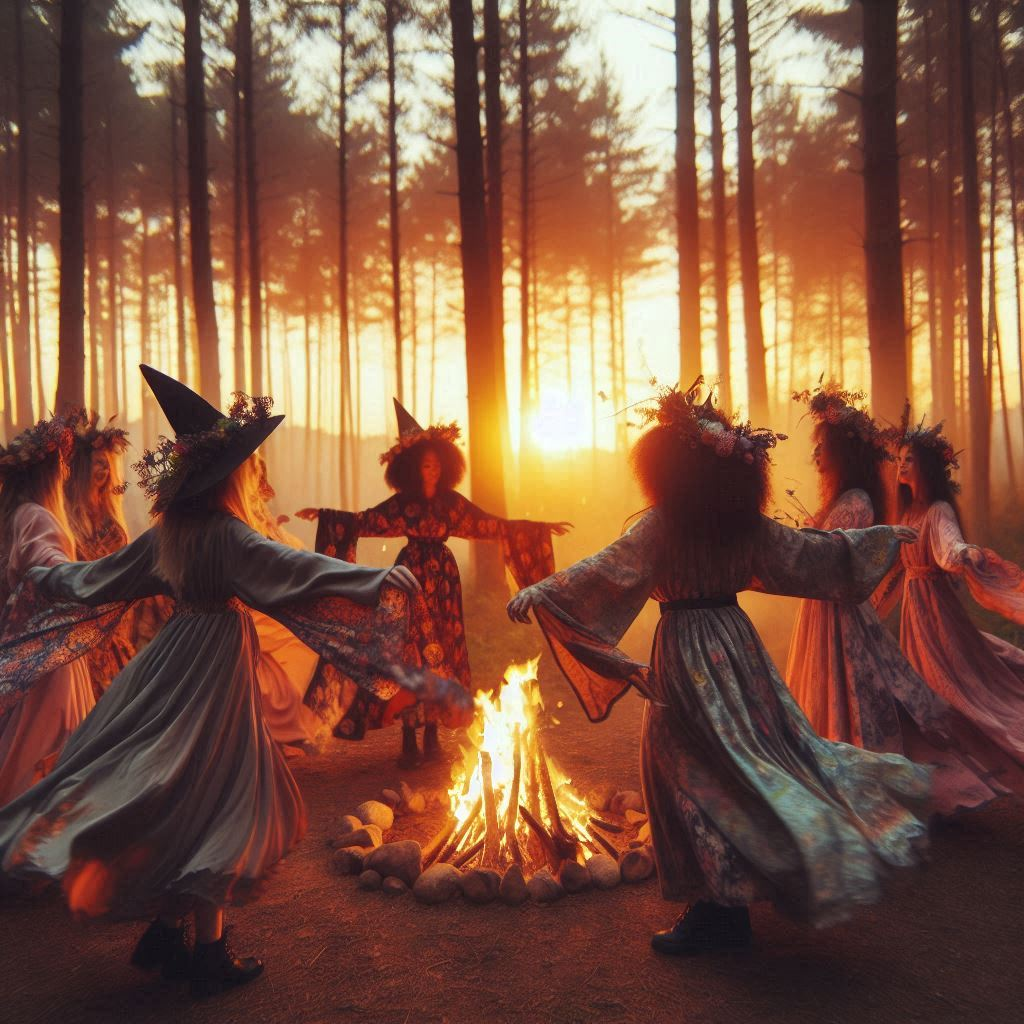
  1. Bonfires and Fire Magic: Lighting a bonfire is a traditional way to celebrate Litha. The fire symbolizes the sun at its zenith and is believed to ward off evil spirits. Jumping over the fire (safely, of course) is a custom thought to bring good fortune and protection.
  2. Sun Offerings: Create a solar altar with sun symbols, yellow and gold candles, and sunflowers. Offerings of fresh fruits, especially those that thrive in the summer like strawberries and peaches, can be made to honor the sun’s bounty.
  3. Nature Walks and Flower Gatherings: Spend time outdoors, reveling in the beauty of nature at its most lush. Gather herbs and flowers such as lavender, St. John’s Wort, and yarrow, which are believed to hold special power during this time.
  4. Midsummer Feasts: Celebrate with a feast that includes summer fruits, fresh vegetables, and honey-based treats. Sharing food with loved ones under the sun or moon strengthens communal bonds and honors the Earth’s gifts.
  5. Divination: The energy of Litha is potent for divination. Use tools like tarot cards, runes, or a pendulum to gain insight and guidance. The heightened energy can provide clearer visions and stronger intuitions.
  6. Meditation and Reflection: While Litha is a time of celebration, it’s also a moment to reflect on personal growth and the goals you set at the beginning of the year. Meditate on the progress you’ve made and set intentions for the remaining year.

  • Create a Litha Wreath: Make a wreath using flowers, herbs, and greenery that symbolize the sun and growth. Hang it on your door to welcome positive energy into your home.
  • Make Sun Water: Charge water under the midday sun and use it for rituals, spells, or as a refreshing drink infused with solar energy.
  • Decorate with Sun Symbols: Use images of the sun, sunflowers, and solar colors (yellow, gold, orange) in your home and sacred space.

Litha is an excellent time to honor deities associated with the sun, such as:

  • Apollo: The Greek god of the sun, music, and prophecy.
  • Ra: The Egyptian sun god.
  • Helios: The Greek personification of the sun.
  • Amaterasu: The Japanese sun goddess.

Set up an altar with symbols and offerings that resonate with your chosen deity to strengthen your connection and invite their blessings.


Ultimately, Litha is about embracing the peak of life and the height of light. It’s a time to celebrate abundance, personal power, and the beauty of nature. Whether you gather with a coven, family, friends, or spend the day in solitary reflection, let the energy of the sun fill you with warmth, inspiration, and joy.

May your Litha be filled with light, love, and lasting memories. Blessed be!