Posted on

Finding Your Path: A Guide to the Diverse World of Witchcraft

For many who are drawn to the world of witchcraft, the initial steps can feel overwhelming. You might have a sense of connection to nature, a curiosity about herbs and crystals, or a desire for a more intentional life, but you might also feel lost in a sea of new terms and traditions. Youโ€™ve heard the words “Wicca,” “Eclectic,” and “Traditional,” but what do they all mean?
The truth is, witchcraft isnโ€™t a one-size-fits-all religion or practice. It’s a vast, rich tapestry woven from countless threads of history, culture, and personal belief. Finding your path is less about choosing the “right” one and more about discovering the one that resonates most deeply with your soul.

Hereโ€™s a simple introduction to some of the most common traditions and styles youโ€™ll encounter on your journey:

Wicca: The Neopagan Religion
When most people think of modern witchcraft, they’re often thinking of Wicca. Founded in the mid-20th century by Gerald Gardner, Wicca is a recognized neopagan religion with a core set of beliefs and practices.

Wicca: The Neopagan Religion

When most people think of modern witchcraft, they’re often thinking of Wicca. Founded in the mid-20th century by Gerald Gardner, Wicca is a recognized neopagan religion with a core set of beliefs and practices.

Key characteristics of Wicca:

  • Deity Veneration: Wiccans typically worship a God and a Goddess, often seen as representing the masculine and feminine divine in nature.
  • The Wiccan Rede: A central ethical guideline, often summarized as “An it harm none, do what ye will.”
  • The Wheel of the Year: The celebration of eight seasonal festivals, known as Sabbats, which mark the changing of the seasons and the cycle of the agricultural year.
  • Ritual Structure: Many Wiccan rituals follow a formal structure, often involving the casting of a circle, calling upon the elements, and working with tools like a wand, athame, and chalice.
  • Initiation: In some covens (groups of witches), practitioners go through a formal initiation process to become a member.
  • Who it might be for: If you are seeking a structured, community-oriented path with a clear ethical framework and a focus on nature-based spirituality, Wicca might be a wonderful fit.

Traditional Witchcraft: Rooted in History

Traditional Witchcraft, as the name suggests, often seeks to connect with pre-modern, folk magic practices that predate Wicca. It is not a single, unified tradition but a broad category that encompasses a wide range of beliefs and methods.

Key characteristics of Traditional Witchcraft:

  • Historical Focus: Practitioners often draw inspiration from historical records, folklore, and regional traditions, such as cunning craft or European folk magic.
  • The Land: There is a strong emphasis on connecting with the spirit of the land, the genius loci, and working with local herbs, spirits, and folklore.
  • No Formal Pantheon: Unlike Wicca, there isn’t a required set of deities. Practitioners might work with ancestral spirits, fae, local gods, or other entities.
  • Fluid Practice: Practices are often less formal than in Wicca, focusing more on personal gnosis, spellcraft, and direct communication with spirits.
  • Who it might be for: If you are a history buff, enjoy independent research, and feel a deep connection to the land and the magical practices of the past, you might find your home in Traditional Witchcraft.

Eclectic Witchcraft: The Path of the Individual

Eclectic Witchcraft is perhaps the most popular style for modern, solitary practitioners. The term “eclectic” simply means “drawing from a variety of sources.” An Eclectic Witch builds their practice by pulling elements from different traditions, cultures, and spiritual systems that resonate with them personally.

Key characteristics of Eclectic Witchcraft:

  • Personalization: The practice is entirely your own. There are no rules, no required deities, and no set rituals. You are the architect of your spiritual life.
  • Fluid Beliefs: An Eclectic Witch might use Tarot cards from a Rider-Waite deck, work with Celtic deities, celebrate the Wheel of the Year, and use herbs based on Hoodoo or rootwork traditions.
  • Solitary Practice: While not exclusively solitary, many Eclectic Witches find that this style is best suited to an individual practice, as it allows for maximum freedom and creativity.
  • Intuition is Key: This path places a high value on intuition and personal experience. If a particular practice or belief feels right, an Eclectic Witch will incorporate it. If not, they will leave it behind.
  • Who it might be for: If you are a free spirit, a lifelong learner, and someone who thrives on creativity and personal discovery, Eclectic Witchcraft offers the freedom to build a practice that is uniquely yours.

Kitchen Witchery: Magick in the Home

Kitchen Witchery is a path that focuses on finding the sacred in the mundane, particularly within the home and hearth. It is less of a separate tradition and more of a style that can be incorporated into any of the above.

Key characteristics of Kitchen Witchery:

  • The Hearth as Altar: The kitchen is the sacred space, and the tools of the trade are the mortar and pestle, the oven, and the cauldron (pot).
  • Intentional Cooking: Spells are often cast through cooking, baking, and creating herbal remedies. A soup made with the intention of healing or bread baked to bring prosperity is a form of Kitchen Witchery.
  • Household Magick: The practice extends beyond the kitchen to include cleaning with intent, creating protective sachets for the home, and making household items with a magical purpose.
    Who it might be for: If you find joy in the domestic arts, feel a connection to home and family, and believe that the most powerful magick is woven into the fabric of daily life.
    Finding Your Way Forward

This is just a small glimpse into the rich and varied world of witchcraft. There are many other paths to explore, from Green Witchcraft (focused on nature and plants) to Hedgewitchery (focused on animism and spirit work), to the Afro-diasporic traditions of Hoodoo and Voudou, which are distinct spiritual practices often mislabeled under the umbrella of witchcraft.
The most important thing to remember is that you don’t need to commit to a label on day one. Start by exploring what calls to you. Read different books, listen to podcasts, and experiment with simple practices. Pay attention to what makes your heart sing and what brings a sense of peace and power to your life.
Your path is unique, and the only guide you truly need is your own intuition.

Posted on 1 Comment

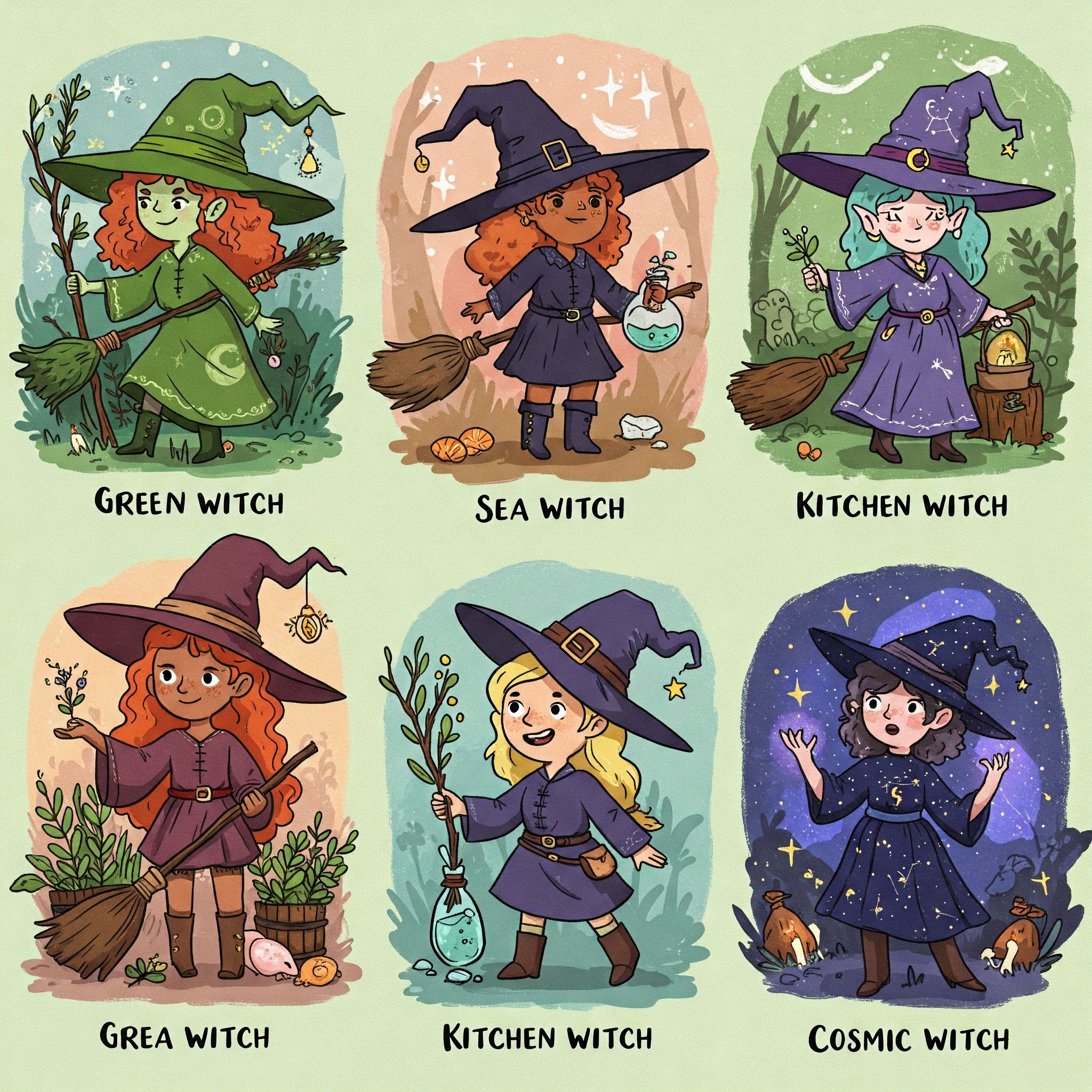
What Type of Witch am I??

The world of witchcraft is incredibly diverse, with many different paths and traditions. Finding out “what type” of witch you are is less about fitting into a rigid category and more about understanding your own inclinations, strengths, and the practices that resonate most deeply with you.

Here’s a breakdown of ways to explore and understand your own unique witchcraft:

1. Self-Reflection and Introspection:

 * What are you naturally drawn to? Think about your hobbies, interests, and what makes you feel connected and alive. Are you drawn to nature, history, art, helping others, knowledge, or something else entirely? These natural inclinations often weave into your craft.

 * What kind of magic feels most intuitive to you? Do you feel a pull towards working with herbs, crystals, energy, deities, spirits, the elements, or something else?

 * What are your values and ethics? Your magical practice should ideally align with your core beliefs.

 * What kind of impact do you want your magic to have? Are you interested in personal growth, healing, protection, manifestation, community work, or something else?

 * How do you best connect with the spiritual or magical? Is it through meditation, ritual, spending time in nature, art, music, or other means?

2. Exploring Different Paths and Traditions:

Research different types of witchcraft to see what sparks your interest. Keep in mind that these are not always strict categories, and many witches blend aspects from different paths:

 * Eclectic Witchcraft:

This is a very common path where individuals draw inspiration and practices from various traditions and create their own unique blend.

 * Hereditary Witchcraft:

Practices and knowledge passed down through family lines.

 * Traditional Witchcraft:

Often focuses on folklore, spirit work, and historical practices of a specific region.

 * Gardnerian/Wiccan:

Initiatory traditions with specific structures, rituals, and deities.

 * Dianic Witchcraft:

Often focuses on the Divine Feminine and may be women-centered.

 * Hedge Witchcraft:

Often solitary practitioners who work closely with nature, herbs, and folk magic.

 * Kitchen Witchcraft:

Magic woven into everyday tasks, especially cooking and home care.

 * Green Witchcraft:

Focuses on plants, herbs, and nature-based magic.

 * Crystal Witchcraft:

Working with the energy and properties of crystals.

 * Sea Witchcraft:

Drawing power from the ocean and its tides.

 * Cosmic Witchcraft:

Working with celestial energies and astrology.

 * Death Witchcraft:

Working with spirits of the dead and ancestor veneration (this is a serious path and requires respect and understanding).

3. Experimentation and Practice:

 * Try different things: Don’t be afraid to experiment with various forms of spellwork, divination, and ritual. See what feels right and what yields results (even small ones).

 * Keep a journal: Document your experiences, observations, and feelings during your magical workings. This can help you identify patterns and what resonates with you.

 * Connect with nature: Spend time outdoors and observe the cycles of the earth. This can inform your practice, regardless of your specific path.

4. Learning and Research:

 * Read books: Explore a wide range of books on witchcraft from different perspectives. Be discerning and look for reputable authors.

 * Take workshops or courses: If available in your area or online, these can provide structured learning and connect you with other practitioners.

 * Explore online communities: Engage with online forums and groups, but be mindful of the information shared and prioritize critical thinking.

5. Trust Your Intuition:

Ultimately, the most important aspect of finding your “type” of witch is listening to your own inner voice and intuition. What truly calls to you? What feels authentic and powerful?

It’s important to remember:

 * Labels can be helpful but aren’t always necessary. You might find that you resonate with aspects of several different paths, and that’s perfectly okay.

 * Your path may evolve over time. As you learn and grow, your practice may shift and change.

 * There’s no right or wrong way to be a witch. Authenticity and ethical practice are key.

Take your time, be patient with yourself, and enjoy the journey of discovering your own unique magical identity. It’s a deeply personal and rewarding exploration! Since you’re in Manitowoc, Wisconsin, you might also consider looking for local metaphysical shops or pagan gatherings (if you feel comfortable) as a way to connect with others on similar paths.


Posted on 1 Comment

Imbolc 2025

Celebrating Imbolc 2025: A Festival of Light and Renewal

Imbolc is a cherished festival with deep roots in ancient traditions. It marks the halfway point between the winter solstice and the spring equinox. Celebrated on February 1st or 2nd, Imbolc heralds the arrival of spring and symbolizes the return of light after the long, dark winter months. In 2025, Imbolc will be celebrated on February 1st.

Historical Significance

Imbolc comes from the Old Irish word “imbolg,” meaning “in the belly.” This signifies when ewes start to lactate and heralds the start of the agricultural year. This festival is often linked to Brigid. She is the goddess of fertility, healing, and poetry. Brigid embodies the themes of fire and light. As the days grow longer, Imbolc reminds us of the impending renewal of life. It also signals the awakening of the earth.

Rituals and Traditions

Imbolc is rich with rituals and activities that honor the returning light and the goddess Brigid. Here are some common practices:

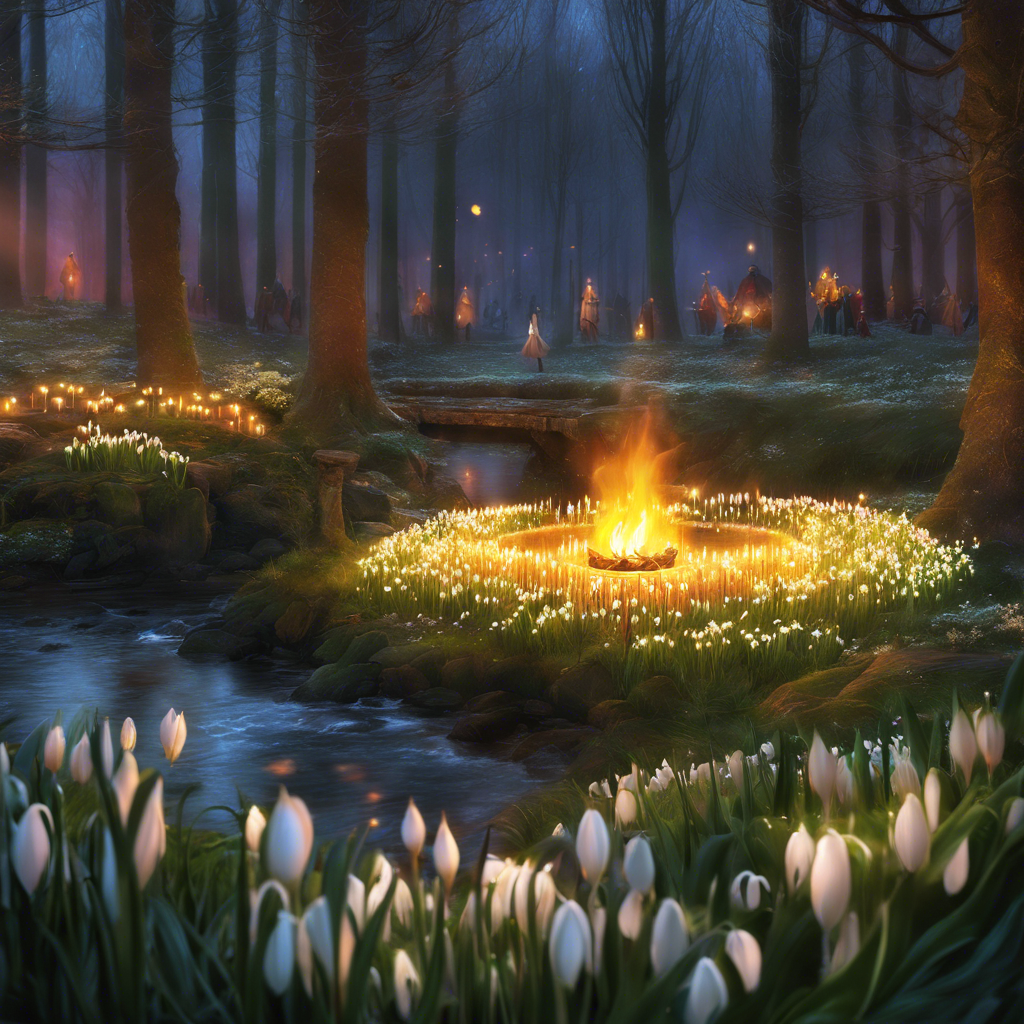
  • **Lighting Candles**: To symbolize the increasing light, it’s customary to light candles or a bonfire. This act serves as a way to invite warmth and illumination into your home.
  • **Brigidโ€™s Cross**: Crafting a Brigidโ€™s Cross from rushes or straw is a traditional practice. This cross is hung in the home for protection and blessings.
  • **Purification Rituals**: Many celebrate Imbolc by performing purification rituals, such as cleansing their homes with sage or water, symbolizing the removal of negativity and welcoming new energy.
  • **Feasting**: Preparing and sharing a special feast with seasonal foods, such as dairy products, grains, and root vegetables, is a way to honor the earth and its gifts.
  • **Brigidโ€™s Bed**: Some create a special place for Brigid, often a bed adorned with white cloth and flowers, symbolizing her presence and blessings in the household.
  • **Nature Walks**: As the first signs of spring begin to appear, a nature walk can be a beautiful way to connect with the earth and observe the emerging life.

Correspondences

Understanding the correspondences associated with Imbolc can enhance your celebration. Here are some key elements to consider:

  • **Elements**: Fire and Water. Fire symbolizes inspiration and purification, while water represents the renewal of life.
  • **Colors**: White, red, and green. These colors represent purity, fertility, and the budding earth.
  • **Herbs and Plants**: Snowdrops, crocuses, and other early-blooming flowers are associated with Imbolc. Herbs like rosemary, mint, and thyme can also be used in rituals.
  • **Stones**: Clear quartz, amethyst, and garnet are stones that resonate with the energy of Imbolc, promoting clarity and protection.

Conclusion

Imbolc is a beautiful celebration of light, renewal, and the promise of spring. As we gather to honor traditions, perform rituals, and connect with nature, we invite the warmth and growth of the coming season into our lives. Whether you choose to light candles, craft a Brigidโ€™s Cross, or simply enjoy a feast with loved ones, Imbolc is a time to reflect on the light within and the potential that lies ahead in the year to come. Embrace this magical festival, and let the spirit of Imbolc inspire you!

๐ŸŒ›โญ๏ธ๐ŸŒœ

Imbolc Ritual for 2025

**Preparation:**

1. **Set the Space:** Choose a quiet space where you can perform the ritual. Cleanse the area by burning sage or sprinkling salt water.

2. **Gather Supplies:**

  • A candle (preferably white or yellow)
  • A small bowl of water
  • A representation of Brigid (such as a statue, picture, or a handmade Brigidโ€™s cross)
  • Flowers or greenery (like snowdrops or willow branches)
  • Incense (optional)
  • A journal and pen

๐ŸŒŸ

**Ritual Steps:**

1. **Create an Altar:**

  • Place the candle in the center of your altar.
  • Surround it with the flowers or greenery.
  • Position the representation of Brigid and the bowl of water nearby.

2. **Light the Candle:**

  • As you light the candle, say a few words of intention, such as: 

     “As the light returns, so does hope and renewal. I honor Brigid and invite her blessings into my life.”

3. **Invoke Brigid:**

  • Take a moment to meditate on Brigidโ€™s qualities: healing, poetry, and the forge. You may choose to recite a prayer or poem dedicated to her.

4. **Water Blessing:**

  • Dip your fingers into the bowl of water and sprinkle a few drops around your space, symbolizing purification and new beginnings. You can say:

     “With this water, I welcome renewal and clarity into my life.”

5. **Set Intentions:**

  • Write down your intentions or goals for the upcoming season in your journal. Focus on what you want to nurture and bring to fruition. 

   – Once youโ€™ve written them down, hold the paper over the candle flame (safely) to symbolize releasing your intentions into the universe.

6. **Closing:**

  • Thank Brigid for her presence and guidance. Extinguish the candle, knowing that the light continues to grow as the days lengthen.
  • If you like, you can keep the candle as a focus for your intentions throughout the season.

7. **Feasting:**

  • Celebrate with a small meal or snack that includes dairy (symbolizing the lactating ewes), bread, and seasonal vegetables. 

This ritual can be adjusted to fit your personal beliefs and practices. Enjoy the warmth and renewal that Imbolc brings!

Posted on 1 Comment

Yuletide Magic: Celebrating the Winter Solstice

A blog post for witches and magic enthusiasts~

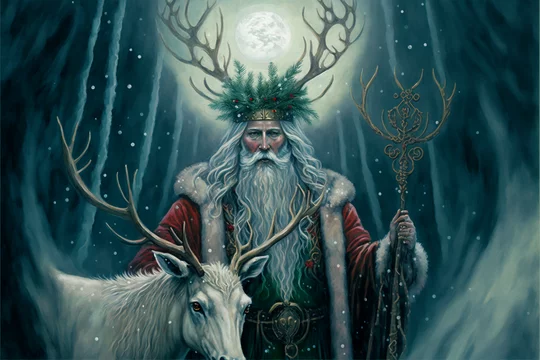
God Odin

Yule, the Winter Solstice,  marks the turning of the Wheel of the Year and is a time of renewal, rebirth, and the triumph of light over darkness. It’s a magical time to connect with the natural world and harness energy for your spells and rituals.


When is Yule?

The Winter Solstice typically falls on December 21st or 22nd in the Northern Hemisphere. It marks the shortest day and longest night of the year, symbolizing the death of the old year and birth of the new.


Yule Correspondence~

  • Colors: Red, green, gold, and white
  • Herbs: Holly, ivy, mistletoe, pine needles, rosemary, and cinnamon
  • Stones: Ruby, emerald, garnet, clear quartz
  • Deities: Freya, Odin, Sol Invictus
  • Animals: Deer, owl, bear, fox
  • Scents: Pine, cinnamon, frankincense, and myrrh

Yule Ritual Ideas:

Yule Log Ceremony ~

Purpose – to symbolize the cycle of life, death, and rebirth

  • Gather a Yule log, preferably from an Evergreen tree
  • Decorate it with ribbons, pine cones, or other natural adornments
  • As you light the log, say a prayer of intention for the coming year
  • Let the log burn slowly, symbolizing the passing of the old and the birth of the new

Winter Solstice Spell ~

Purpose – to manifest intentions for the coming year

  • Gather your Yule Correspondence – Red and green candles, a sprig of Holly, and a piece of paper
  • Write your intentions clearly and concisely for the New Year on the paper
  • Light the candles and burn the paper, visualizing your desires manifesting
  • As the papers burn, say: “Winter’s night is fading fast, A new year dawns, a hopeful cast. Let light and love now fill the air, as I release old worries and care.”

Decorate your Altar ~

  • Adorn your Altar with Yule symbols like evergreen boughs, red, green, and gold candles, and pinecones and ribbon
  • Place a Yule log or small candle in the center to represent the returning sun
  • Include offerings for the gods and spirits, such as honey, wine, and fresh fruit

Yuletide Magic Tips ~

  • Nature connection – spend time outdoors, connecting with the natural world. Take a walk in the forest or simply observe the Winter sky
  • Reflect on the blessings in your life – write down things you are grateful for in the past year, and express gratitude
  • Self-Care – practice self-care rituals like taking a warm bath, meditating, listening to music or reading a good book
  • Community – gather with friends and family to celebrate the season and share warmth and joy.

By incorporating these rituals and practices into your Yule celebrations, you can harness the powerful energy of the Winter Solstice and manifest your intentions for the coming year

Happy Yule!

Pagan Essentials Llc

Subscribe to continue reading

Subscribe to get access to the rest of this post and other subscriber-only content.

Posted on

Litha: The Midsummer Sabbat Soltice Celebration

Welcome to the radiant zenith of the Sun’s journey, as we embrace the longest day and the shortest night of the year. Litha, also known as Midsummer or the Summer Solstice, is a time of intense power, magic, and celebration. As witches, pagans, and followers of the old ways, we gather to honor the full strength of the Sun, revel in the abundance of the Earth, and acknowledge the fleeting nature of light and darkness.

In this sacred season, we stand at the threshold of two worlds, where the veil between the seen and unseen is as thin as the new moon’s crescent. The fires of Litha ignite our passions, fuel our dreams, and cleanse our spirits. Join us as we delve into the ancient traditions, modern practices, and the enchanting lore of this sabbat. Whether you’re dancing around the bonfire, crafting sun-infused charms, or simply soaking in the warmth of the season, Litha is a time to celebrate life’s bounty and the fire within us all.

Let’s explore the mysteries and the joy of Litha together, as we turn the Wheel of the Year and bask in the Sun’s glorious light. ๐Ÿ”ฎโœจ


Welcome to Pagan Essentials, where we explore and celebrate the rich traditions of modern witchcraft and Paganism. As the Wheel of the Year turns, we now find ourselves approaching Litha, also known as the Summer Solstice. This powerful Sabbat marks the longest day and the shortest night of the year, a time of abundant energy, growth, and celebration.


Litha, typically celebrated around June 20th to 23rd in the Northern Hemisphere, is a time to honor the sun at its peak. The word “Litha” is believed to derive from the Anglo-Saxon term for the months of June and July. This Sabbat is a celebration of light, warmth, and life. It’s a time to acknowledge the power of the sun and its role in nourishing the Earth.

In many traditions, Litha is seen as a time when the Oak King, who reigns from Yule to Litha, is overthrown by the Holly King, who will rule from Litha to Yule. This symbolic battle represents the shifting balance between light and dark as the days begin to shorten once more.


Litha is a vibrant and joyous Sabbat, and there are many ways to celebrate its energies. Here are some popular traditions and rituals:

  1. Bonfires and Fire Magic: Lighting a bonfire is a traditional way to celebrate Litha. The fire symbolizes the sun at its zenith and is believed to ward off evil spirits. Jumping over the fire (safely, of course) is a custom thought to bring good fortune and protection.
  2. Sun Offerings: Create a solar altar with sun symbols, yellow and gold candles, and sunflowers. Offerings of fresh fruits, especially those that thrive in the summer like strawberries and peaches, can be made to honor the sun’s bounty.
  3. Nature Walks and Flower Gatherings: Spend time outdoors, reveling in the beauty of nature at its most lush. Gather herbs and flowers such as lavender, St. John’s Wort, and yarrow, which are believed to hold special power during this time.
  4. Midsummer Feasts: Celebrate with a feast that includes summer fruits, fresh vegetables, and honey-based treats. Sharing food with loved ones under the sun or moon strengthens communal bonds and honors the Earth’s gifts.
  5. Divination: The energy of Litha is potent for divination. Use tools like tarot cards, runes, or a pendulum to gain insight and guidance. The heightened energy can provide clearer visions and stronger intuitions.
  6. Meditation and Reflection: While Litha is a time of celebration, it’s also a moment to reflect on personal growth and the goals you set at the beginning of the year. Meditate on the progress you’ve made and set intentions for the remaining year.

  • Create a Litha Wreath: Make a wreath using flowers, herbs, and greenery that symbolize the sun and growth. Hang it on your door to welcome positive energy into your home.
  • Make Sun Water: Charge water under the midday sun and use it for rituals, spells, or as a refreshing drink infused with solar energy.
  • Decorate with Sun Symbols: Use images of the sun, sunflowers, and solar colors (yellow, gold, orange) in your home and sacred space.

Litha is an excellent time to honor deities associated with the sun, such as:

  • Apollo: The Greek god of the sun, music, and prophecy.
  • Ra: The Egyptian sun god.
  • Helios: The Greek personification of the sun.
  • Amaterasu: The Japanese sun goddess.

Set up an altar with symbols and offerings that resonate with your chosen deity to strengthen your connection and invite their blessings.


Ultimately, Litha is about embracing the peak of life and the height of light. It’s a time to celebrate abundance, personal power, and the beauty of nature. Whether you gather with a coven, family, friends, or spend the day in solitary reflection, let the energy of the sun fill you with warmth, inspiration, and joy.

May your Litha be filled with light, love, and lasting memories. Blessed be!