Posted on

Finding Your Path: A Guide to the Diverse World of Witchcraft

For many who are drawn to the world of witchcraft, the initial steps can feel overwhelming. You might have a sense of connection to nature, a curiosity about herbs and crystals, or a desire for a more intentional life, but you might also feel lost in a sea of new terms and traditions. Youโ€™ve heard the words “Wicca,” “Eclectic,” and “Traditional,” but what do they all mean?
The truth is, witchcraft isnโ€™t a one-size-fits-all religion or practice. It’s a vast, rich tapestry woven from countless threads of history, culture, and personal belief. Finding your path is less about choosing the “right” one and more about discovering the one that resonates most deeply with your soul.

Hereโ€™s a simple introduction to some of the most common traditions and styles youโ€™ll encounter on your journey:

Wicca: The Neopagan Religion
When most people think of modern witchcraft, they’re often thinking of Wicca. Founded in the mid-20th century by Gerald Gardner, Wicca is a recognized neopagan religion with a core set of beliefs and practices.

Wicca: The Neopagan Religion

When most people think of modern witchcraft, they’re often thinking of Wicca. Founded in the mid-20th century by Gerald Gardner, Wicca is a recognized neopagan religion with a core set of beliefs and practices.

Key characteristics of Wicca:

  • Deity Veneration: Wiccans typically worship a God and a Goddess, often seen as representing the masculine and feminine divine in nature.
  • The Wiccan Rede: A central ethical guideline, often summarized as “An it harm none, do what ye will.”
  • The Wheel of the Year: The celebration of eight seasonal festivals, known as Sabbats, which mark the changing of the seasons and the cycle of the agricultural year.
  • Ritual Structure: Many Wiccan rituals follow a formal structure, often involving the casting of a circle, calling upon the elements, and working with tools like a wand, athame, and chalice.
  • Initiation: In some covens (groups of witches), practitioners go through a formal initiation process to become a member.
  • Who it might be for: If you are seeking a structured, community-oriented path with a clear ethical framework and a focus on nature-based spirituality, Wicca might be a wonderful fit.

Traditional Witchcraft: Rooted in History

Traditional Witchcraft, as the name suggests, often seeks to connect with pre-modern, folk magic practices that predate Wicca. It is not a single, unified tradition but a broad category that encompasses a wide range of beliefs and methods.

Key characteristics of Traditional Witchcraft:

  • Historical Focus: Practitioners often draw inspiration from historical records, folklore, and regional traditions, such as cunning craft or European folk magic.
  • The Land: There is a strong emphasis on connecting with the spirit of the land, the genius loci, and working with local herbs, spirits, and folklore.
  • No Formal Pantheon: Unlike Wicca, there isn’t a required set of deities. Practitioners might work with ancestral spirits, fae, local gods, or other entities.
  • Fluid Practice: Practices are often less formal than in Wicca, focusing more on personal gnosis, spellcraft, and direct communication with spirits.
  • Who it might be for: If you are a history buff, enjoy independent research, and feel a deep connection to the land and the magical practices of the past, you might find your home in Traditional Witchcraft.

Eclectic Witchcraft: The Path of the Individual

Eclectic Witchcraft is perhaps the most popular style for modern, solitary practitioners. The term “eclectic” simply means “drawing from a variety of sources.” An Eclectic Witch builds their practice by pulling elements from different traditions, cultures, and spiritual systems that resonate with them personally.

Key characteristics of Eclectic Witchcraft:

  • Personalization: The practice is entirely your own. There are no rules, no required deities, and no set rituals. You are the architect of your spiritual life.
  • Fluid Beliefs: An Eclectic Witch might use Tarot cards from a Rider-Waite deck, work with Celtic deities, celebrate the Wheel of the Year, and use herbs based on Hoodoo or rootwork traditions.
  • Solitary Practice: While not exclusively solitary, many Eclectic Witches find that this style is best suited to an individual practice, as it allows for maximum freedom and creativity.
  • Intuition is Key: This path places a high value on intuition and personal experience. If a particular practice or belief feels right, an Eclectic Witch will incorporate it. If not, they will leave it behind.
  • Who it might be for: If you are a free spirit, a lifelong learner, and someone who thrives on creativity and personal discovery, Eclectic Witchcraft offers the freedom to build a practice that is uniquely yours.

Kitchen Witchery: Magick in the Home

Kitchen Witchery is a path that focuses on finding the sacred in the mundane, particularly within the home and hearth. It is less of a separate tradition and more of a style that can be incorporated into any of the above.

Key characteristics of Kitchen Witchery:

  • The Hearth as Altar: The kitchen is the sacred space, and the tools of the trade are the mortar and pestle, the oven, and the cauldron (pot).
  • Intentional Cooking: Spells are often cast through cooking, baking, and creating herbal remedies. A soup made with the intention of healing or bread baked to bring prosperity is a form of Kitchen Witchery.
  • Household Magick: The practice extends beyond the kitchen to include cleaning with intent, creating protective sachets for the home, and making household items with a magical purpose.
    Who it might be for: If you find joy in the domestic arts, feel a connection to home and family, and believe that the most powerful magick is woven into the fabric of daily life.
    Finding Your Way Forward

This is just a small glimpse into the rich and varied world of witchcraft. There are many other paths to explore, from Green Witchcraft (focused on nature and plants) to Hedgewitchery (focused on animism and spirit work), to the Afro-diasporic traditions of Hoodoo and Voudou, which are distinct spiritual practices often mislabeled under the umbrella of witchcraft.
The most important thing to remember is that you don’t need to commit to a label on day one. Start by exploring what calls to you. Read different books, listen to podcasts, and experiment with simple practices. Pay attention to what makes your heart sing and what brings a sense of peace and power to your life.
Your path is unique, and the only guide you truly need is your own intuition.

Posted on

Litha 2025


Published: June 5, 2025

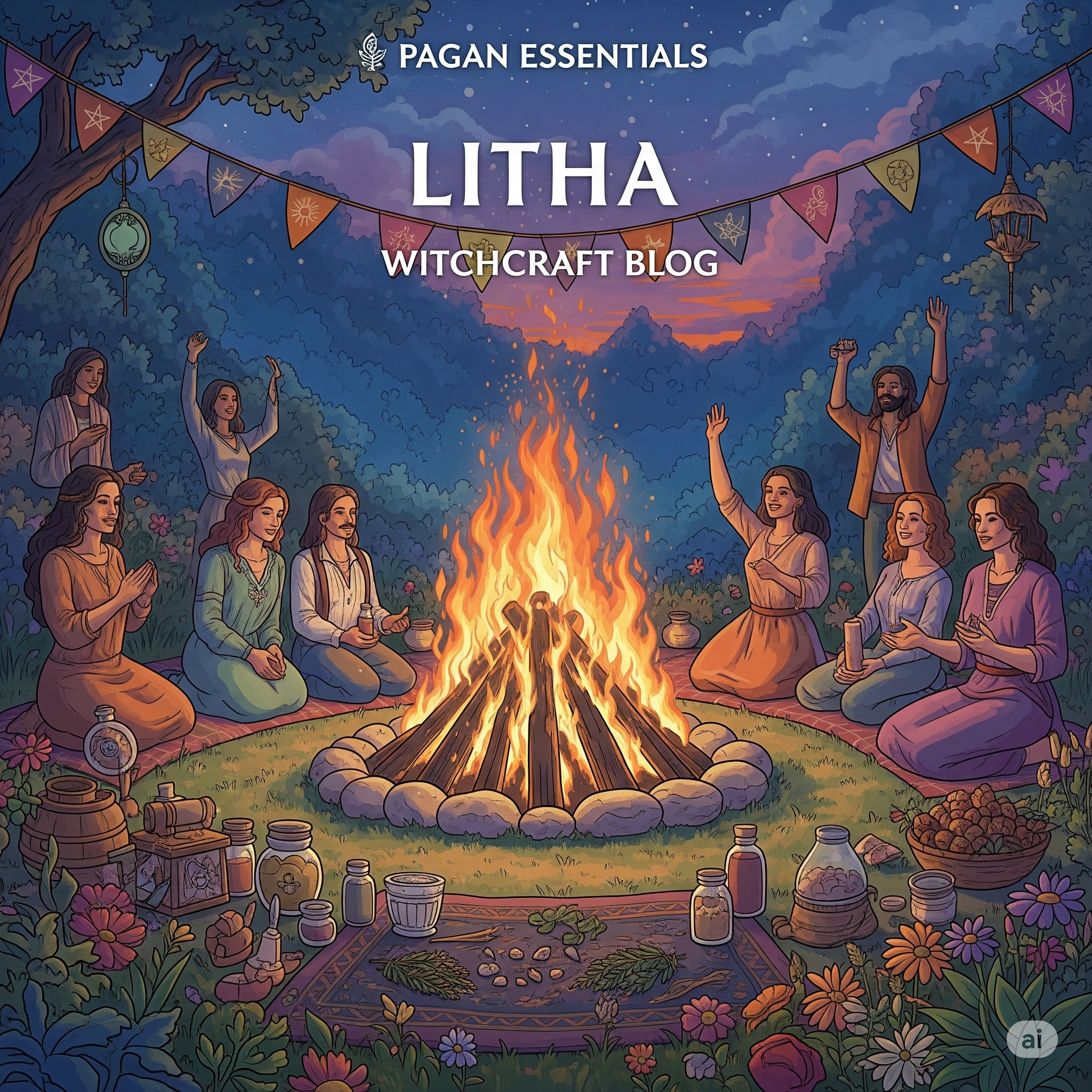
The celebration of the Summer Solstice dates back thousands of years, long before the rise of organized religions. Ancient cultures across the globe recognized and revered this pivotal point in the solar year. From the megalithic structures of Stonehenge, precisely aligned with the solstice sunrise, to the sun worship of the Egyptians and the fire festivals of the Celts, humanity has always acknowledged the sun’s vital role in sustaining life.
Many Litha traditions stem from these ancient practices. Bonfires were lit to honor the sun and offer protection, herbs were gathered for their potent magical properties, and feasts were held to celebrate the bounty of the earth.
The Meaning of Litha
Litha is a time of profound meaning for Pagans:

Litha is a time of profound meaning for Pagans:

  • Peak of Solar Power: It represents the sun at its most powerful, a time of warmth, energy, and vitality.
  • Abundance and Fertility: The earth is fertile, crops are growing, and life is flourishing. It’s a time to acknowledge and appreciate this abundance.
  • Celebration of Light: With the longest daylight hours, Litha is a powerful reminder to embrace light in all its forms โ€“ illumination, joy, and spiritual clarity.
  • Balance: While it’s the peak of the sun’s power, it also marks the turning point where the days will begin to shorten. This subtle shift reminds us of the continuous cycle of life, death, and rebirth.
  • Joy and Merriment: Litha is a time for feasting, dancing, and general revelry, embracing the joyous energy of the season.

To enrich your Litha celebrations, here are some common correspondence:

  • Colors: Gol, yellow, orange, red, green, blue (sky and sea).
  • Deities: Sun gods and goddesses (e.g., Ra, Apollo, Lugh, Sol, Amaterasu), fertility goddesses, mother goddesses.
  • Crystals: Sunstone, Citrine, Carnelian, Amber, Peridot.
  • Herbs & Flowers: Oak, Mistletoe, Lavender, Chamomile, St. John’s Wort, Sunflower, Rose, Daisy.
  • Foods: Seasonal fruits and vegetables, honey, mead, bread, anything sun-shaped.
  • Animals: Bees, butterflies, eagles, lions, horses.
  • Symbols: Sun, fire, oak leaves, circles, wheels.

This ritual can be adapted for solitary practice or a small group.

What you’ll need:

  • A comfortable outdoor space, ideally where you can see the sun (or a window if indoors).
  • A yellow or gold candle.
  • A small offering of fresh fruit, flowers, or a handmade sun symbol.
  • A bowl of water
  • Incense (optional, but a good choice would be frankincense or lemon verbena). * A lighter or matches.
  • Preparation: Cleanse your space, perhaps by sweeping or smudging. Center yourself with a few deep breaths.
  • Cast a Circle (Optional): If you usually cast a circle, do so now.
  • Light the Candle: Light your yellow or gold candle, saying: “Great Sun, at your zenith you stand, Bringing life and warmth to this land. I light this flame to honor your might, And welcome your radiant, abundant light.”
  • Connect with the Sun: Close your eyes and visualize the sun’s warm rays washing over you. Feel its energy filling you with vitality and joy. Imagine the earth beneath you, vibrant and fertile.
  • Offer Gratitude: Hold your offering in your hands and, either aloud or silently, express your gratitude for the sun’s blessings, the abundance of nature, and the joy of the season. You might say: “Blessed be the sun, the bringer of life, Blessed be the earth, bursting with life. I give thanks for this season’s embrace, For abundance, joy, and sacred space.”
  • Offer to the Earth: Place your offering gently on the earth (if outdoors) or near your candle (if indoors).
  • Water Blessing: Dip your fingers into the bowl of water and sprinkle a few drops around your space, saying: “Water of life, flow ever free, Cleanse and refresh, bringing purity.”
  • Meditation/Reflection: Take a few moments to sit in the light of the candle, reflecting on your intentions for the coming half of the year. What do you wish to cultivate? What abundance do you seek?
  • Feast and Merriment (Optional): After your ritual, enjoy a light, seasonal snack and drink. Connect with loved ones or simply enjoy the moment.
  • Close the Ritual: Thank the sun, the earth, and any deities you worked with. Extinguish your candle safely. If you cast a circle, open it now.

Posted on 1 Comment

What Type of Witch am I??

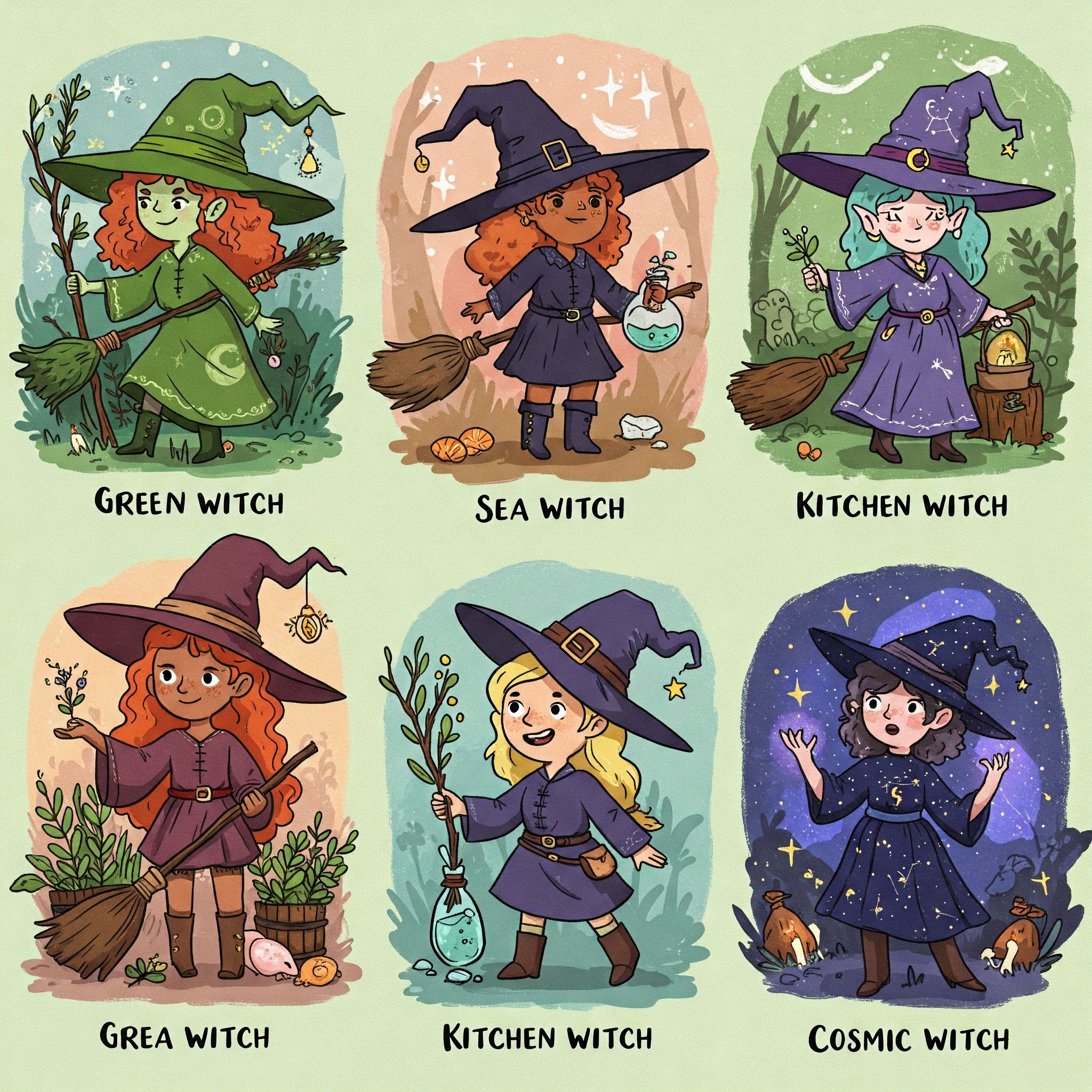
The world of witchcraft is incredibly diverse, with many different paths and traditions. Finding out “what type” of witch you are is less about fitting into a rigid category and more about understanding your own inclinations, strengths, and the practices that resonate most deeply with you.

Here’s a breakdown of ways to explore and understand your own unique witchcraft:

1. Self-Reflection and Introspection:

 * What are you naturally drawn to? Think about your hobbies, interests, and what makes you feel connected and alive. Are you drawn to nature, history, art, helping others, knowledge, or something else entirely? These natural inclinations often weave into your craft.

 * What kind of magic feels most intuitive to you? Do you feel a pull towards working with herbs, crystals, energy, deities, spirits, the elements, or something else?

 * What are your values and ethics? Your magical practice should ideally align with your core beliefs.

 * What kind of impact do you want your magic to have? Are you interested in personal growth, healing, protection, manifestation, community work, or something else?

 * How do you best connect with the spiritual or magical? Is it through meditation, ritual, spending time in nature, art, music, or other means?

2. Exploring Different Paths and Traditions:

Research different types of witchcraft to see what sparks your interest. Keep in mind that these are not always strict categories, and many witches blend aspects from different paths:

 * Eclectic Witchcraft:

This is a very common path where individuals draw inspiration and practices from various traditions and create their own unique blend.

 * Hereditary Witchcraft:

Practices and knowledge passed down through family lines.

 * Traditional Witchcraft:

Often focuses on folklore, spirit work, and historical practices of a specific region.

 * Gardnerian/Wiccan:

Initiatory traditions with specific structures, rituals, and deities.

 * Dianic Witchcraft:

Often focuses on the Divine Feminine and may be women-centered.

 * Hedge Witchcraft:

Often solitary practitioners who work closely with nature, herbs, and folk magic.

 * Kitchen Witchcraft:

Magic woven into everyday tasks, especially cooking and home care.

 * Green Witchcraft:

Focuses on plants, herbs, and nature-based magic.

 * Crystal Witchcraft:

Working with the energy and properties of crystals.

 * Sea Witchcraft:

Drawing power from the ocean and its tides.

 * Cosmic Witchcraft:

Working with celestial energies and astrology.

 * Death Witchcraft:

Working with spirits of the dead and ancestor veneration (this is a serious path and requires respect and understanding).

3. Experimentation and Practice:

 * Try different things: Don’t be afraid to experiment with various forms of spellwork, divination, and ritual. See what feels right and what yields results (even small ones).

 * Keep a journal: Document your experiences, observations, and feelings during your magical workings. This can help you identify patterns and what resonates with you.

 * Connect with nature: Spend time outdoors and observe the cycles of the earth. This can inform your practice, regardless of your specific path.

4. Learning and Research:

 * Read books: Explore a wide range of books on witchcraft from different perspectives. Be discerning and look for reputable authors.

 * Take workshops or courses: If available in your area or online, these can provide structured learning and connect you with other practitioners.

 * Explore online communities: Engage with online forums and groups, but be mindful of the information shared and prioritize critical thinking.

5. Trust Your Intuition:

Ultimately, the most important aspect of finding your “type” of witch is listening to your own inner voice and intuition. What truly calls to you? What feels authentic and powerful?
It’s important to remember:

 * Labels can be helpful but aren’t always necessary. You might find that you resonate with aspects of several different paths, and that’s perfectly okay.

 * Your path may evolve over time. As you learn and grow, your practice may shift and change.

 * There’s no right or wrong way to be a witch. Authenticity and ethical practice are key.

Take your time, be patient with yourself, and enjoy the journey of discovering your own unique magical identity. It’s a deeply personal and rewarding exploration! Since you’re in Manitowoc, Wisconsin, you might also consider looking for local metaphysical shops or pagan gatherings (if you feel comfortable) as a way to connect with others on similar paths.


Posted on 1 Comment

Blooming into Balance: Celebrating Ostara 2025

The air is changing. A gentle warmth replaces the winter’s chill, and the world awakens with a vibrant burst of life. Ostara, the Spring Equinox, is upon us! This Pagan Sabbat marks the moment when day and night are of equal length, a perfect balance before the sun’s power begins to dominate. In 2025, we’ll be celebrating Ostara on Thursday, March 20th.

Ostara is a time of renewal, rebirth, and growth. It’s a celebration of the Goddess Ostara (or Eostre), associated with dawn, spring, and fertility, and a welcoming of the returning sun. Let’s delve into how you can celebrate this vibrant Sabbat, whether you’re a solitary practitioner or part of a coven.

๐Ÿ’ซ Correspondences of Ostara

 ๐Ÿ’ซ Deities:

Ostara/Eostre, Persephone, Flora, Green Man, any deities associated with spring, dawn, and fertility.

 ๐Ÿ’ซ Colors:

Pastel shades of green, yellow, pink, white, and light blue.

 ๐Ÿ’ซ Symbols:

Eggs, rabbits, hares, flowers (especially daffodils, tulips, and crocuses), seeds, budding trees, lambs, butterflies.

 ๐Ÿ’ซ Herbs and Flowers:

Daffodils, tulips, crocuses, violets, honeysuckle, sage, and anything new and green.

 ๐Ÿ’ซ Stones:

Rose quartz, aquamarine, moonstone, and any light-colored crystals.

 ๐Ÿ’ซ Incense/Oils:

Floral scents like jasmine, rose, and violet, as well as light, fresh scents like lemon and sandalwood.

 ๐Ÿ’ซ Foods:

Eggs (decorated and plain), leafy greens, spring vegetables, seeds, honey cakes, and fruit.

_______________________________

โœจ Altar Setup

Your Ostara altar should reflect the vibrancy & colors of spring and can be in or outdoors.

Consider:

 โœจ A white or pastel-colored altar cloth.

 โœจ Fresh flowers in a vase.

 โœจ Decorated eggs or a nest of eggs.

 โœจ Images or figurines of rabbits or hares.

 โœจ Seeds or small potted plants.

 โœจ Candles in Ostara colors.

 โœจ Crystals that resonate with the season.

 โœจ A bowl of spring water.

 โœจ A representation of your chosen deities.

_______________________________

๐ŸŒ›Rituals for Ostara

 ๐ŸŒ› Planting Ritual:

Plant seeds or seedlings to symbolize new beginnings and growth. As you plant, speak your intentions aloud.

 ๐ŸŒ› Equinox Meditation:

Find a quiet space and meditate on the balance of light and dark, the renewal of nature, and your own personal growth.

 ๐ŸŒ› Journaling:

Reflect on your goals and intentions for the coming season. Write about what you want to grow and cultivate in your life.

๐ŸŒ› Offering Ritual:

Make offerings to Ostara or your chosen deities, such as flowers, seeds, or honey cakes.

 ๐ŸŒ› Spring Cleansing Ritual:

Cleanse your home and sacred space, both physically and energetically, to make way for new energy. Use sage, palo santo, or spring-scented essential oils.

_______________________________

Solitary Practitioner Activities

 ๐ŸŒŸ Nature Walk:

Spend time in nature, observing the signs of spring. Gather flowers, leaves, or stones to add to your altar.

 ๐ŸŒŸ Crafting:

Create Ostara-themed crafts, such as egg decorations, flower crowns, or nature mandalas.

 ๐ŸŒŸ  Baking:

Bake spring-themed treats, such as honey cakes or egg-rich pastries.

 ๐ŸŒŸ  Dawn Meditation:

Wake up early and greet the sunrise, welcoming the return of the light.

_______________________________

Coven Activities

๐ŸŒŸ Plant a communal garden or tree, symbolizing the coven’s shared growth and intentions.

Continue reading Blooming into Balance: Celebrating Ostara 2025
Posted on 1 Comment

The Different Types of Witchcraft

Witchcraft is a diverse and multifaceted practice that encompasses various traditions and practices. Understanding the different types of witchcraft can provide insight into the rich tapestry of this ancient craft. There are several different types of witchcraft, but some of the most common include:

Wicca: Wicca is a modern pagan religion that incorporates elements of witchcraft, nature worship, and magic. It focuses on the worship of the Goddess and the God, along with the practice of rituals, spellcasting, and the observance of the Wheel of the Year. It also adheres to ethical principles such as the Wiccan Rede.

Pagan Witchcraft: Pagan witchcraft draws inspiration from pre-Christian nature-based religions. It emphasizes a deep connection with nature, honoring deities, and celebrating seasonal cycles.

Traditional witchcraft: Traditional witchcraft refers to various pre-modern witchcraft practices that are deeply rooted in folklore and local traditions. It is a practice that has been passed down from generation to generation. It often involves the use of herbs, oils, and crystals for healing and divination and working with spirits, connecting with the land, and folk magic.

Chaos magick: Chaos magick is a type of witchcraft that emphasizes the power of the mind. It is often used for personal transformation and empowerment. Practitioners believe that belief itself is the key ingredient for successful magic rather than adherence to specific rituals or dogmas.

Kitchen Witchcraft: Kitchen Witchcraft is a type of witchcraft that centers around domestic activities, such as cooking, herbalism, and potion=making. Practitioners of Kitchen Witchcraft often incorporate magic into their everyday lives and can be considered the โ€œhomemakersโ€ of the magical world.

Hedge Witchcraft: Hedge Witchcraft is associated with connecting and journeying between different realms or dimensions. Hedge Witches often engage in spirit work, divination, healing, and herbalism. They bridge the gap between the physical and spiritual worlds.

Eclectic Witchcraft: Eclectic Witchcraft involves borrowing practices and beliefs from multiple traditions, creating a personalized and flexible approach to witchcraft. Eclectic witches often mix different magical systems, symbols, and rituals to suit their individual preferences.

Shamanic Witchcraft: Shamanic Witchcraft combines elements of shamanism and witchcraft. Practitioners focus on journeying into altered states of consciousness, connecting with their spirit guides or power animals, and using trance work for healing and divination.

Hereditary Witchcraft: Hereditary Witchcraft is passed down through family lineage. It emphasizes ancestral connections, inherited wisdom, and practices specific to a particular family or cultural background.

These are just a few examples of the diverse spectrum of witchcraft practices and there may be variations and subcategories within each. It is important to note that the actual practices and beliefs within each type can vary significantly among individuals and communities.

No matter what type of witchcraft you practice, it is important to remember that it is a spiritual practice. It should be approached with respect and reverence.