Pagan Essentials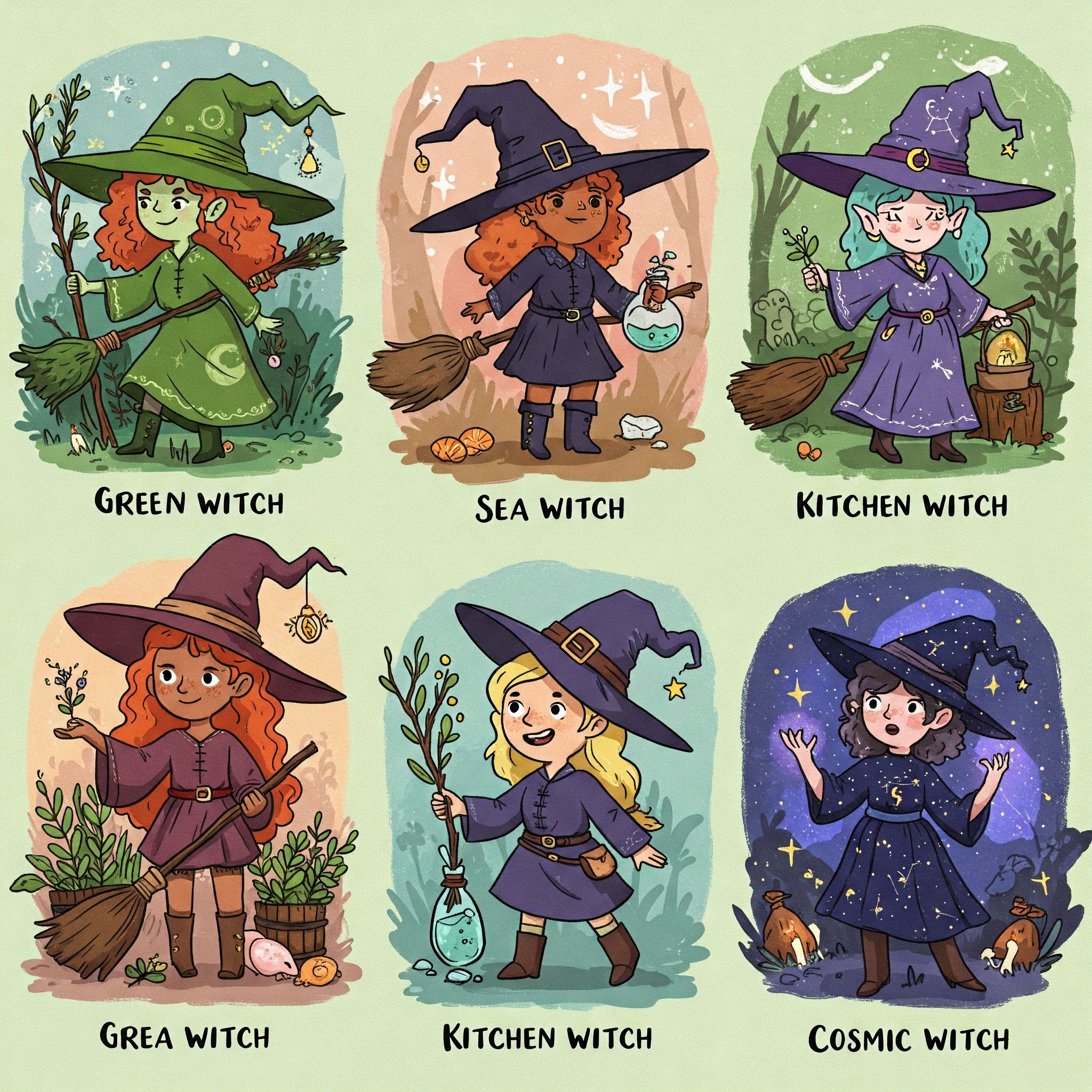
The world of witchcraft is incredibly diverse, with many different paths and traditions. Finding out “what type” of witch you are is less about fitting into a rigid category and more about understanding your own inclinations, strengths, and the practices that resonate most deeply with you.

Here’s a breakdown of ways to explore and understand your own unique witchcraft:
1. Self-Reflection and Introspection:
* What are you naturally drawn to? Think about your hobbies, interests, and what makes you feel connected and alive. Are you drawn to nature, history, art, helping others, knowledge, or something else entirely? These natural inclinations often weave into your craft.
* What kind of magic feels most intuitive to you? Do you feel a pull towards working with herbs, crystals, energy, deities, spirits, the elements, or something else?
* What are your values and ethics? Your magical practice should ideally align with your core beliefs.
* What kind of impact do you want your magic to have? Are you interested in personal growth, healing, protection, manifestation, community work, or something else?
* How do you best connect with the spiritual or magical? Is it through meditation, ritual, spending time in nature, art, music, or other means?
2. Exploring Different Paths and Traditions:
Research different types of witchcraft to see what sparks your interest. Keep in mind that these are not always strict categories, and many witches blend aspects from different paths:
* Eclectic Witchcraft:
This is a very common path where individuals draw inspiration and practices from various traditions and create their own unique blend.
* Hereditary Witchcraft:
Practices and knowledge passed down through family lines.
* Traditional Witchcraft:
Often focuses on folklore, spirit work, and historical practices of a specific region.
* Gardnerian/Wiccan:
Initiatory traditions with specific structures, rituals, and deities.
* Dianic Witchcraft:
Often focuses on the Divine Feminine and may be women-centered.
* Hedge Witchcraft:
Often solitary practitioners who work closely with nature, herbs, and folk magic.
* Kitchen Witchcraft:
Magic woven into everyday tasks, especially cooking and home care.
* Green Witchcraft:
Focuses on plants, herbs, and nature-based magic.
* Crystal Witchcraft:
Working with the energy and properties of crystals.
* Sea Witchcraft:
Drawing power from the ocean and its tides.
* Cosmic Witchcraft:
Working with celestial energies and astrology.
* Death Witchcraft:
Working with spirits of the dead and ancestor veneration (this is a serious path and requires respect and understanding).
3. Experimentation and Practice:
* Try different things: Don’t be afraid to experiment with various forms of spellwork, divination, and ritual. See what feels right and what yields results (even small ones).
* Keep a journal: Document your experiences, observations, and feelings during your magical workings. This can help you identify patterns and what resonates with you.
* Connect with nature: Spend time outdoors and observe the cycles of the earth. This can inform your practice, regardless of your specific path.
4. Learning and Research:
* Read books: Explore a wide range of books on witchcraft from different perspectives. Be discerning and look for reputable authors.
* Take workshops or courses: If available in your area or online, these can provide structured learning and connect you with other practitioners.
* Explore online communities: Engage with online forums and groups, but be mindful of the information shared and prioritize critical thinking.
5. Trust Your Intuition:
Ultimately, the most important aspect of finding your “type” of witch is listening to your own inner voice and intuition. What truly calls to you? What feels authentic and powerful?
It’s important to remember:
* Labels can be helpful but aren’t always necessary. You might find that you resonate with aspects of several different paths, and that’s perfectly okay.
* Your path may evolve over time. As you learn and grow, your practice may shift and change.
* There’s no right or wrong way to be a witch. Authenticity and ethical practice are key.
Take your time, be patient with yourself, and enjoy the journey of discovering your own unique magical identity. It’s a deeply personal and rewarding exploration! Since you’re in Manitowoc, Wisconsin, you might also consider looking for local metaphysical shops or pagan gatherings (if you feel comfortable) as a way to connect with others on similar paths.
Ivyjaded Wyldfyre
- October 2026 Moon Magick Calendar
 Follow October’s lunar rhythm with key phase dates, practical rituals, and reflective prompts for release, intention, action, and celebration.
 - The Harvest Moon in Aries
 On Saturday, September 26, the full Harvest Moon rises in fiery Aries — a moon for claiming your harvest and cutting away what is done growing. This simple gathering ritual helps you name what has ripened, release what you no longer need to carry, and commit to one brave step, with tarot, numerology, and bespoke spellwork to deepen the work.
 - Harnessing the August New Moon Solar Eclipse: Celestial Power, Correspondences and Ritual

When the New Moon aligns directly between the Earth and the Sun, a solar eclipse occurs—a rare celestial event that amplifies lunar magic exponentially. While a standard New Moon represents fresh starts and quiet intention, a Solar Eclipse accelerates fate, tears away outdated energetic structures, and opens a portal for radical transformation. During the heat […]
- Magic in the Margins: The May 31, 2026 Blue Micromoon
 We are standing on the precipice of a rare and beautifully intense celestial event. On May 31, 2026, the night sky will host a Calendrical Blue Moon…
 - The Pink Moon: Blossoming into Your Power
 Welcome, seeker. As the wheel turns and the earth softens, we approach one of the most vibrant lunations of the year. On April 2nd, 2026, the sky will be graced by the Full Pink Moon. Despite its name, the moon won’t literally turn a rosy hue, but its spiritual “color” is one of undeniable growth,… Read more: The Pink Moon: Blossoming into Your Power