Posted on — 1 Comment

Moon Phases and Magick: Working with Lunar Energies for Enhanced Spells

Welcome, fellow seekers, to Pagan Essentials! I’m Ivyjaded Wyldfyre, and today we’ll delve into the enchanting connection between the moon’s celestial dance and the potency of our magickal workings. The moon, our luminous neighbor, doesn’t just illuminate the night sky; it casts a subtle yet powerful influence upon our world and, most importantly, our spells. Understanding and aligning your craft with the lunar cycle can significantly amplify your intentions and bring forth more potent results.

Just as the tides ebb and flow with the moon’s pull, so too do the energetic currents that weave through our existence. Each phase of the moon carries its own unique vibrational signature, making certain phases more conducive to specific types of magick. Let’s explore the primary lunar phases and how to harness their energy:

  • New Moon (Dark Moon): This is the phase of introspection, new beginnings, and planting seeds of intention. The energy is subtle, inward-focused, and perfect for shadow work, banishing unwanted influences, and conceiving new projects or goals. Spells for setting intentions, breaking bad habits, and seeking clarity are particularly potent now.
  • Waxing Crescent: As a sliver of light begins to grow, so does the energy around your intentions. This phase is ideal for attracting positive influences, setting goals in motion, and nurturing new ventures. Spells for growth, attraction, and inspiration thrive during this time.
  • First Quarter: This phase brings a surge of dynamic energy and a push to take action on the intentions set during the New Moon. It’s a time for courage, overcoming obstacles, and making decisive moves. Spells focused on strength, motivation, and taking action are well-suited here.
  • Waxing Gibbous: The light continues to expand, and the energy builds towards fullness. This is a time for refinement, growth, and bringing your intentions closer to fruition. Spells for abundance, prosperity, healing, and manifestation are particularly effective.
  • Full Moon: The peak of lunar energy! The veil between worlds is thin, making this the most potent time for almost any form of magick. Emotions are heightened, and energy is abundant. Spells for charging tools, divination, love, healing, protection, and manifestation are incredibly powerful. Be mindful of the amplified energy and ground yourself.
  • Waning Gibbous: As the light begins to recede, the energy shifts towards releasing and banishing. This is a time for gratitude for what has manifested and for gently letting go of what no longer serves you. Spells for releasing negativity, breaking ties, and diminishing unwanted influences are favored.
  • Third Quarter (Last Quarter): The energy continues to decline, making it a potent time for banishing, releasing, and cleansing. This phase supports inner reflection, letting go of burdens, and preparing for a new cycle. Spells for banishing, protection, and breaking hexes are effective now.
  • Balsamic Moon (Darkening Moon): The final phase before the New Moon, this is a time for deep rest, reflection, and releasing the last vestiges of the previous cycle. It’s not typically a time for casting new spells but rather for inner work and preparation for the new beginnings to come.

To effectively work with lunar energies, start by observing the moon’s phases. Many calendars and lunar apps can help you track its cycle. Once you know the current phase, consider how its energetic qualities align with your magickal intentions.

  • Match Your Intentions: Choose spellwork that resonates with the energy of the current moon phase. For example, don’t try to banish something on the Waxing Crescent, as the energy is geared towards growth and attraction.
  • Charge Your Tools: Place your crystals, tarot decks, and other magickal tools under the light of the Full Moon to cleanse and charge them with potent lunar energy.
  • Time Your Rituals: If possible, schedule your rituals to coincide with the most appropriate lunar phase for your desired outcome.
  • Incorporate Lunar Symbolism: Use moon imagery, colors associated with the moon (silver, white, grey), and lunar deities in your spells and rituals.

By consciously aligning your magickal practices with the cycles of the moon, you tap into a powerful and consistent source of energy, enhancing the effectiveness and flow of your spells. May your craft be illuminated by the wisdom of the lunar light!

Posted on — 1 Comment

Blooming into Balance: Celebrating Ostara 2025

The air is changing. A gentle warmth replaces the winter’s chill, and the world awakens with a vibrant burst of life. Ostara, the Spring Equinox, is upon us! This Pagan Sabbat marks the moment when day and night are of equal length, a perfect balance before the sun’s power begins to dominate. In 2025, we’ll be celebrating Ostara on Thursday, March 20th.

Ostara is a time of renewal, rebirth, and growth. It’s a celebration of the Goddess Ostara (or Eostre), associated with dawn, spring, and fertility, and a welcoming of the returning sun. Let’s delve into how you can celebrate this vibrant Sabbat, whether you’re a solitary practitioner or part of a coven.

💫 Correspondences of Ostara

 💫 Deities:

Ostara/Eostre, Persephone, Flora, Green Man, any deities associated with spring, dawn, and fertility.

 💫 Colors:

Pastel shades of green, yellow, pink, white, and light blue.

 💫 Symbols:

Eggs, rabbits, hares, flowers (especially daffodils, tulips, and crocuses), seeds, budding trees, lambs, butterflies.

 💫 Herbs and Flowers:

Daffodils, tulips, crocuses, violets, honeysuckle, sage, and anything new and green.

 💫 Stones:

Rose quartz, aquamarine, moonstone, and any light-colored crystals.

 💫 Incense/Oils:

Floral scents like jasmine, rose, and violet, as well as light, fresh scents like lemon and sandalwood.

 💫 Foods:

Eggs (decorated and plain), leafy greens, spring vegetables, seeds, honey cakes, and fruit.

_______________________________

✨ Altar Setup

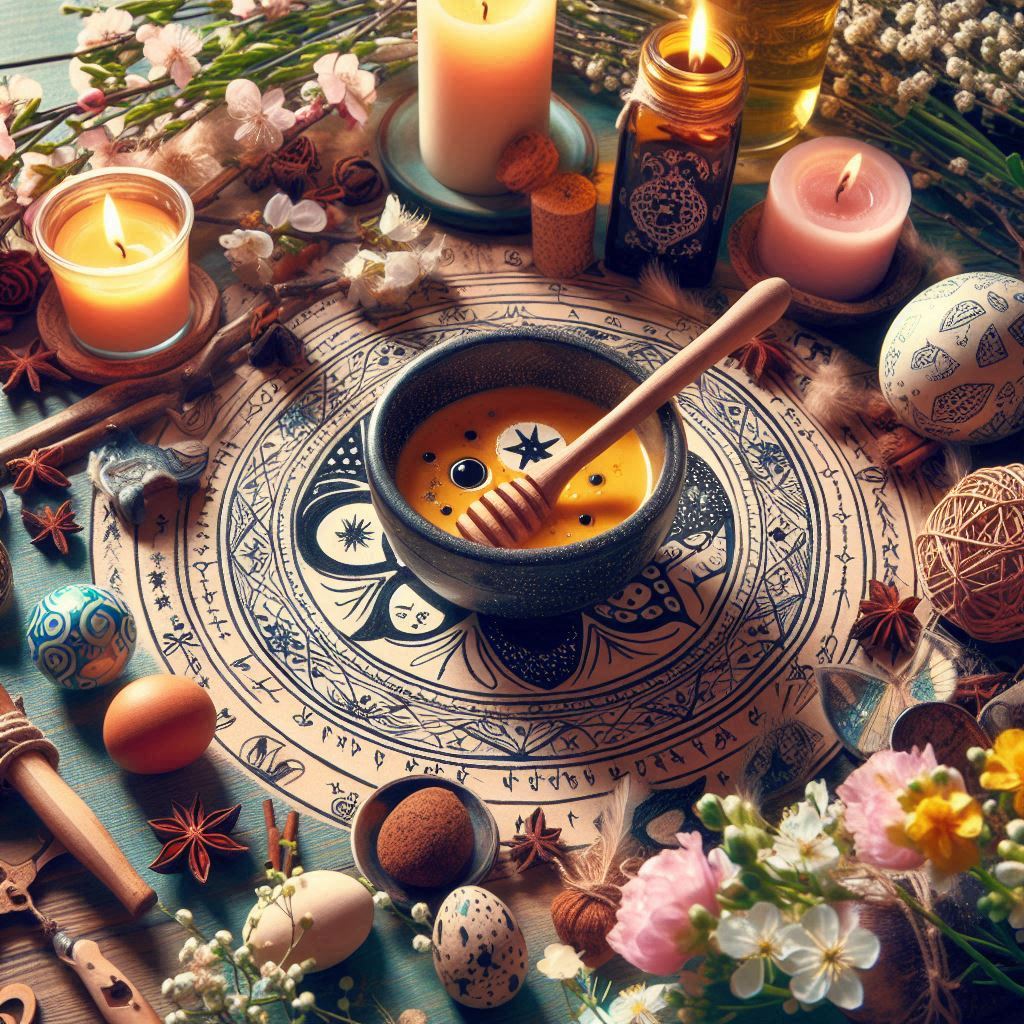
Your Ostara altar should reflect the vibrancy & colors of spring and can be in or outdoors.

Consider:

 ✨ A white or pastel-colored altar cloth.

 ✨ Fresh flowers in a vase.

 ✨ Decorated eggs or a nest of eggs.

 ✨ Images or figurines of rabbits or hares.

 ✨ Seeds or small potted plants.

 ✨ Candles in Ostara colors.

 ✨ Crystals that resonate with the season.

 ✨ A bowl of spring water.

 ✨ A representation of your chosen deities.

_______________________________

🌛Rituals for Ostara

 🌛 Planting Ritual:

Plant seeds or seedlings to symbolize new beginnings and growth. As you plant, speak your intentions aloud.

 🌛 Equinox Meditation:

Find a quiet space and meditate on the balance of light and dark, the renewal of nature, and your own personal growth.

 🌛 Journaling:

Reflect on your goals and intentions for the coming season. Write about what you want to grow and cultivate in your life.

🌛 Offering Ritual:

Make offerings to Ostara or your chosen deities, such as flowers, seeds, or honey cakes.

 🌛 Spring Cleansing Ritual:

Cleanse your home and sacred space, both physically and energetically, to make way for new energy. Use sage, palo santo, or spring-scented essential oils.

_______________________________

Solitary Practitioner Activities

 🌟 Nature Walk:

Spend time in nature, observing the signs of spring. Gather flowers, leaves, or stones to add to your altar.

 🌟 Crafting:

Create Ostara-themed crafts, such as egg decorations, flower crowns, or nature mandalas.

 🌟  Baking:

Bake spring-themed treats, such as honey cakes or egg-rich pastries.

 🌟  Dawn Meditation:

Wake up early and greet the sunrise, welcoming the return of the light.

_______________________________

Coven Activities

🌟 Plant a communal garden or tree, symbolizing the coven’s shared growth and intentions.

Continue reading Blooming into Balance: Celebrating Ostara 2025
Posted on

Celebrating Beltane: The Fire of Summer’s Beginning


Beltane Altar

As the wheel of the year turns and the vibrant energy of spring reaches its zenith, we find ourselves at the threshold of summer, marked by the ancient Pagan Sabbat of Beltane. This festive holiday, celebrated on May 1st in the Northern Hemisphere and October 31st in the Southern Hemisphere, is a time of fire, fertility, and the harmonious balance of energies.

Beltane is a season of heightened spiritual energy. The thinning of the veil between the worlds of the living and the dead is a powerful catalyst for magic and divination, making Beltane an auspicious time to connect with the spiritual realm. During this season, the energies of the natural world and the divine become more accessible, enabling practitioners to tap into deeper spiritual truths and connect with the higher forces of the universe. Beltane represents a unique opportunity to unlock the transformative power of magic and divination, allowing us to break free from old patterns and beliefs and embrace new possibilities for growth and change.


Beltane, or May Day, is a time when the veil between worlds is thin, similar to its opposite point on the Wheel of the Year, Samhain. It is a day when the Earth is teeming with life, fertility, and the potential for abundant growth. The God and Goddess are often portrayed in equal power during this time, symbolizing the unity of masculine and feminine energies.


Beltane has origins in the Gaelic/Celtic cultures of Ireland, Scotland, and the Isle of Man. The name Beltane comes from the Gaelic language, with “bel” meaning “bright” or “radiant” and “tane” meaning “fire”. It was traditionally celebrated on the night of April 30th and May 1st, which is the halfway point between the spring equinox and summer solstice. The festival marks the beginning of summer and the end of winter, and is a time to celebrate fertility, growth, and the power of the sun. It was also a time for livestock to be driven from their winter pastures to their summer grazing grounds, and for farmers to pray for a good harvest. Over time, Beltane has been influenced by other cultures and religions, such as Christianity, but its origins can still be traced back to the ancient Celtic traditions.


One of the most iconic symbols of Beltane is the Maypole. The pole represents the phallus of the God, and the ribbons and the dance around it symbolize the fertility of the Goddess. Communities would rise at dawn to gather flowers and green branches, weave ribbons, and celebrate the fertility of the land.

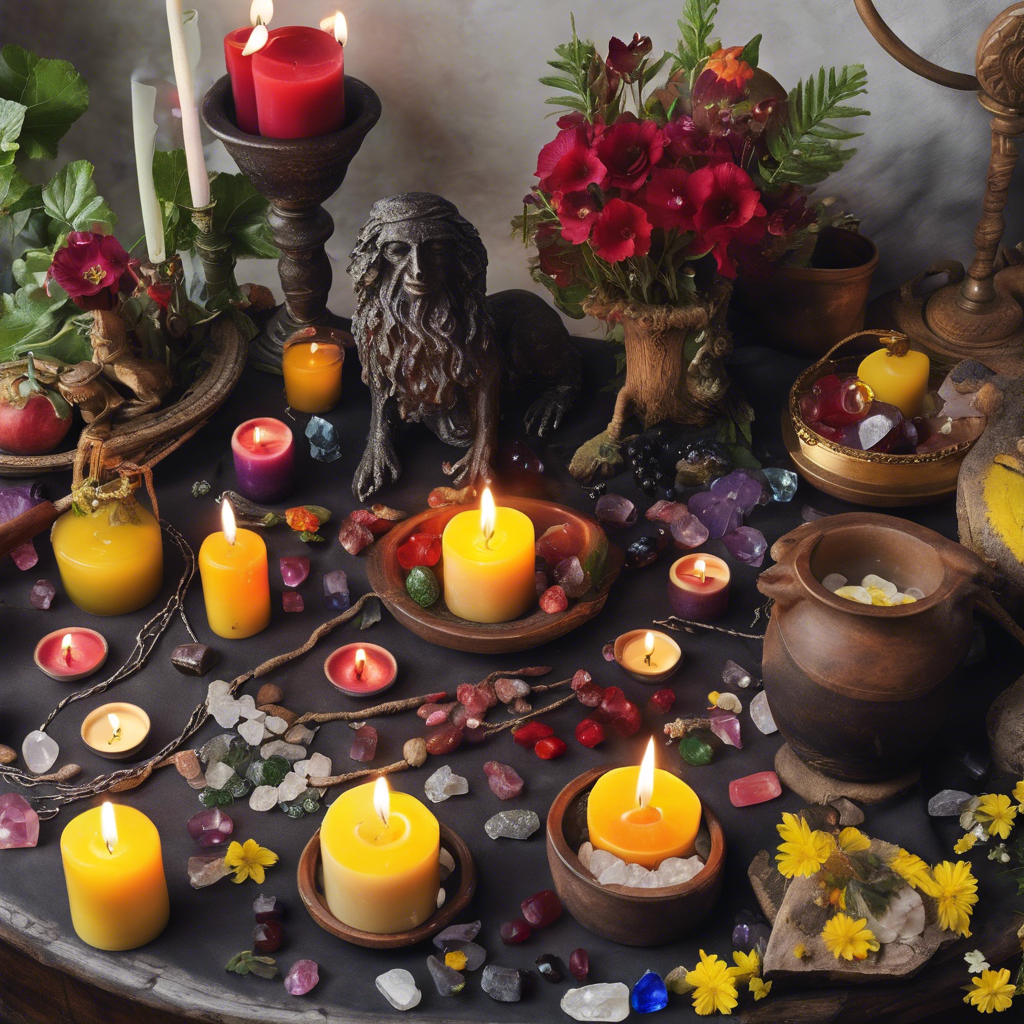
There are many creative ways to set up a Beltane altar. Here are a few ideas:

  1. Decorate your altar with brightly colored flowers, such as daisies, primroses, roses, lilacs, and hawthorn blossoms to represent fertility and spring growth.
  2. Add a Maypole to your altar. You can make a miniature version using ribbons, or decorate a larger one with flowers and streamers.
  3. Use a cauldron or chalice to represent the Divine Feminine, the womb of creation, and the element of water. Include a symbol or picture to represent the Horned God who represents male energy and fertility.
  4. Place symbols of fertility on your altar, such as eggs, seeds, and baby animals.
  5. Include fresh herbs: Like rosemary, thyme, lavender, and mint, which can be used for cooking, smudging, or as offerings.
  6. Include candles to represent the element of fire and the sun’s power. Choose bright, warm colors like red, orange or yellow.
  7. Use crystals and gemstones associated with Beltane, such as emerald, rose quartz, and sunstone.
  8. Add symbols of the Green Man and the Goddess, such as statues or pictures.
  9. Include foods associated with Beltane, such as honey, strawberries, and fresh herbs.
  10. Finally, don’t forget to smudge your altar with sage or other cleansing herbs to purify and prepare the space.

Using these symbols on your Beltane altar can help you to tap into the energy of the season and honor the traditions and beliefs of this ancient festival.

Fire still plays a prominent role in modern Beltane celebrations. Lighting a bonfire or candle represents the Sun’s life-giving energy. In Scotland, the Beltane Fire Festival is a spectacular event that draws thousands to witness the rekindling of life and light.

Beltane fire festivals have been celebrated for centuries, and the specific details of the celebrations varied depending on the specific region and culture. Here is a general overview of how Beltane fire festivals were set up and celebrated:

  1. Preparation and gathering: In the days leading up to Beltane, preparations were made for the festival. People would clean and decorate their homes, and gather food and other offerings for the celebrations. Communities would come together to prepare for the festivities.
  2. Bonfire: A large bonfire was the focal point of the Beltane celebrations. It was traditionally lit by a sacred fire, which was kindled by friction between two pieces of wood or a fire struck from flint. The fire represented the power of the sun and was seen as a way to purify and cleanse the land and the people.
  3. Dancing and music: The fire was surrounded by dancing, music and revelry. Maypole dancing was a popular activity during Beltane, and people would dance around the maypole holding brightly colored ribbons.
  4. Rituals and offerings: Beltane was a time for making offerings and performing rituals to honor the gods and nature spirits. People would offer food, drink, flowers and other gifts to the sacred fire and other altars that were set up for the festival.
  5. Feasting and celebration: After the rituals and offerings were made, people would gather together to feast and celebrate. Food and drink were shared, and people would continue to dance, sing and make merry around the fire.

Overall, Beltane fire festivals were a time of communal celebration, with people coming together to honor the changing of the seasons, make offerings to the gods and nature spirits, and connect with the power of the sun and the earth. While the specifics of the celebrations varied from place to place, the core elements of feasting, dancing, music and ritual were a part of all Beltane fire festivals.

Beltane is also a popular time for handfasting, a traditional Pagan wedding ceremony. Couples would jump over the Beltane fire to bring luck and fertility to their union.

Handfasting is a traditional pagan ritual where a couple publicly acknowledges their love and commitment to each other before the divine, or however they individually define their beliefs. It is often referred to as “tying the knot” and is similar to a wedding ceremony. Beltane is considered a particularly auspicious and appropriate time for handfasting ceremonies for a few reasons:

  1. Fertility and Love: Beltane is a celebration of fertility, love and union. It is believed that the Beltane energy can help to bless the union and increase the fertility of the couple.
  2. Heightened Energy: Beltane falls between the spring equinox and the summer solstice and represents the peak of spring energy. This is seen as a particularly powerful and potent time for magic and rituals.
  3. Celtic Traditions: Handfasting has its roots in Celtic traditions, and the Celtic festival of Beltane was an important celebration in the wheel of the year. Handfasting during Beltane is seen as a way to honor and connect with these traditions.
  4. Connecting to Nature: Beltane celebrates the return of the fertility of the earth, and handfasting during this time is seen as a way to connect with and honor this natural cycle.

Overall, Beltane is seen as a powerful and appropriate time to celebrate love and commitment through handfasting, connecting the couple with the energy of the season to bless their union and honor the greater natural cycles of life.

Today, Pagans continue to celebrate Beltane with fire, dancing, and rituals that honor the balance of energies. It’s a time for planting seeds, both literally in the garden and metaphorically in our lives. Beltane invites us to embrace the passion and potential within and around us, to engage in the dance of life with joy and anticipation for the summer to come.

Modern-day Beltane Sabbats are celebrated differently from traditional or ancient celebrations, as it has adapted itself to modern-day cultures, practices, and beliefs. Here are a few ways in which modern-day Beltane Sabbats may be celebrated:

  1. Community Events: Modern pagan communities often have Beltane Sabbat celebrations that bring people together to celebrate the season with music, dancing, and other festivities. These events may include workshops, performances, and other forms of entertainment.
  2. Personal Rituals: Many people celebrate Beltane through personal rituals that may involve meditation, lighting candles, making offerings to the earth, or performing a spell or ritual.
  3. Maypole Dancing: Maypole dancing is still a popular practice in many modern-day Beltane celebrations. People dance around a maypole, weaving ribbons around it to symbolize the union of the masculine and feminine energies.
  4. Feasting: The tradition of feasting and sharing food is still an important part of many modern-day Beltane celebrations. People gather with loved ones and friends to enjoy the bounty of the earth and celebrate spring.
  5. Nature Walks: Many people celebrate Beltane by taking walks in nature, visiting local gardens or parks, and connecting with the earth. Some may also participate in outdoor activities like hiking, camping, or nature photography.
  6. Integrating Eco-friendly rituals: With the growing awareness of the environmental impact of human activities, many pagan communities are working to integrate environmentally sustainable practices into their Beltane celebrations. As a community that honors nature and the earth, it is essential that we seek to minimize our ecological footprint and promote the health of the planet. Some ways we can achieve this include using biodegradable or reusable materials for decorations, reducing waste by using compostable plates and utensils, and choosing locally sourced or seasonal food for feasting. We can also incorporate eco-friendly rituals, such as offering seeds or plants to the earth as a symbol of regeneration, or engaging in outdoor activities that connect us with nature. Integrating such environmentally sustainable practices in our Beltane celebrations is a way of honoring the earth and deepening our connection with the natural world.

Overall, modern-day Beltane Sabbats offer a variety of ways for people to celebrate the season in a way that is meaningful and relevant to their individual practices and beliefs. While the specifics of the celebrations may vary, the core themes of fertility, renewal, and community continue to be celebrated and honored.


Beltane is a reminder of the enduring cycle of life, death, and rebirth. As we celebrate, we connect with our ancestors and the natural world, recognizing the fires of creativity and life that burn within us all.

I trust that you relished this elucidation on the Beltane celebration. Should you desire any particular facets to be expounded upon or incorporated into your blog, kindly apprise me and I shall gladly oblige. 🌷🔥

Beltane Fire Festival


(1) What Is Beltane? And, How Do You Celebrate It? – The Pagan Grimoire. https://www.pagangrimoire.com/what-is-beltane-celebrate/.
(2) Beltane: Sabbat History, Traditions & 15+ Ways to Celebrate. https://otherworldlyoracle.com/beltane/.
(3) The Origins and Practices of Holidays: Beltane and The Last Day … – BPL. https://www.bpl.org/blogs/post/the-origins-and-practices-of-holidays-beltane-and-the-last-day-of-ridvan/.
(4) Beltane Lore & Traditions – Information | Rituals | Recipes – Wicca. https://www.wicca.com/pagan-holidays/beltane.html.
(5) Beltane Sabbat – Pagan Gate. https://www.pagangate.com/wicca/beltane-sabbat/.
(6) undefined. https://www.instagram.com/p/B_qN5ViFX8w/.
(7) en.wikipedia.org. https://en.wikipedia.org/wiki/Beltane.

Posted on

New Moon Rituals for Abundance & Prosperity

Here are some New Moon ritual ideas for attracting prosperity:

  1. Unlocking Prosperity Ritual:
    • Working with the energy of the New Moon can enhance your manifestation efforts. Follow this five-step ritual for abundance:
      • Step 1: Set Intentions: Begin by clarifying your intentions for prosperity. Write down what you desire to attract.
      • Step 2: Cleanse Your Space: Clear your environment by smudging with sage or using other cleansing methods.
      • Step 3: Create an Abundance Altar: Arrange items that symbolize prosperity, such as crystals, coins, or green candles.
      • Step 4: Light Green Candles: Light three green candles and focus on the amount of money you want to attract or the type of abundance you desire.
      • Step 5: Recite a Prosperity Prayer: Use a prayer like this: “From The Light of the Goddess that I Am. From The Love of the Goddess that I Am. From The Power of Goddess that I Am., etc…’
  2. New Moon Money Bath Ritual:
    • Ingredients:
      • Epsom salt
      • Rosemary essential oil
      • Lavender essential oil
      • Three green candles
    • Steps:
      • Fill your bathtub with warm water and add Epsom salt.
      • Add a few drops of rosemary and lavender oils to infuse prosperity energy.
      • Soak in the bath, visualizing abundance flowing into your life like liquid gold.
  3. Money Ritual with Green Candles and Essential Oils:
    • Choose green candles and use essential oils like orange, bergamot, and cinnamon that correspond with abundance and/or prosperity.
    • Express gratitude to the moon and the elements for their assistance in your prosperity ritual.

These rituals will help you align your intentions with the energy of the New Moon. Feel free to adapt them to your personal beliefs and preferences. May your path be filled with abundance! 🌙💫🍀

Posted on

Chakra Guide

This guide provides a comprehensive summary of the chakras, which are the energy centers in the body according to ancient Indian philosophy. There are seven main chakras located along the spine, in our astral body, from the base to the crown of the head, each associated with different physical, emotional, and spiritual aspects of life.

“The seven chakras are vortexes of energy that represent our seven levels of consciousness,” explains author, yoga teacher, and certified holistic practitioner Thimela Garcia. “Through these seven chakras, we move from the lower self, or an unconscious state, to the higher self, or conscious state.”

By Thimela Garcia

The chakras radiate a specific colour and energy. Each one coincides with a gland in the physical body. Since each chakra relates to specific spiritual, emotional, psychological, and physical aspects of our being, it is believed that their blockage or malfunction can lead to physical, psychological, and emotional disorders. The conscious awareness and balancing of these energy centers, on the other hand, is believed to lead to well-being and good health.

Mostly, we hear about the ‘seven chakras’ but, there is an infinite number of chakras in the human body. A specific vibration, color, symbol, and sound are associated with all 7 chakras. Depending on whether these energy centers are healthy or blocked, you may experience different attributes of your physical, mental, and emotional health.

A Chakra map.

The 7 Chakras

Root Chakra or the Muladhara Chakra

We will start with the strongest chakra, the Root Chakra, or the Muladhara Chakra, which is located at the base of the spine, between the anus and the genitals, and is the basis of existence and is associated with stability, security, fear, ambition, feelings of groundedness, and connection to the earth. Keep this chakra balanced for overall well-being. Practice grounding exercises, connecting with nature, and practicing mindfulness to achieve this. However, when the Root Chakra is balanced, these are replaced by more positive emotions, and you feel stable, confident, balanced, energetic, independent, and strong. 

Symbol; The Root Chakra symbol consists of a 4-petalled lotus flower, a square, and a downward-facing triangle. Each element is said to represent the 4 aspects of the human mind, uniting to form the birth of the human consciousness. 

Color: Red

Element: Earth 

Deity; Lord Ganesha. One worships and asks for his help to activate this chakra.

Gemstones: Any red or red/brown colored stones (e.g. ruby, garnet, hematite, black onyx, smoky quartz, and red jasper)

Essential Oils: Sandalwood, labdanum, olibanum, copal, styrax, white ceremonial sage, frankincense, myrrh

Herbs: Burdock, clove, dandelion, rosemary, paprika, cayenne, allspice, nutmeg


Sacral Chakra or the Svadhishthana Chakra

Moving up, the Sacral Chakra, or the Svadhishthana Chakra, is located in the lower abdomen, about four fingers below the navel, and is connected to creativity, pleasure, emotions, self-worth, and sexuality. It is important for this energy center to maintain emotional balance with activities like dancing, painting, or engaging in hobbies to stimulate this chakra. When balanced, it makes one feel more vibrant, happy, positive, satisfied, compassionate, and intuitive.  

Symbol: The symbol for the Svadhishthana Chakra or Sacral Chakra is made up of multiple circles, a crescent moon, and six lotus flower petals. The circles and crescent moon represent the cyclical nature of life, death, and rebirth, while the 6 petals portray the 6 negative aspects of our nature that we need to overcome to open this chakra. 

Color: Orange

Element: Water

Deity; Lord Varun, the God of water (for women it is also associated with the Goddess Saraswati connected with the womb area)

Gemstones: Any orange-colored stones (e.g. carnelian, orange sapphire, imperial topaz, Tiger’s Eye, and goldstone)

Essential Oils: Vetiver, black pepper, rosemary, cedarwood, angelica, clove

Herbs: Coriander, calendula, fennel, licorice, cinnamon, vanilla


Solar Plexus Chakra or the Manipura Chakra

Next in line, the Solar Plexus Chakra, or the Manipura Chakra, is located in the upper abdomen, between the navel and the bottom of the rib cage, and is associated with personal power, self-esteem, and confidence, perfectionism, and digestive health. A balanced Solar Plexus Chakra promotes a healthy self-image and assertiveness. Practices like tapping into personal strengths, setting boundaries, and practicing self-care nurture this chakra. By balancing this chakra, we feel more energetic, confident, productive, and focused. 

Symbol: The Solar Plexus Chakra symbol consists of a downward-pointing triangle within a ten-petalled lotus flower. The ten petals symbolize ten negative character traits that we have to conquer, while the triangle is the Agni tattva or fire of kundalini energy which signifies our inner strength. 

Color: Yellow

Element: Fire 

Deity; Lord Shiva (rudra)

Gemstones: Any yellow-colored stones (e.g. citrine, yellow pyrite, red creek jasper, sapphire, and amber)

Essential Oils: Lily of the Valley, lemon, helichrysum, juniper, grapefruit, neroli, tea tree

Herbs: Anise, celery, cinnamon, lily of the valley, marshmallow, mint, melissa, turmeric, cumin


Heart Chakra or the Anahata Chakra

Further up, the Heart Chakra, or the Anahata Chakra, situated in the center of the chest, governs love, compassion, and relationships. It is important to keep this chakra open and balanced to experience unconditional love, and trust, and encourage healthy relationships. Rituals like practicing forgiveness, and self-compassion, and engaging in activities that evoke love and joy will help keep this chakra open. By harmonizing this energy center, a person begins to feel more compassionate, caring, optimistic, friendly, and motivated. 

Symbol: In the Heart Chakra symbol, two triangles intersect to form a yantra which represents the balance of yin and yang, or upward and downward forces. Outside, there is a lotus flower with 12 petals symbolizing the twelve divine qualities associated with the heart. 

Color: Green

Element: Air 

Deity; Lord Krishna, an avatar of Lord Vishnu, the God of. Balance.

Gemstones: Any green or light pink colored stones (e.g. jade, rose quartz, emerald, and green aventurine)

Essential Oils: Rose, jasmine, cacao, cardamom, palmarosa, bergamot, black spruce

Herbs: Cayenne, hawthorn berries, jasmine, lavender, marjoram, rose, thyme, cilantro, parsley


Throat Chakra or the Vishuddha Chakra

Moving up to the Throat Chakra, or the Vishuddha Chakra, located in the neck region, coincides with the thyroid gland, and is associated with communication, self-expression, and authenticity. It is important to maintain a clear and honest expression of thoughts and emotions for a balanced Throat Chakra. Rituals like journaling, singing, or speaking affirmations to enhance communication and expressiveness will make this chakra happy. When this chakra is balanced, it enables creativity, positive self-expression, constructive communication, and a sense of satisfaction. 

Symbol: The symbol of the Throat Chakra consists of a 16-petalled lotus flower surrounding an inverted triangle which holds a circle within. This represents spiritual growth and the purification of the body, mind, and spirit.

Color: Blue

Element: Space 

Deity; Goddess Saraswati, the Goddess of knowledge and illumination.

Gemstones: Any bright or light blue colored stones (e.g. turquoise, aquamarine, blue topaz, and sodalite)

Essential Oils: Petitgrain, blue chamomile, bay laurel, blue yarrow, Peru balsam, fir balsam

Herbs: Coltsfoot, blackberry, elderberry, common sage, salt, lemongrass, bay laurel, chamomile, eucalyptus, geranium


Third Eye Chakra or the Ajna Chakra

Continuing to the Third Eye Chakra, or the Ajna Chakra, situated between the eyebrows, is connected to concentration, intuition, insight, and spiritual awareness. A balanced Third Eye Chakra assists in developing psychic abilities, inner wisdom, and a deeper understanding of oneself and the world. Practices like meditation, visualization, and working with symbols will enhance this chakra. It is said that meditating upon this chakra destroys the karma of past lives and brings liberation and intuitive knowledge. When this chakra is active and balanced, a person feels more vibrant and confident, both spiritually and emotionally. In the absence of the fear of death, one becomes his own master and remains free of all attachment to material things. 

Symbol: The Third Eye Chakra symbol consists of an inverted triangle resting in a circle between two lotus petals. The two petals and the downward-facing pyramid both signify wisdom, emphasizing the Third Eye Chakra’s role in our journey to spiritual awareness. 

Color: Indigo

Element: None 

Deity; Lord Shiva

Gemstones: Any dark blue or indigo-colored stones (e.g. amethyst, fluorite, lapis lazuli, sapphire, or tanzanite)

Essential Oils: Mugwort, blue lotus, juniper, cypress, yarrow, opoponax

Herbs: Eyebright, juniper, mugwort, poppy, mandrake root, blue lotus, cypress


Crown Chakra or the Sahastrara Chakra

Lastly, the Crown Chakra, or the Sahastrara Chakra, located at the crown of the head, is associated with spirituality, connection to higher consciousness, and inner peace. Crown Chakra is a connection to supreme power and it is long-lasting happiness and freedom which is achieved by only some great gurus on earth. It is important to integrate spiritual practices, such as meditation, prayer, or contemplation into our lives to activate and balance the Crown Chakra. A balanced Crown Chakra promotes spiritual understanding, inner peace, and a clear perspective on the world.

Symbol: The Crown Chakra symbol is depicted as a ring of a thousand lotus petals surrounding an inverted triangle. This symbolizes the rising of divine energy into the Crown Chakra, bringing spiritual liberation and enlightenment. 

Color: Violet White

Element: None 

Shiva; the deity of the crown chakra

Gemstones: Any purple or clear colored stones (e.g. amethyst, quartz, moonstone, and diamond)

Essential Oils: Gotu kola, lavender, pink lotus, palo santo, spikenard, frangipani

Herbs: Gotu kola, lavender, pink lotus, St. John’s wort


In conclusion, the guide provides an overview of the seven chakras, emphasizing the significance of maintaining balance in these energy centers for overall physical, emotional, and spiritual well-being. It suggests various practices and techniques to align and harmonize each chakra, enabling individuals to lead a more fulfilled and harmonious life. By learning about the functions and symbols of each chakra, we can identify imbalances or blocks and work to restore balance and harmony within our bodies and minds. Restoring imbalances in the flow of energy can clear emotional disturbances and strengthen your physical body, helping you to operate at your optimal level of physical, emotional, and spiritual well-being.

Chakra Crystal chart
  1. Muladhara = I am
  2. Swadhisthana = I feel
  3. Manipura = I do
  4. Anahata = I love
  5. Vishuddha = I speak
  6. Ajna = I see or I know
  7. Sahasrara = I understand

The seven Chakras and their meanings

The Ultimate Chakra guide image