Pagan Essentials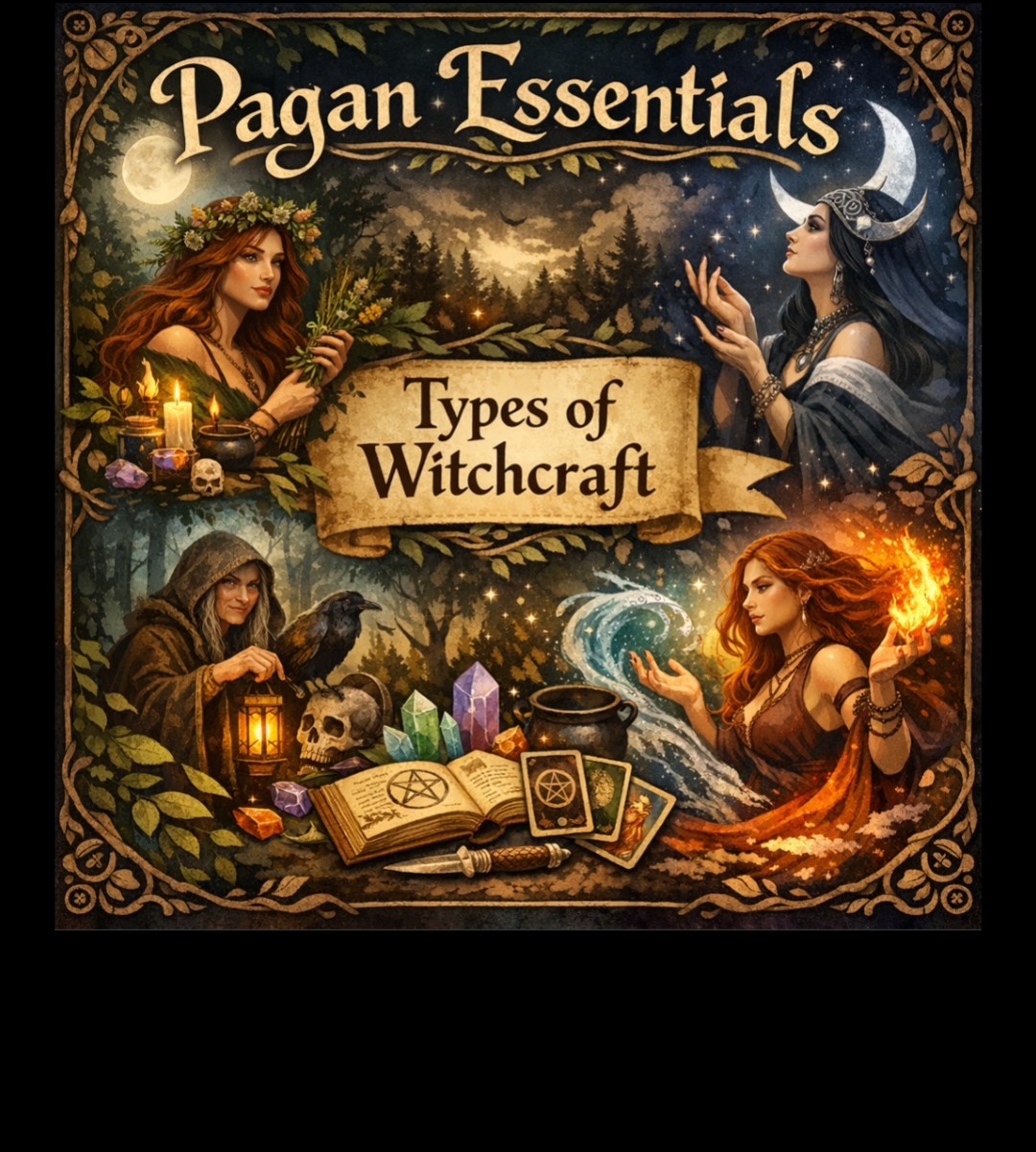
Witchcraft is not a “one size fits all” practice. It is a vast, shimmering tapestry woven from history, culture, and personal intuition. For those just beginning their journey at Pagan Essentials, the sheer number of “labels” can feel overwhelming.
The most important thing to remember is that your path is yours alone. Here is an introduction to the most common traditions found in the modern craft:
Wicca
Often the most recognized path, Wicca is a modern, nature-based religion. It typically follows the Wiccan Rede (“An it harm none, do what ye will”) and honors a God and a Goddess. It is highly structured, revolving around the Wheel of the Year and the phases of the moon.
Traditional Witchcraft
Traditional witches often look to history, folklore, and the “Old Ways” that existed before the modern Wiccan movement. This path often focuses heavily on local land spirits, ancestor work, and a more “grit-and-herb” approach to magic rather than formal religious ritual.
Eclectic Witchcraft
The Eclectic witch is a collector of wisdom. They do not follow a single tradition but instead study various cultures, systems, and philosophies, adopting the practices that resonate most with them. This is currently one of the most popular paths because of its high level of personal freedom.
Hedge Witchcraft
Inspired by the “hedge” that once separated the village from the wild woods, Hedge witches focus on “crossing the veil.” This path is deeply solitary and emphasizes herbalism, healing, and astral travel (spirit flight).
Kitchen & Cottage Witchcraft
For these practitioners, the home is the temple. Magic is woven into daily chores—stirring intentions into a soup, enchanting the broom used to sweep the floor, or using hearth-fire for protection. It is a practical, grounded, and deeply nurturing form of craft.
A Note for the Seeker: You do not need to choose a label today. Many witches spend years “path-walking” through different traditions before finding where their spirit feels most at home.