Posted on

Mabon


Mabon, also known as the Fall Equinox, is a significant Pagan holiday celebrated during the autumn season. This year it will be celebrated on September 23rd. This holiday holds great importance for those who follow Pagan or Wiccan traditions.

Mabon marks the time when day and night are in perfect balance, symbolizing the transition from summer to fall. It is a time to honor and give thanks for the abundance of the harvest season.

Rituals associated with Mabon vary among different pagan traditions. Some may choose to perform ceremonies outdoors, while others prefer indoor rituals within sacred spaces such as altars or shrines. Druids and other nature-based spiritual practices often connect with the natural world during this time by spending time in forests or near bodies of water.

The origins of Mabon can be traced back to ancient cultures such as the Romans and Druids who celebrated their own versions of harvest festivals during this time of year. These celebrations were centered around gratitude for nature’s bounty and preparing for the darker days ahead.

Creating an altar is a common practice during Mabon rituals. Altars are typically adorned with symbols of autumn such as colorful leaves, acorns, pumpkins, and other seasonal items that represent abundance and gratitude.

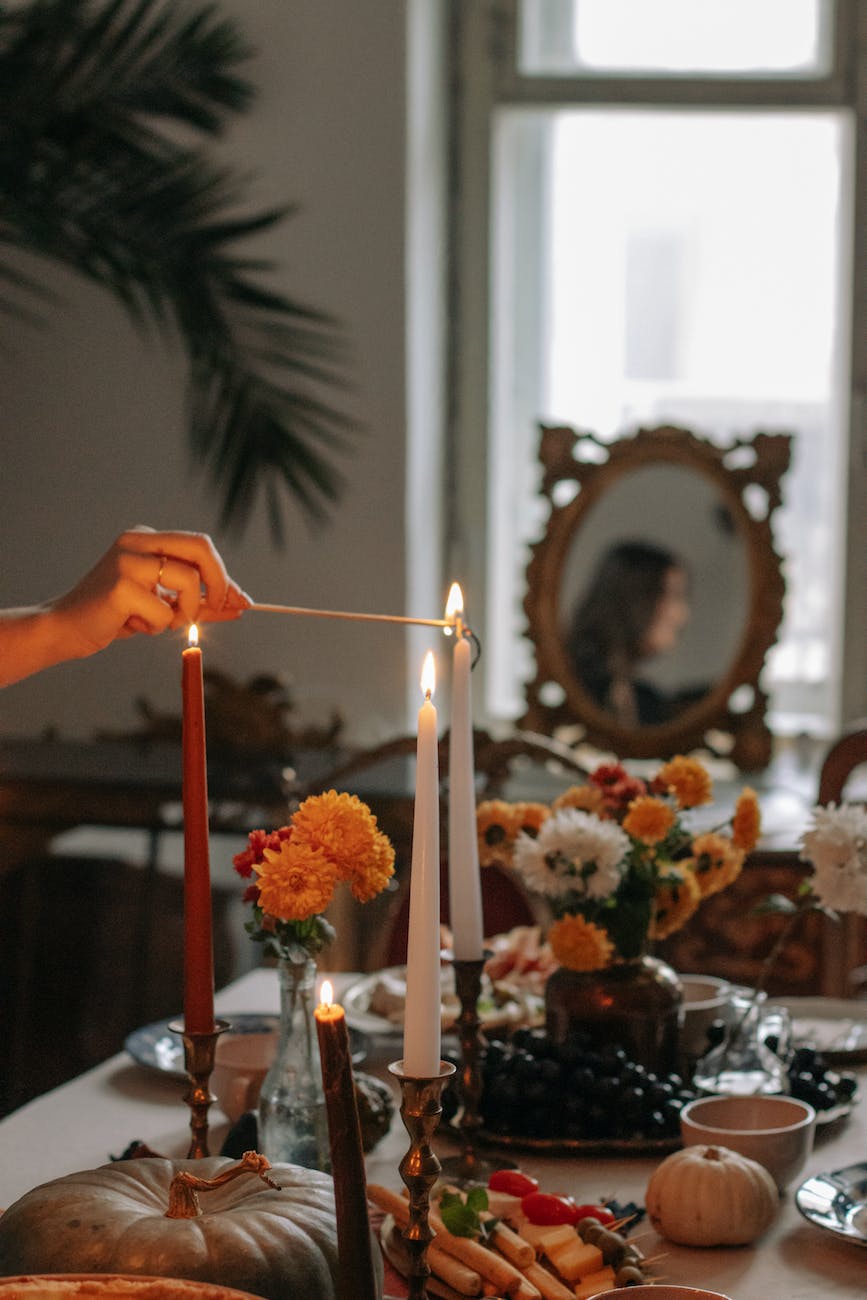
During Mabon rituals, participants may engage in activities like meditation, reflection, candle lighting, offering prayers or blessings to deities associated with this season, sharing meals with loved ones, or performing specific spells or divination practices related to harvest blessings.

Overall, Mabon serves as a reminder to appreciate nature’s cycles and express gratitude for all that we have received throughout the year. It is a time for reflection and connection with both us and the natural world around us.


Correspondence

Colors: Red (Dark), Maroon, Burgundy, Gold, Yellow, Orange (Dark), Brown

Incense/Plants: Almond leaves, Chamomile, Marigold, Passionflower, Rosemary, Rue, Saffron, Sage, Walnut leaves and husks, Yarrow

Elements: Water

Symbols/Decorations: Autumn Leaves, Cornucopia, Pinecones, Acorns, Nuts, Berries, Vines, Grapes, Wine, Baskets, Apples


Mabon Rituals

During Mabon, many pagans perform rituals and ceremonies to celebrate the holiday. These rituals often involve the use of symbols, such as apples, pumpkins, and corn. They may also include the lighting of candles, the burning of incense, and the casting of spells. One of the most important aspects of Mabon is the concept of balance.

Here is an example of a Mabon Ritual:

  • Cleanse the area of negative energy.
  • Cast your Circle.
  • Call the Quarters.
  • Invite the God and Goddess (or Deity(ies) of your choosing).
  • Take a few moments to think about the blessings in your life. Give thanks, either aloud or in your head; if you are in a group, feel free to go around the circle and have everyone share what they are thankful for.
  • Cakes and Ale
  • Thank the God and Goddess (Or Deity(ies) of your choosing).
  • Thank the Quarters.
  • Release the Circle.
  • Ground yourself.
  • Then, cast a Mabon spell. Here is an example of one but feel free to write your own.

Balance Spell

As Autumn brings balance to night and day,
Let there be balance between work and play.
May we live our lives harmoniously,
And in tune with Natureโ€™s melody.

As Sun is to Moon
And midnight is to noon,
Let there be balance in all that we do.
May we know our inner light, and our inner darkness, too.

As I will it, so mote it be!


If you do not want to cast a spell for balance, you can try writing a blessing.

Here is an example:

“During this time of abundance and plenty,
I send my love and blessings to my family.
May you be blessed by the Lord and the Lady,
With Their Love and Light embracing thee.
Blessed be!”

I hope you enjoy this ritual. Have a blessed Mabon!

Posted on

Lammas

Lammas is a traditional Celtic festival that marks the beginning of the harvest season. Celebrated on August 1st or the first weekend in August, it holds great significance for agricultural communities and those who follow pagan or Wiccan traditions.

Lammas is also known as Lughnasadh (pronounced Loo-NAS-ah). In some Wiccan and Pagan traditions, Lammas is also a day honoring Lugh, the Celtic god of craftsmanship, grain, the Sun, and late summer storms.

Like all Celtic or Pagan holidays, Lammas also honors goddesses whose associations, strengths, and myths align with the work weโ€™re doing at this time of year. Ceres, the harvest goddess, known as Demeter by the Greeks, and Tailtiu, mother of Lugh, are significant forces of agricultural abundance. We receive their blessings in the bounty of food that feeds us the rest of the year.

During Lammas, people gather to give thanks for the abundance of the harvest and to honor the god Lugh, who is associated with skills, craftsmanship, and abundance. It is a time to appreciate the fruits of our labor and reflect on the cycles of nature.

Regarding correspondence, Lammas is often associated with grains such as wheat, corn, and barley. These crops symbolize fertility and sustenance. Other correspondences include colors like gold and yellow to represent ripening crops and symbols of sunflowers or cornucopias to signify abundance.

When setting up an altar for Lammas, you can incorporate these correspondences by placing items such as freshly harvested grains or bread made from them. Sunflowers or golden-hued candles can add visual appeal while representing prosperity. Additionally, you may wish to include seasonal fruits or vegetables that are abundant during this time.

Overall, Lammas is a festival that encourages gratitude for nature’s bountiful gifts and serves as a reminder of our connection to the cycles of life.

Six Ways to Honor Lammas:

  • Create a Lammas Altar
  • Create a Harvest Jar
  • Bake Bread
  • Light Candles (Orange and Yellow)
  • Work with Crystals pertaining to the Sun’s energy (Carnelian, Citrine, Golden Healer Quartz, and Yellow Fluorite)
  • Charge your Witchcraft Tools in the late summer sunshine to absorb the Sun’s vitality
Posted on

Litha


A picture of the Sun smiling.

Litha, also known as Midsummer or the Summer Solstice, is a Pagan holiday that marks the longest day of the year. Astronomically, the summer solstice (June 21, 2023) will happen when the sun reaches its highest point in the sky.ย It is celebrated on June 21st every year and is one of the eight Sabbats.

This holiday celebrates the light and dark within us as we strive to find our inner strength. Traditionally, bonfires are lit to honor this day and pay tribute to the Oak King and Holly King in a battle of light and dark. Fire rituals are also performed to bring good luck for the upcoming season. Early European traditions celebrated midsummer by setting large wheels on fire and then rolling them down a hill into a body of water. Celebrations can also include altar ideas such as flowers, incense, candles, fruits, herbs, stones, and crystals that correspond with specific spells and rituals. On this day we celebrate life itself with joyous festivities!

Litha is a time to celebrate the longest day of the year and the abundance of nature. It is one of the eight sabbats in the Wheel of the Year, and it marks the transition from the waxing to the waning phase of the Sun. Fire is a symbol of this sabbat, as it represents the power and warmth of the Sun-God, who is at his peak on this day. Many Wiccans light bonfires or candles to honor him and to ask for his blessings of protection, fertility, and prosperity. There are also other deities that are associated with Litha, such as goddesses of love, beauty, and fertility, or gods of agriculture, harvest, and growth. Some examples are Aphrodite, Freya, Lugh, and Cernunnos. Litha is a joyous occasion to celebrate life, light, and abundance with gratitude and generosity.

If you are interested in the origins of Pagan names and festivals, you might have wondered what “Litha” means. Litha is one of the names for the summer solstice, the longest day of the year and a time of celebration for many cultures. But where does this name come from and what does it signify?

According to a medieval scholar named Bede, who wrote a book called “The Reckoning of Time”, Litha is an Anglo-Saxon word that means “gentle” or “navigable”. He explained that this was because the winds were calm, and the seas were smooth during this season. Bede also recorded the names of other months based on the Pagan customs of his time, such as Eostre (April), Thrimilchi (May), and Halegmonath (September).

Litha is not the only name for the summer solstice, though. Other traditions call it Midsummer, Alban Hefin, St. John’s Day, or simply the First Day of Summer. Whatever you call it, it is a time to honor the sun, the fire, and the abundance of nature. It is also a time to celebrate life, joy, and creativity. You can celebrate Litha by lighting a bonfire, making flower crowns, dancing, singing, or doing any activity that makes you happy and grateful.


Litha Correspondence

Colors: White, Red, Yellow, Orange, Gold, Green.


Energies: Power, Creativity, Inspiration, Love, Divination, God energy, Healing, Fertilization.


Oils/Incenses: Cinnamon, Heliotrope, Lemon, Musk, Orange, Rose, Saffron, Sandalwood, Wisteria, Vervain.

Plants and Herbs: Lavender, Chamomile, Roses, Daisies, Lily, Elder, Fennel, Sunflower, St. Johnโ€™s Wort, Verbena.


Gemstones: Amber, Jade, Tigerโ€™s eye, Jasper, Peridot, Aventurine, Ruby, Emerald.


Symbols: Sun wheel, Sun, Fire, Bonfires, Roses, Daisies, All rayed flowers, Torches, Fairies.


Foods: Ale, Bread, Cheese, Edible Flowers, Fresh fruits and vegetables, Lemons, Mead & Wine, Milk, Oranges, Pumpernickel bread, Oatmeal cake.

Drinks: Sunflower Tea. Fresh Juice from Seasonal Fruits, Water, Beer, and White Wine.

Posted on

Beltane

May 1st, 2023

Beltane is a traditional Gaelic festival that celebrates the arrival of summer and the fertility of the land. It is one of the eight Sabbats in the Wheel of the Year, and falls on May 1st, halfway between the spring equinox and the summer solstice.

The origins of Beltane can be traced back to pagan times, when it was a fire festival that honored the sun god Belenos. The name Beltane comes from the Old Irish words bel (bright) and tene (fire), meaning “bright fire” or “Bel’s fire”. The fire symbolized purification, protection, and transformation. People would light bonfires and walk around or jump over them with their cattle to ward off evil spirits and diseases. They would also extinguish all other fires in their homes and relight them from the sacred Beltane fire.

Beltane was also a time of joy and celebration, as people welcomed the warmer weather and the abundance of nature. They would decorate their homes and fields with flowers, especially yellow ones that resembled the sun. They would also make May bushes or poles with colorful ribbons and bells, and dance around them to bring good luck and prosperity. Some people would visit holy wells and drink or wash with the water, believing it had healing powers. Others would collect the dew on Beltane morning, which was said to enhance beauty and youthfulness.

Beltane is also associated with romance and sexuality, as it marks the union of the god and goddess who create new life. Some couples would spend the night in the woods or fields, making love under the stars. This was seen as a way of participating in the fertility of nature and honoring the divine forces. Some traditions also held that children conceived on Beltane night were blessed by the gods.

Today, Beltane is still celebrated by some people who follow Celtic or pagan traditions, as well as by modern pagans and Wiccans. They may perform rituals, ceremonies, or dances to honor the elements, the deities, and the spirits of nature. They may also light bonfires, make offerings, or practice divination. Beltane is a time to celebrate life, love, and creativity, and to express gratitude for the gifts of nature.


How to Decorate a Beltane Altar

Beltane is a pagan holiday that celebrates the fertility of the earth and the union of the God and Goddess. It is also a time of fire, passion, and rebirth. If you want to decorate your altar for Beltane, here are some ideas:

Include flowers and faeries on your altar. Beltane is a time when the earth is blooming with life and beauty, and the faeries are said to be more active and visible. You can use fresh or dried flowers, such as daffodils, lilacs, tulips, or daisies. You can also make flower crowns or garlands to wear or hang on your altar. You can also leave offerings for the faeries, such as honey, milk, oats, or shiny objects.

Add symbols of fertility and sexuality, such as a phallus, a chalice, a wreath, or a maypole. These represent the masculine and feminine energies that come together at Beltane. You can also use antlers, acorns, seeds, or fruits as symbols of the God’s potency and the Goddess’s womb.

Use green, yellow, purple, and blue as your main colors. These represent the freshness of spring, the warmth of the sun, the magic of the flowers, and the sky above. You can use candles, ribbons, cloths, or flowers in these colors to adorn your altar.

Light a fire or a brazier on your altar. Beltane is one of the four fire festivals in pagan traditions, and fire symbolizes purification, transformation, and inspiration. You can use a small cauldron or a fireproof bowl to create a mini bonfire on your altar. You can also burn incense or herbs that are associated with Beltane, such as rosemary, lavender, sage, or thyme.

These are some suggestions for how to decorate your Beltane altar for paganism. You can also use your intuition and creativity to make your altar unique and personal to you. The most important thing is to honor the spirit of Beltane and celebrate the joy of life.

  • Harnessing the August New Moon Solar Eclipse: Celestial Power, Correspondences and Ritual

    Harnessing the August New Moon Solar Eclipse: Celestial Power, Correspondences and Ritual

    When the New Moon aligns directly between the Earth and the Sun, a solar eclipse occursโ€”a rare celestial event that amplifies lunar magic exponentially. While a standard New Moon represents fresh starts and quiet intention, a Solar Eclipse accelerates fate, tears away outdated energetic structures, and opens a portal for radical transformation. During the heat… Read more

  • Magic in the Margins: The May 31, 2026 Blue Micromoon

    Magic in the Margins: The May 31, 2026 Blue Micromoon

    We are standing on the precipice of a rare and beautifully intense celestial event. On May 31, 2026, the night sky will host a Calendrical Blue Moon… Read more

  • The Pink Moon: Blossoming into Your Power

    The Pink Moon: Blossoming into Your Power

    Welcome, seeker. As the wheel turns and the earth softens, we approach one of the most vibrant lunations of the year. On April 2nd, 2026, the sky will be graced by the Full Pink Moon. Despite its name, the moon won’t literally turn a rosy hue, but its spiritual “color” is one of undeniable growth,… Read more

  • ๐ŸŒ™ Friday the 13th: The Goddessโ€™s Lucky Day

    ๐ŸŒ™ Friday the 13th: The Goddessโ€™s Lucky Day

    Happy Friday the 13th, Seekers! ๐Ÿ–คWhile the rest of the world might be walking cautiously around ladders, weโ€™re leaning into the magic. For the modern practitioner, Friday the 13th isn’t a day of “bad luck”โ€”it is a potent alignment of divine feminine energy and manifestation. Why this day is sacred to Witchcraft: * The Day… Read more

  • Working with the Ancients: A Beginnerโ€™s Guide to Dragon Magick

    Working with the Ancients: A Beginnerโ€™s Guide to Dragon Magick

    Dragon Magick is not for the faint of heart. It is a path of high energy, deep wisdom, and personal transformation. While pop culture often depicts dragons as monsters to be slain, in the world of witchcraft, they are ancient, powerful astral beings who act as guardians, mentors, and catalysts for change. Read more

  • ๐Ÿ’ซFinding Your Path: A Guide to Traditions and Styles of Witchcraft๐Ÿ’ซ

    ๐Ÿ’ซFinding Your Path: A Guide to Traditions and Styles of Witchcraft๐Ÿ’ซ

    Witchcraft is not a “one size fits all” practice. It is a vast, shimmering tapestry woven from history, culture, and personal intuition. For those just beginning their journey at Pagan Essentials, the sheer number of “labels” can feel overwhelming. The most important thing to remember is that your path is yours alone. Here is an… Read more

Posted on

Ostara or Spring Equinox

Ostara is a Pagan holiday that celebrates the Spring equinox and the fertility of nature. It officially marks the first day of Spring and is one of the 4 minor Sabbats which fall on the equinoxes or solstices. The word Ostara comes from the Anglo-Saxon goddess name, Eostre. Eostre represents spring and new beginnings. Ostara is a time of balance, when there are equal parts of day and night, with the light on the increase. It is also a time to celebrate the coming of Spring and fertility. Ostara is a time to give thanks for the abundance of life and to honor the Green Man, the god of vegetation, and the Goddess.

Ostara or Spring Equinox falls on March 19th thru the 21st for the Northern Hemisphere and around September 23rd for the Southern Hemisphere,  This happens at the same time our planet is tilted just right so both hemispheres receive equal amounts of heat from the sun. It is also the day when the Goddess and God (Mother Earth and the Green Man or the Young Maiden and Sun God) join in sacred marriage. The Goddess will conceive, and give birth in nine months. Then she will become the Great Mother once again.


SYMBOLS OF OSTARA

Colors: Green, Pink, Blue, Yellow

Flowers: Daffodil, Jonquils, Woodruff, Violet, Gorse, Peony, Iris, Narcissus, and all Spring flowers

Herbs: Thyme, Tarragon, Lemon Balm, Red Clover, Marjoram, Chamomile, Lavender, Copal

Gemstones: Rose Quartz, Aquamarine, Amethyst, Tiger’s Eye, Jasper, Lapis Lazuli, Moon Stone

Incense: Jasmine, Rose, Strawberry, Myrrh, Dragon’s Blood, and any type of Floral

Symbols:  Rabbits, eggs, spring flowers, lambs, clover, baskets

Animals and Mythical Creatures: Rabbits, Snakes, Merpeople, and the Pegasus

Foods:  Eggs, honey, sprouted greens, baked goods, asparagus   

Flowers & Plants: Clover, Daffodils, Crocus, Tulips  

Symbols:   the Hare, Butterflies, Seeds, Eggs, Butterflies, Flowers, Dragons, Trees


CELEBRATING OSTARA

There are many ways to celebrate Ostara. Scott Cunninham’s traditional Vernal Equinox pastime is to go to a field and randomly collect wildflowers, thanking the flowers for their sacrifice before picking them, and leaving an offering to the plant and/or the Earth for taking the flowers, such as some milk and honey, a small crystal, or even a coin.

You can also buy flowers from a florist, Take one or two of those that appeal to you. and bring them home and divine their magickal meanings by the use of books, your own intuition, a pendulum, or other means. The flowers you’ve chosen reveal your inner thoughts and emotions

Other ways to celebrate Ostara

Celebrating Ostara is a great way to connect with nature and your spiritual self. The properties of Ostara are associated with renewal, rebirth, fertility, growth, and new beginnings. Here are some ways to celebrate the Spring Equinox:

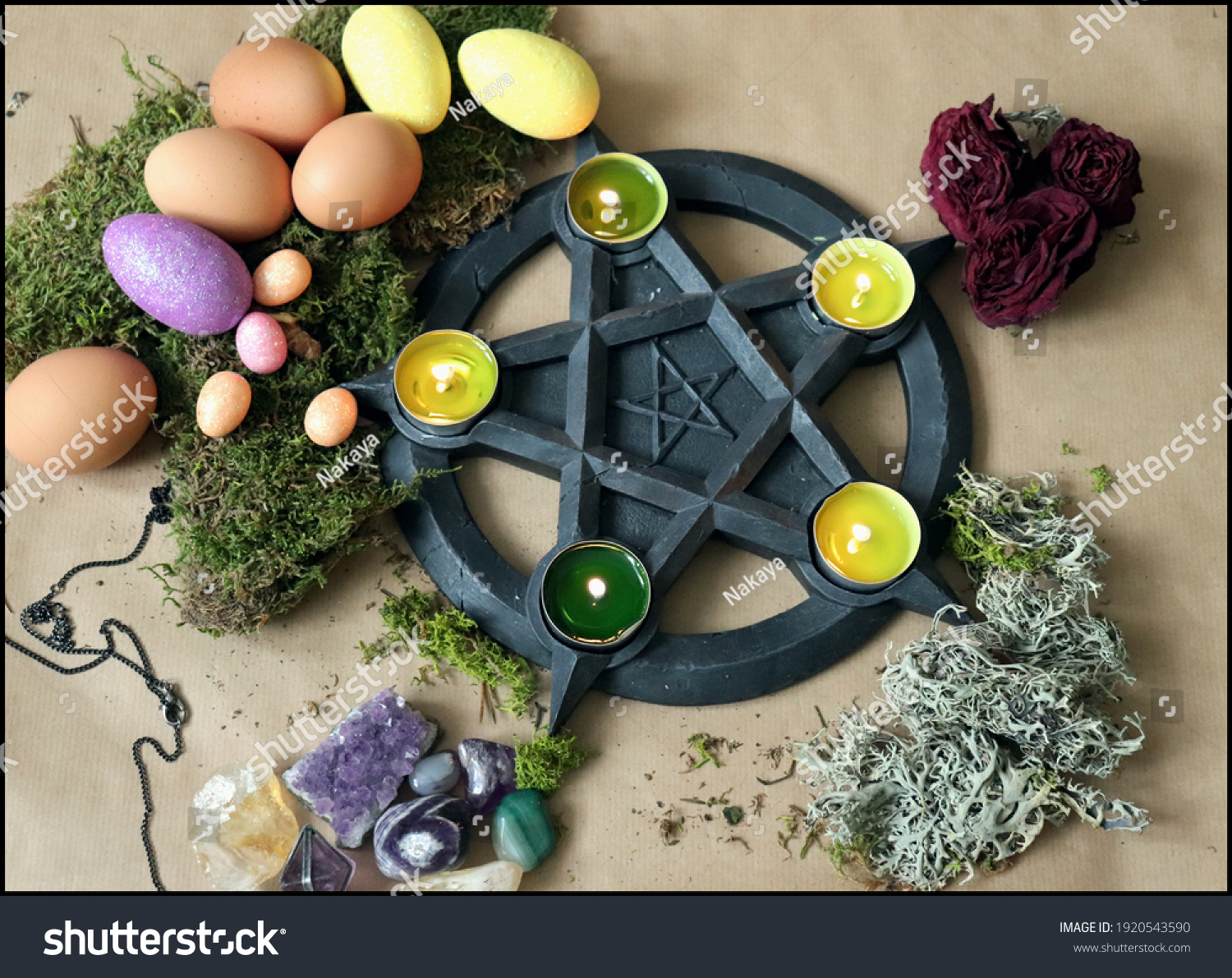
  • You can create an Ostara Altar by using pastel colors, flowers, and a sign of balance. Balancing can be symbolized by having representations of the God and Goddess, a white candle and a black candle, or anything else that represents the opposition. You can also use anything that symbolizes Ostara on your Altar
  • Create and/or Perform a Spell or Ritual for fertility, abundance, or positivity
  • Light a bonfire at dawn to celebrate the increasing light
  • Take a nature walk to celebrate nature
  • Plant a flower, herb, or vegetable garden
  • Color and decorate hard-boiled eggs with bright colors
  • Celebrate with a traditional Ostara meal, making egg-based dishes and desserts, chicken, duck, lamb, fish, \dairy foods, green vegetables, and edible Flowers