Posted on

Magickal Journaling: Documenting Your Journey and Enhancing Your Practice

Pagan Essentials: The Witch’s Online Resource

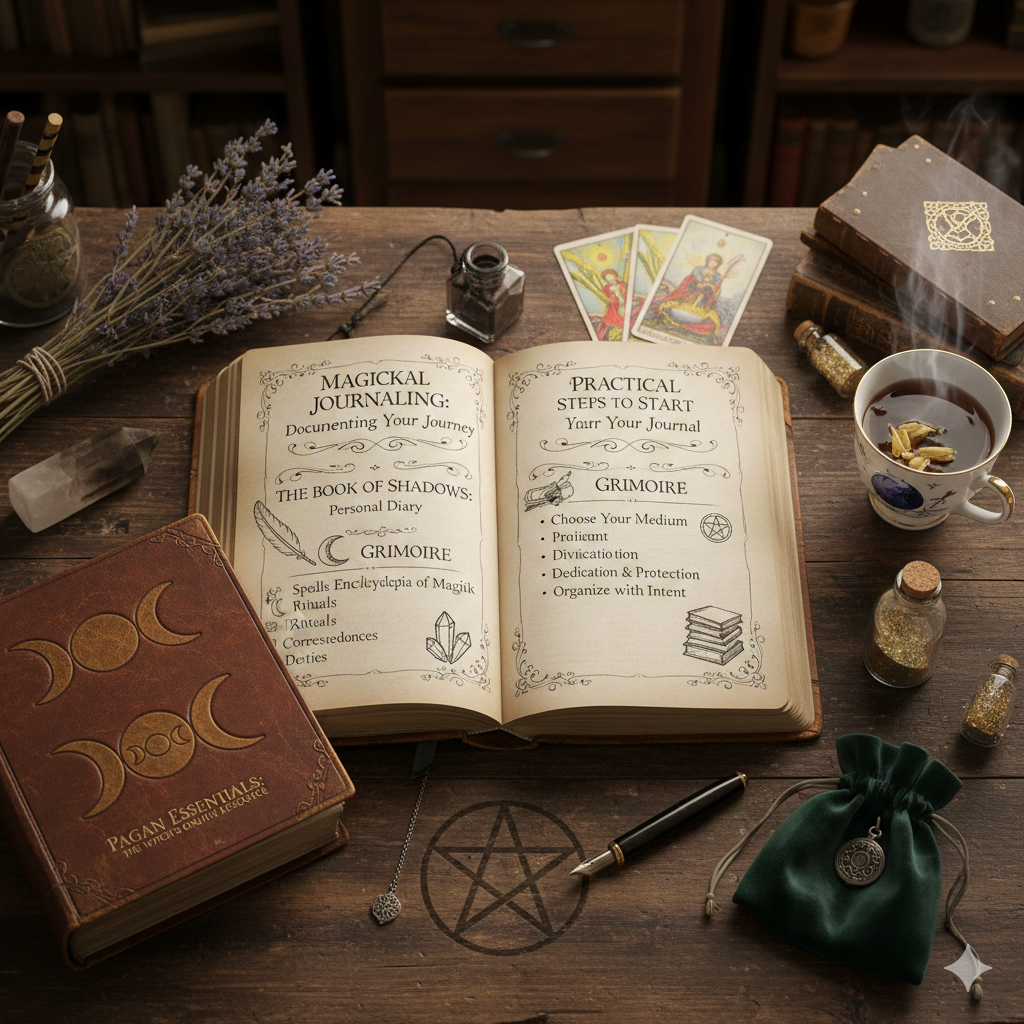
Every craftsperson relies on their tools, and for the Witch, there are few tools more crucial than the Magickal Journal. Whether you call it a Grimoire, a Book of Shadows (BoS), or simply your personal journal, this physical or digital space is where your practice lives, breathes, and grows. It is the living archive of your personal relationship with the Divine and the Magickal Arts.
If you’ve been hesitant to start one, or if yours has been collecting dust, here are the essential benefits and methods to making magickal journaling a vital part of your path.

Why Magickal Journaling is Essential for Your Practice

Keeping a detailed record of your work is far more than just writing down spells. It is a profound act of self-reflection and magical accountability.

1. Tracking and Analyzing Results
Magick is an art and a science. When you cast a spell or perform a ritual, you need a way to measure its effectiveness. A good magickal journal documents the following for every working:
  *  The Date and Time: Crucial for astrological timing.
  *  The Lunar Phase: How did the Moon’s energy influence the outcome?
  *  The Intent: What specifically did you ask for?
  *  The Tools/Ingredients: List of herbs, candles, colors, and incantations used.
  *  The Outcome: Did the spell manifest as intended? If so, when? If not, why might it have failed?


By analyzing past workings, you quickly learn which ingredients, timings, and techniques yield the best results for your unique energy, helping you refine your practice continuously.


2. Deepening Self-Knowledge and Introspection
Your journey is about personal evolution. Journaling provides a safe, structured space to record:
  *  Dream Work: Analyzing recurring symbols and messages from your subconscious.
  *  Divination Results: Recording tarot readings, pendulum sessions, or oracle casts, and tracking how they played out in reality.
  *  Emotional and Spiritual Shifts: Noting how certain rituals, meditations, or moon cycles affect your inner state. This helps you understand your own energetic flow.


3. Preserving Priceless Personal Knowledge
Your tradition is unique. While you may read books and online resources (like this one!), the true power comes from your direct experience. That subtle energy shift during a meditation, the flash of inspiration you received from a deity, or the specific way you adapted a traditional spell—these are the moments that define your path. Your journal ensures this personal, non-transferable wisdom is never lost.

Grimoire vs. Book of Shadows: Defining Your Documents

While the terms are often used interchangeably today, traditionally, they refer to two distinct types of books. You can keep one combined book or separate them, depending on your needs.

The Book of Shadows (BoS) – Your Personal Diary

The BoS is historically the personal record of the Witch. It is the repository of your own experience, growth, and practice.

Content – Purpose

Spell Records – Documenting the execution and results of your workings

Personal Rituals – Rites you create, Sabbat celebrations, or dedications

Divination Logs – Tracking the context and outcomes of readings

Meditative/Astral Notes – Records of visions, messages, and spiritual encounters

The Grimoire – Your Encyclopedia of Magick

The Grimoire is typically the knowledge book—a comprehensive reference tool filled with information sourced from external research.

Content – Purpose


Correspondences – Lists of herbs, colors, stones, days of the week, and their magical uses.


Deity Information – Pantheon research, invocations, and history.


Astrology & Phases – Tables for moon phases, planetary hours, and signs.


Ritual Basics – General information on cleansing, grounding, and circle casting.

Practical Steps to Start Your Magickal Journal

Ready to begin? Starting is easier than you think, but consistency is the key to success.

1. Choose Your Medium
  *  Physical (Notebook/Binder): Many prefer the tactile connection of writing by hand. A binder allows you to re-organize and add pages easily.
  *  Digital (App/Document): Perfect for portability, search functions, and security. Use apps that allow password protection to keep your secrets safe.


2. Dedication and Protection
Before you begin using your new journal, perform a simple dedication and blessing ritual. This transforms it from a simple book into a sacred tool. You might use smudge, anoint it with protective oil, or cast a brief circle, stating your intent for the book to hold only truth, wisdom, and positive energy.


3. Organize with Intent
Don’t wait until you have a perfect system. Start with simple sections. If you’re using a binder or a digital format, organization is fluid. For a fixed notebook, start pages with a clear title and plenty of space for future notes and results.


4. Commit to Consistency
The best way to fail at journaling is to treat it as a chore. Try to record something once a week, even if it’s just a quick note about a successful meditation or a strange encounter. The more consistent you are, the faster your knowledge base—and your practice—will grow.

Embrace your magickal journal today. It is your most honest teacher, your most loyal historian, and the undeniable proof of the power within you.

(Stay tuned to Pagan Essentials for more tips on using your magickal tools!)

Posted on

Book of Shadows vs. Grimoire: What’s the Difference?

​By Ivyjaded Wyldfyre

Greetings, fellow travelers on the magical path! Today, let’s delve into a topic that often sparks curiosity and sometimes a little confusion: the difference between a Book of Shadows and a Grimoire. While both are invaluable tools for any witch or pagan, they serve distinct purposes in our craft.

The Book of Shadows: Your Personal Magical Journal

Think of your Book of Shadows (BOS) as your most intimate magical companion – a personal journal of your spiritual journey and magical practice. It’s a living, breathing record of your experiences, insights, and growth.

What goes into a Book of Shadows?

  • Spells and Rituals: Not just any spells, but those you have personally worked, adapted, or created. Include details about the moon phase, time of day, your emotional state, and the results. Did it work? What would you change next time?
  • Correspondences: Your personal notes on herbs, crystals, colors, deities, astrological alignments, and their magical associations. This is tailored to your understanding and experience.
  • Divination Records: Keep track of your tarot readings, pendulum sessions, or other divinatory practices. What questions did you ask? What answers did you receive? How did they resonate?
  • Dreams and Visions: A space to record your dreams, particularly those that feel significant or carry magical messages.
  • Meditations and Reflections: Your thoughts, feelings, and insights gained during meditation, sabbat celebrations, or moments of spiritual clarity.
  • Recipes: Magical concoctions, incense blends, oils, and even recipes for pagan feasts.
  • Poetry, Art, and Sigils: Any creative expressions inspired by your practice.

​The BOS is deeply personal and often kept private. It’s a reflection of your unique path and evolves with you over time. There’s no right or wrong way to create one; it can be a simple notebook, a beautifully bound tome, or even a digital file. The most important thing is that it serves you.

​Here’s an example of what a beautifully adorned Book of Shadows might look like, perhaps open to a page with a new moon spell:

Book of Shadows

The Grimoire: A Comprehensive Magical Reference

A Grimoire, on the other hand, is more akin to a textbook or a reference manual for magical practices. While it can also be personal, its primary purpose is to compile information, spells, rituals, and magical knowledge that can be accessed and utilized by others, or as a structured resource for your own learning.

What goes into a Grimoire?

  • Established Spells and Rituals: These are often spells passed down through traditions, sourced from books, or widely known within a specific magical system. Think of classic protection spells or traditional ceremonial magic rituals.
  • Magical Theory: Explanations of magical principles, laws, and philosophies.
  • Divine Names and Invocations: Lists of deities, spirits, or entities, along with their sigils, symbols, and appropriate invocations.
  • Astrology and Numerology Charts: Detailed information on planetary hours, zodiac correspondences, and numerological meanings.
  • Herbal and Crystal Encyclopedias: Comprehensive lists of magical properties, uses, and preparation methods for various herbs and crystals.
  • Symbolism and Sigils: Meanings of various magical symbols, runic alphabets, ogham, or other magical scripts.
  • Consecration and Preparation: Instructions for consecrating tools, creating sacred space, and preparing for magical work.

​Grimoires tend to be more organized and structured than a BOS. They are often less about personal experience and more about documented magical knowledge. Many historical grimoires, like the Key of Solomon, are famous examples of this type of text. Some witches keep both – a BOS for their personal journey and a Grimoire for a more formalized collection of magical lore.

​Imagine a section of a Grimoire dedicated to various symbols and their meanings, beautifully illustrated for easy reference.

Grimoire

Can You Have Both? Absolutely!

Many practitioners find immense value in keeping both a Book of Shadows and a Grimoire. Your BOS becomes the place where you experiment, grow, and reflect, while your Grimoire serves as a solid foundation of magical wisdom to draw upon. Some even start with a general Grimoire and then gradually personalize sections into their BOS.

​Ultimately, the best approach is the one that resonates most with you and supports your unique magical journey. Whether you choose one, both, or something entirely different, the act of documenting your craft is a powerful magical act in itself.

​Blessed be, and may your pages be ever filled with wisdom and wonder!

About Ivyjaded Wyldfyre: Ivyjaded is a green witch, avid herbalist, and lover of ancient lore. She believes in finding magic in the everyday and connecting deeply with the natural world. When not tending her herb garden or brewing potions, she can be found lost in a good book or exploring forgotten forest paths.

Posted on 1 Comment

How Do I Start? Resources for New Witches: A Step-by-Step Guide

Welcome, curious soul, to the path of witchcraft! If you’re feeling drawn to the ancient wisdom, the power of nature, and the magic within, you’ve come to the right place. The journey into witchcraft is deeply personal and incredibly rewarding. Here at Pagan Essentials, we’re thrilled to offer you a starting point. Let’s dive in!

The very first step on any magical path is to simply explore. There’s no single “right” way to be a witch, and the vastness of traditions and practices can be exciting!

  • Read, Read, Read: Immerse yourself in different perspectives. Start with general introductions to witchcraft, then delve into specific traditions that pique your interest, such as Wicca, Traditional Witchcraft, Green Witchcraft, or Chaos Magic.
  • Listen and Learn: Podcasts, documentaries, and reputable online articles can be excellent resources.
  • Keep a Journal: As you explore, jot down your thoughts, feelings, and any concepts that resonate with you. This will become an invaluable tool on your journey.
  • ​”Wicca: A Guide for the Solitary Practitioner” by Scott Cunningham (a classic, though focused on Wicca)
  • ​”Psychic Witch: A Metaphysical Guide to Meditation, Magick & Manifestation” by Mat Auryn
  • ​”Protection & Reversal Magick” by Jason Miller
  • ​”The Inner Temple of Witchcraft” by Christopher Penczak (comprehensive and great for structured learning)

Before you cast a single spell or invoke a deity, mastering grounding and meditation is crucial. These practices will help you center yourself, manage your energy, and connect with your inner wisdom.

  • Grounding: Think of grounding as rooting yourself to the Earth, like a tree. It helps dissipate excess energy, brings you into the present moment, and provides stability. There are many techniques, but a simple one is to visualize roots extending from the soles of your feet deep into the Earth, drawing up its calm, stable energy.
  • Meditation: This isn’t about emptying your mind, but rather observing your thoughts without judgment and focusing your awareness. Start with just 5-10 minutes a day, focusing on your breath. Meditation enhances intuition, concentration, and psychic abilities – all vital for magical work.

Magic is powerful, and with great power comes great responsibility. Before engaging in any spell work, it’s essential to consider the ethical implications.

  • The Threefold Law/Rule of Return: Many traditions adhere to the idea that whatever energy you send out (positive or negative) will return to you threefold. While not universally adopted, it’s a valuable reminder to act with intention and integrity.
  • Do No Harm: This is a fundamental principle for many witches. Consider the potential impact of your actions on yourself, others, and the environment.
  • Consent: Never attempt to influence someone’s free will without their explicit consent. This includes love spells, mind manipulation, or any form of coercive magic.
  • Personal Responsibility: You are accountable for your magic. Take time to reflect on your intentions and the potential consequences of your workings.

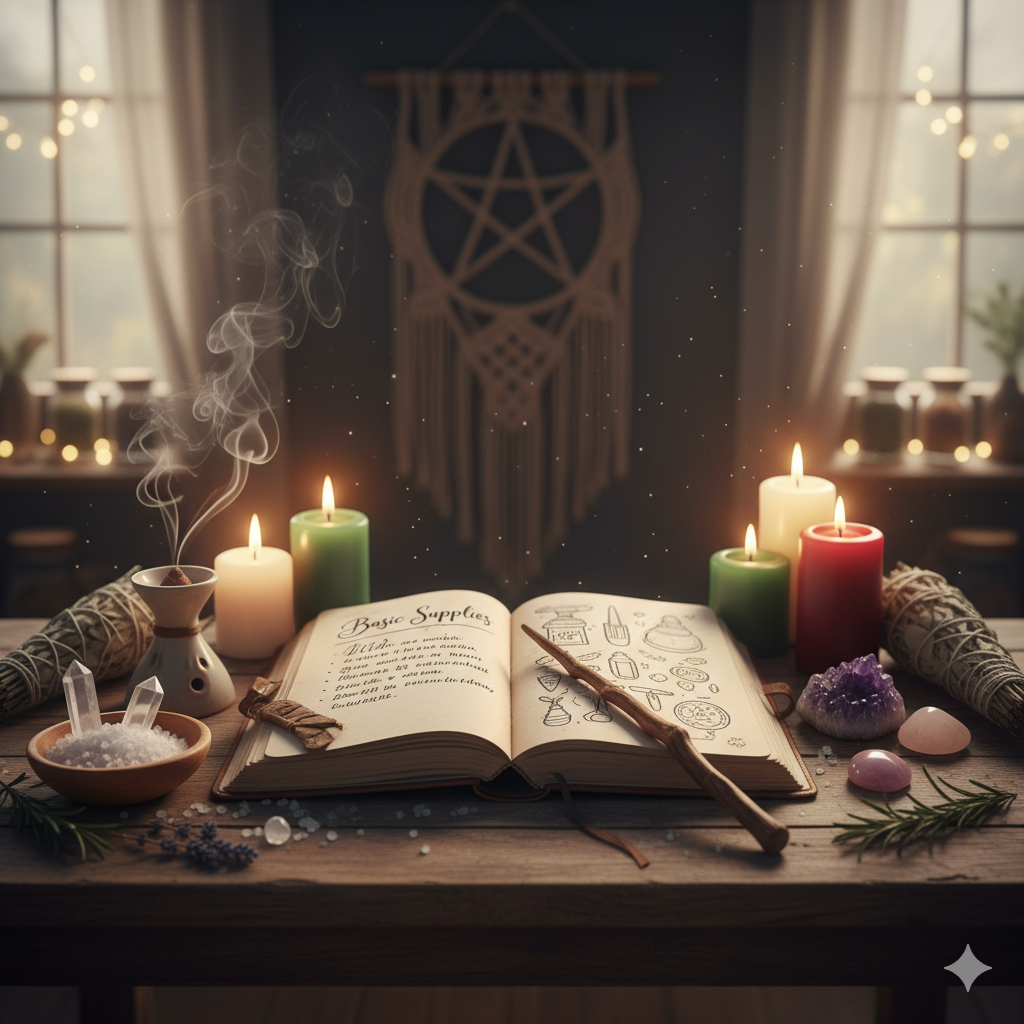
​You don’t need anything to be a witch – your most potent tools are your mind and spirit. However, certain items can enhance your practice and create a sacred atmosphere.

  • Journal/Book of Shadows: A place to record your spells, rituals, dreams, and magical insights.
  • Candles: Different colors correspond to different intentions (e.g., white for purity, green for prosperity, red for passion).
  • Incense/Herbs: For cleansing, offering, or setting the mood. Sage, palo santo, and frankincense are popular choices.
  • Salt: A powerful purifier and protector.
  • Wand or Athame: (Optional) These are tools to direct energy, not for cutting. A simple stick found in nature can serve as a powerful wand!
  • Altar Space: A dedicated area, no matter how small, to honor your practice. It can hold your tools, natural items, and representations of what you hold sacred.
  • Crystals: Each crystal carries unique energetic properties. Start with clear quartz, amethyst, or rose quartz for general purposes.

Posted on 1 Comment

Imbolc 2025

Celebrating Imbolc 2025: A Festival of Light and Renewal

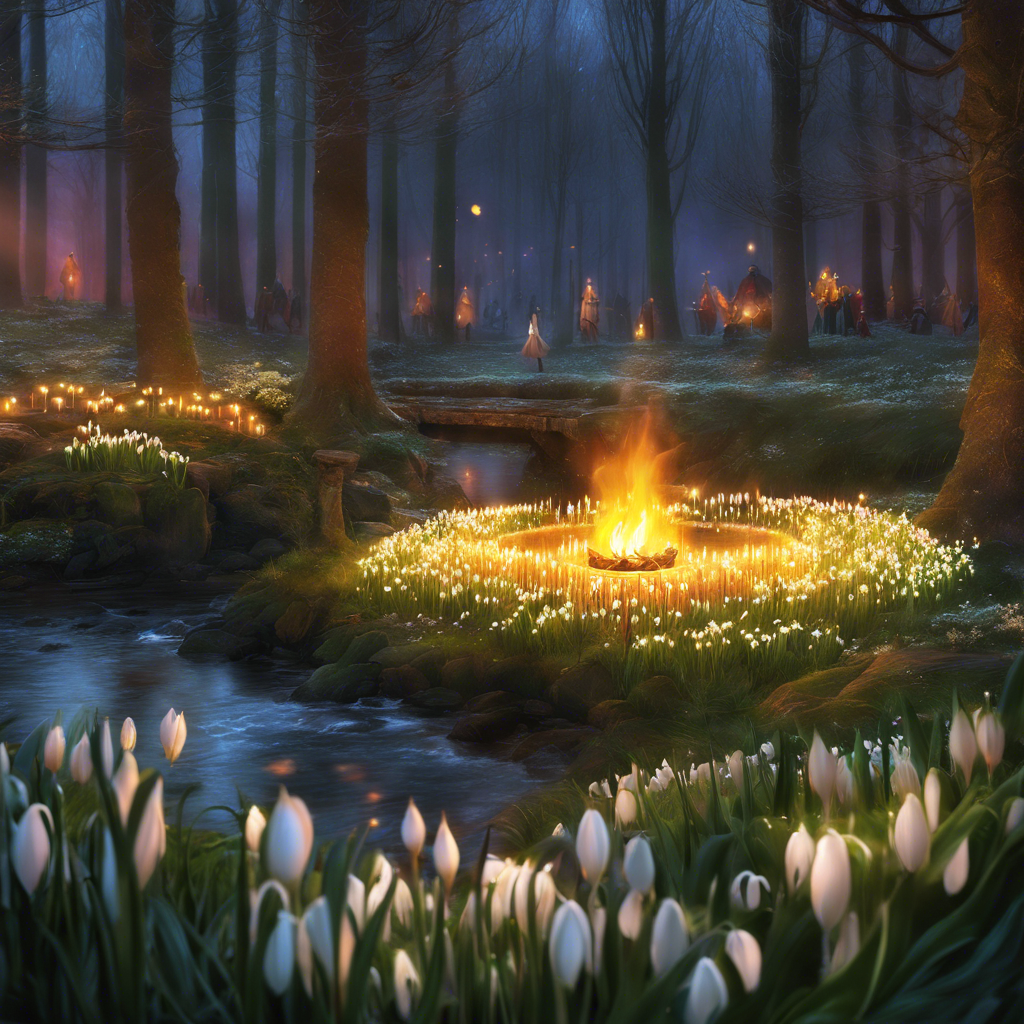
Imbolc is a cherished festival with deep roots in ancient traditions. It marks the halfway point between the winter solstice and the spring equinox. Celebrated on February 1st or 2nd, Imbolc heralds the arrival of spring and symbolizes the return of light after the long, dark winter months. In 2025, Imbolc will be celebrated on February 1st.

Historical Significance

Imbolc comes from the Old Irish word “imbolg,” meaning “in the belly.” This signifies when ewes start to lactate and heralds the start of the agricultural year. This festival is often linked to Brigid. She is the goddess of fertility, healing, and poetry. Brigid embodies the themes of fire and light. As the days grow longer, Imbolc reminds us of the impending renewal of life. It also signals the awakening of the earth.

Rituals and Traditions

Imbolc is rich with rituals and activities that honor the returning light and the goddess Brigid. Here are some common practices:

  • **Lighting Candles**: To symbolize the increasing light, it’s customary to light candles or a bonfire. This act serves as a way to invite warmth and illumination into your home.
  • **Brigid’s Cross**: Crafting a Brigid’s Cross from rushes or straw is a traditional practice. This cross is hung in the home for protection and blessings.
  • **Purification Rituals**: Many celebrate Imbolc by performing purification rituals, such as cleansing their homes with sage or water, symbolizing the removal of negativity and welcoming new energy.
  • **Feasting**: Preparing and sharing a special feast with seasonal foods, such as dairy products, grains, and root vegetables, is a way to honor the earth and its gifts.
  • **Brigid’s Bed**: Some create a special place for Brigid, often a bed adorned with white cloth and flowers, symbolizing her presence and blessings in the household.
  • **Nature Walks**: As the first signs of spring begin to appear, a nature walk can be a beautiful way to connect with the earth and observe the emerging life.

Correspondences

Understanding the correspondences associated with Imbolc can enhance your celebration. Here are some key elements to consider:

  • **Elements**: Fire and Water. Fire symbolizes inspiration and purification, while water represents the renewal of life.
  • **Colors**: White, red, and green. These colors represent purity, fertility, and the budding earth.
  • **Herbs and Plants**: Snowdrops, crocuses, and other early-blooming flowers are associated with Imbolc. Herbs like rosemary, mint, and thyme can also be used in rituals.
  • **Stones**: Clear quartz, amethyst, and garnet are stones that resonate with the energy of Imbolc, promoting clarity and protection.

Conclusion

Imbolc is a beautiful celebration of light, renewal, and the promise of spring. As we gather to honor traditions, perform rituals, and connect with nature, we invite the warmth and growth of the coming season into our lives. Whether you choose to light candles, craft a Brigid’s Cross, or simply enjoy a feast with loved ones, Imbolc is a time to reflect on the light within and the potential that lies ahead in the year to come. Embrace this magical festival, and let the spirit of Imbolc inspire you!

🌛⭐️🌜

Imbolc Ritual for 2025

**Preparation:**

1. **Set the Space:** Choose a quiet space where you can perform the ritual. Cleanse the area by burning sage or sprinkling salt water.

2. **Gather Supplies:**

  • A candle (preferably white or yellow)
  • A small bowl of water
  • A representation of Brigid (such as a statue, picture, or a handmade Brigid’s cross)
  • Flowers or greenery (like snowdrops or willow branches)
  • Incense (optional)
  • A journal and pen

🌟

**Ritual Steps:**

1. **Create an Altar:**

  • Place the candle in the center of your altar.
  • Surround it with the flowers or greenery.
  • Position the representation of Brigid and the bowl of water nearby.

2. **Light the Candle:**

  • As you light the candle, say a few words of intention, such as: 

     “As the light returns, so does hope and renewal. I honor Brigid and invite her blessings into my life.”

3. **Invoke Brigid:**

  • Take a moment to meditate on Brigid’s qualities: healing, poetry, and the forge. You may choose to recite a prayer or poem dedicated to her.

4. **Water Blessing:**

  • Dip your fingers into the bowl of water and sprinkle a few drops around your space, symbolizing purification and new beginnings. You can say:

     “With this water, I welcome renewal and clarity into my life.”

5. **Set Intentions:**

  • Write down your intentions or goals for the upcoming season in your journal. Focus on what you want to nurture and bring to fruition. 

   – Once you’ve written them down, hold the paper over the candle flame (safely) to symbolize releasing your intentions into the universe.

6. **Closing:**

  • Thank Brigid for her presence and guidance. Extinguish the candle, knowing that the light continues to grow as the days lengthen.
  • If you like, you can keep the candle as a focus for your intentions throughout the season.

7. **Feasting:**

  • Celebrate with a small meal or snack that includes dairy (symbolizing the lactating ewes), bread, and seasonal vegetables. 

This ritual can be adjusted to fit your personal beliefs and practices. Enjoy the warmth and renewal that Imbolc brings!