Pagan Essentials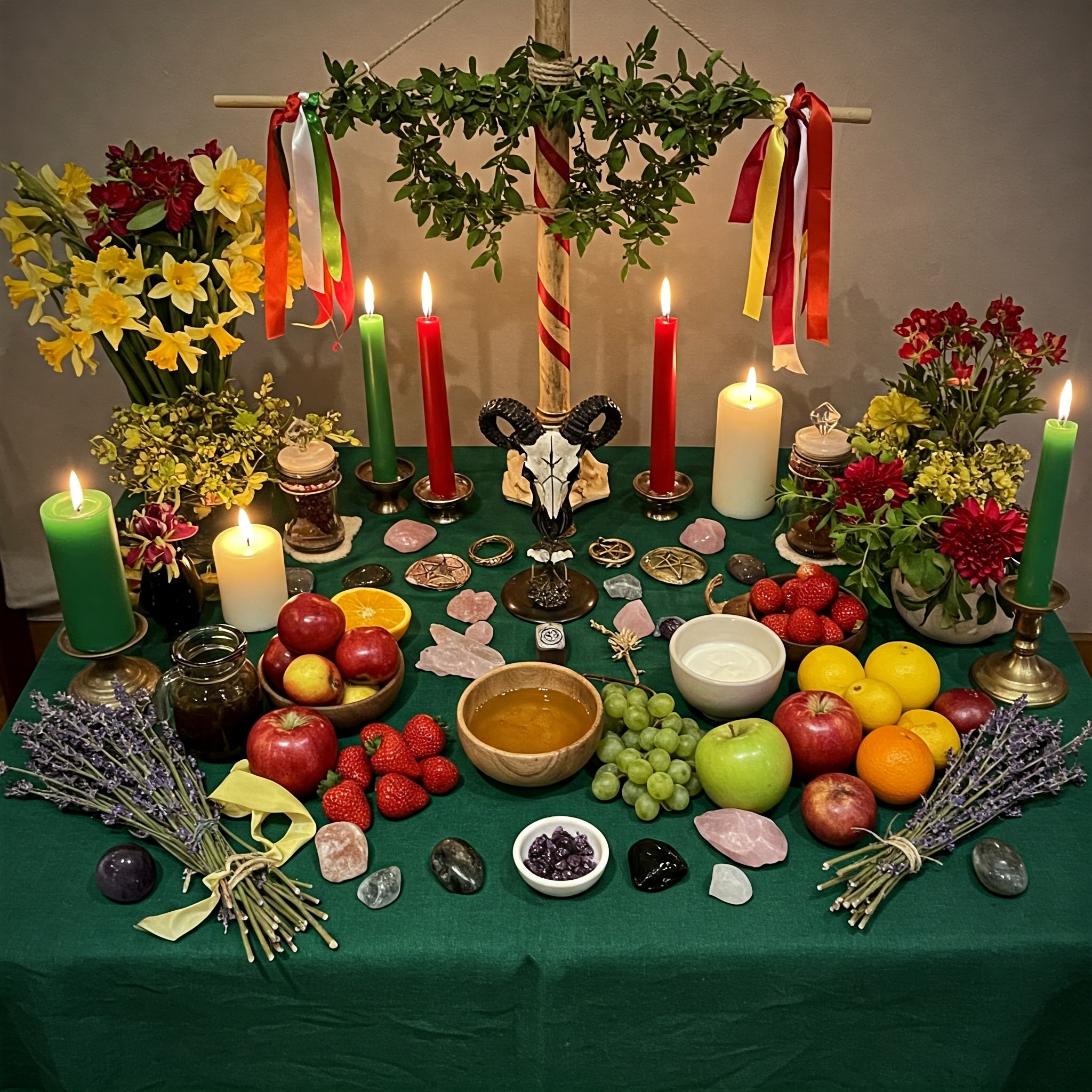
(By Ivyjaded Wyldfyre)
Welcome, dear seekers, to the vibrant heart of spring! As the days lengthen and the earth bursts forth in a riot of color, we arrive at Beltane, a Sabbat brimming with life, passion, and the promise of summer’s bounty. Here at Pagan Essentials, we delve into the essence of this joyous festival, exploring its rich tapestry of correspondences, practices, altar inspiration, and a sample ritual to ignite your own Beltane celebrations.
Beltane, also sometimes called May Day, marks the halfway point between the Spring Equinox (Ostara) and the Summer Solstice (Litha). It’s a time when the veil between the worlds thins, and the potent energies of fertility and growth are at their peak. Our ancestors celebrated this fiery festival with bonfires, dances, and rituals honoring the burgeoning life force of nature. Today, we carry that spirit forward, weaving our own magic into this ancient tapestry.
Unveiling the Correspondences of Beltane
Understanding the energies and symbols associated with Beltane can deepen our connection to the Sabbat. Consider incorporating these correspondences into your celebrations:
* Themes: Fertility, passion, love, joy, vitality, blossoming, new beginnings, the union of the God and Goddess, protection.
* Deities: The May Queen and the Green Man (or their local equivalents), Flora, Pan, Cernunnos, any deities associated with love, fertility, and the sun.
* Colors: Green (for growth and abundance), red (for passion and vitality), white (for purity and new beginnings), yellow (for the sun’s energy).
* Symbols: Maypoles, bonfires, flowers (especially hawthorn, primrose, and marigolds), ribbons, phallic symbols, yoni symbols, dew.
* Herbs & Flowers: Hawthorn, gorse, rowan, primrose, elderflower, daisies, all spring blossoms.
* Incense & Oils: Frankincense, sandalwood, rose, jasmine, ylang-ylang.
* Stones & Crystals: Rose quartz (for love), carnelian (for passion), emerald (for growth), citrine (for joy and abundance).
* Animals: Bees (for community and sweetness), rabbits (for fertility), cattle (representing prosperity).
Embracing Beltane Practices
Beltane offers a multitude of ways to connect with its vibrant energy:
* Dance the Maypole: This iconic tradition symbolizes the union of the God and Goddess and the intertwining of energies. Weave ribbons around a pole, infusing it with your intentions for the season.
* Leap the Bonfire: Historically a purification and fertility rite, jumping over a small bonfire (with safety as your utmost priority, of course!) can symbolize letting go of the old and embracing new possibilities. Even gazing into the flames can be a powerful meditative practice.
* Gather May Dew: Collect dew from plants and flowers at dawn on Beltane morning. It’s said to bring beauty, luck, and healing.
* Create Flower Crowns and Garlands: Adorn yourself and your sacred space with the vibrant blossoms of the season. This act honors the beauty of the earth and connects you to its life force.
* Feast and Celebrate: Share a meal with loved ones, incorporating seasonal foods like fresh greens, dairy products, and honey. Raise a toast to the abundance of life.
* Handfasting Rituals: Beltane is a traditional time for handfastings, a commitment ritual that can last for a year and a day or for eternity.
* Decorate Your Home: Bring the spirit of Beltane indoors with fresh flowers, green foliage, and colorful ribbons.
Crafting Your Beltane Altar
Your altar serves as a focal point for your Beltane workings. Consider these elements when setting it up:
* A Green or Floral Altar Cloth: To represent the lushness of the season.
* Candles in Beltane Colors: Green, red, white, and yellow to embody the Sabbat’s energies.
* Flowers and Greenery: Freshly gathered blossoms, leaves, and branches.
* Symbols of the God and Goddess: A small statue or representation of the May Queen and the Green Man, or symbols like a wand and a chalice.
* Offerings: Honey, milk, spring fruits, flower petals, or a small craft you’ve made.
* Beltane Correspondences: Incorporate stones, herbs, and other symbolic items from the list above.
* Ribbons: Drape colorful ribbons across your altar or tie them to branches.
* A Maypole (Miniature or Drawn): If space allows, a small Maypole can be a beautiful addition. Alternatively, draw or print an image of one.
Beltane Ritual
This is a simple ritual you can adapt to your own needs and traditions.
You will need:
* Your Beltane altar set up.
* A red candle (representing passion and vitality).
* A green candle (representing growth and abundance).
* Incense (frankincense or a floral blend).
* A bowl of water and a bowl of salt (representing the elements).
* Flowers or a flower crown.
The Ritual:
* Prepare Your Space: Cast your circle if you usually do so. Take a few deep breaths to center yourself and connect with the energy of the season.
* Opening: Stand before your altar. Say:
“The wheel turns, and the vibrant energies of Beltane awaken the land. The earth is fertile, the sun is strong, and life bursts forth in glorious abundance.”
* Honoring the Elements:
– Sprinkle a little salt into the bowl of water. Say:
“I honor the element of Water, the flow of emotions, the wellspring of life.”
– Light your incense. Say:
“I honor the element of Air, the breath of inspiration, the winds of change.”
* Invoking the Deities (Optional): If you feel called to, invoke the deities of Beltane. For example:
“Great Goddess, in your guise as the May Queen, radiant and fertile, I welcome your life-giving presence. Green Man, Lord of the Forest, wild and untamed, I honor your vital energy.”
* Lighting the Candles: Light the green candle. Say:
“With this flame, I ignite the spark of growth and abundance within and around me.”
– Light the red candle. Say:
“With this flame, I embrace passion, vitality, and the joy of life.”
* Working Your Magic: This is the time for any specific workings you wish to do. You might focus on intentions related to love, fertility, creativity, or new beginnings. Visualize your desires taking root and blossoming. You can also dance, sing, or play music.
* Connecting with Nature: If possible, step outside and connect with the natural world. Feel the sun on your skin, the earth beneath your feet, and the gentle breeze. Offer thanks for the beauty and abundance around you. You might place your flower crown upon your head as a symbol of connection to the May Queen.
* Closing: Give thanks to the elements and any deities you invoked. Say:
“Thank you, Water, for your nurturing flow. Thank you, Air, for your inspiring breath. Thank you, Great Goddess and Green Man, for the gifts of life and love. May the blessings of Beltane be upon us all.”
* Grounding and Centering: Take a few moments to ground yourself. You can do this by visualizing roots extending from your feet into the earth.
* Closing the Circle (If Cast): Release the circle in your usual manner.
–
Beltane is a time of joy, celebration, and embracing the vibrant energy of life. May your celebrations be filled with warmth, passion, and the blossoming of all that you desire. Blessed Be!
By Ivyjaded Wyldfyre for Pagan Essentials