Posted on 1 Comment

How Do I Start? Resources for New Witches: A Step-by-Step Guide

Welcome, curious soul, to the path of witchcraft! If you’re feeling drawn to the ancient wisdom, the power of nature, and the magic within, you’ve come to the right place. The journey into witchcraft is deeply personal and incredibly rewarding. Here at Pagan Essentials, we’re thrilled to offer you a starting point. Let’s dive in!

The very first step on any magical path is to simply explore. There’s no single “right” way to be a witch, and the vastness of traditions and practices can be exciting!

  • โ€‹Read, Read, Read: Immerse yourself in different perspectives. Start with general introductions to witchcraft, then delve into specific traditions that pique your interest, such as Wicca, Traditional Witchcraft, Green Witchcraft, or Chaos Magic.
  • โ€‹Listen and Learn: Podcasts, documentaries, and reputable online articles can be excellent resources.
  • โ€‹Keep a Journal: As you explore, jot down your thoughts, feelings, and any concepts that resonate with you. This will become an invaluable tool on your journey.
  • โ€‹”Wicca: A Guide for the Solitary Practitioner” by Scott Cunningham (a classic, though focused on Wicca)
  • โ€‹”Psychic Witch: A Metaphysical Guide to Meditation, Magick & Manifestation” by Mat Auryn
  • โ€‹”Protection & Reversal Magick” by Jason Miller
  • โ€‹”The Inner Temple of Witchcraft” by Christopher Penczak (comprehensive and great for structured learning)

Before you cast a single spell or invoke a deity, mastering grounding and meditation is crucial. These practices will help you center yourself, manage your energy, and connect with your inner wisdom.

  • Grounding: Think of grounding as rooting yourself to the Earth, like a tree. It helps dissipate excess energy, brings you into the present moment, and provides stability. There are many techniques, but a simple one is to visualize roots extending from the soles of your feet deep into the Earth, drawing up its calm, stable energy.
  • โ€‹Meditation: This isn’t about emptying your mind, but rather observing your thoughts without judgment and focusing your awareness. Start with just 5-10 minutes a day, focusing on your breath. Meditation enhances intuition, concentration, and psychic abilities โ€“ all vital for magical work.

Magic is powerful, and with great power comes great responsibility. Before engaging in any spell work, it’s essential to consider the ethical implications.

  • The Threefold Law/Rule of Return: Many traditions adhere to the idea that whatever energy you send out (positive or negative) will return to you threefold. While not universally adopted, it’s a valuable reminder to act with intention and integrity.
  • โ€‹Do No Harm: This is a fundamental principle for many witches. Consider the potential impact of your actions on yourself, others, and the environment.
  • โ€‹Consent: Never attempt to influence someone’s free will without their explicit consent. This includes love spells, mind manipulation, or any form of coercive magic.
  • โ€‹Personal Responsibility: You are accountable for your magic. Take time to reflect on your intentions and the potential consequences of your workings.

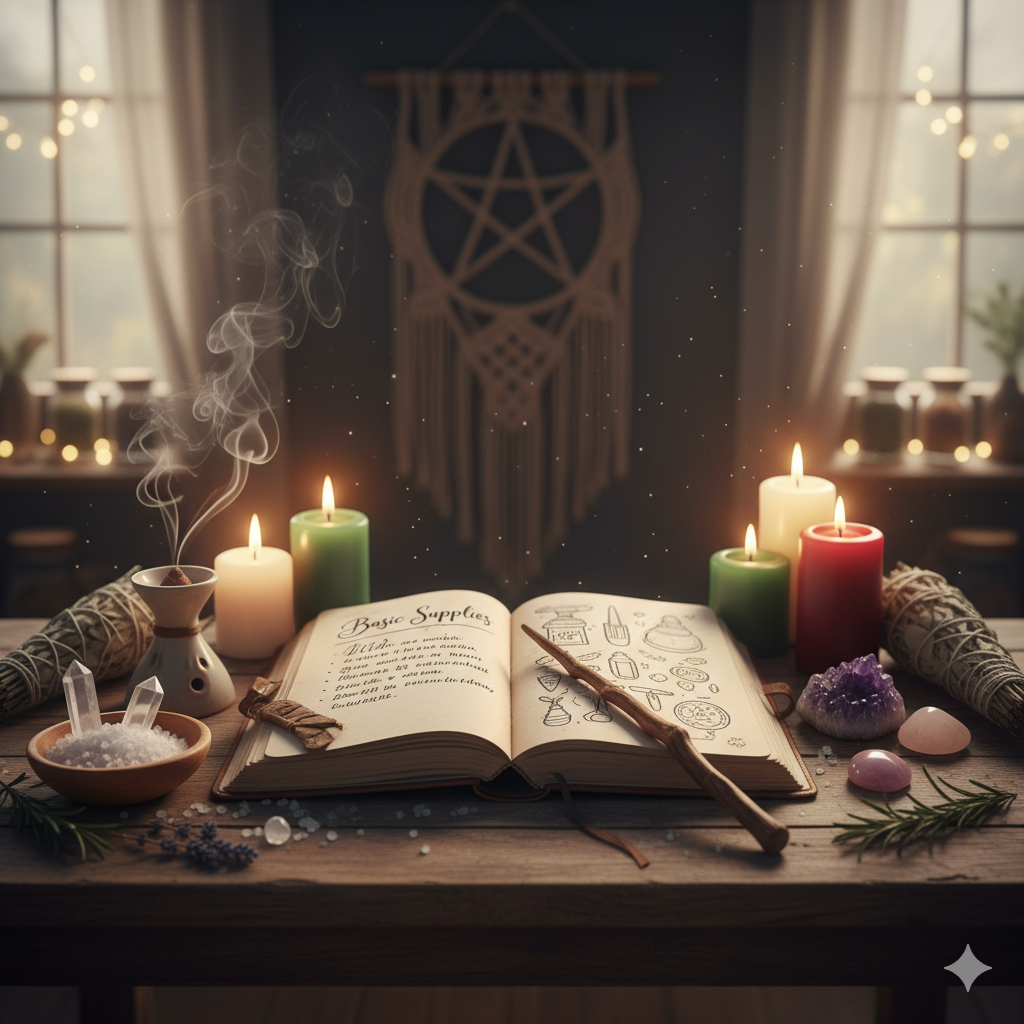
โ€‹You don’t need anything to be a witch โ€“ your most potent tools are your mind and spirit. However, certain items can enhance your practice and create a sacred atmosphere.

  • Journal/Book of Shadows: A place to record your spells, rituals, dreams, and magical insights.
  • โ€‹Candles: Different colors correspond to different intentions (e.g., white for purity, green for prosperity, red for passion).
  • โ€‹Incense/Herbs: For cleansing, offering, or setting the mood. Sage, palo santo, and frankincense are popular choices.
  • โ€‹Salt: A powerful purifier and protector.
  • โ€‹Wand or Athame: (Optional) These are tools to direct energy, not for cutting. A simple stick found in nature can serve as a powerful wand!
  • โ€‹Altar Space: A dedicated area, no matter how small, to honor your practice. It can hold your tools, natural items, and representations of what you hold sacred.
  • โ€‹Crystals: Each crystal carries unique energetic properties. Start with clear quartz, amethyst, or rose quartz for general purposes.

Posted on 1 Comment

Blooming into Balance: Celebrating Ostara 2025

The air is changing. A gentle warmth replaces the winter’s chill, and the world awakens with a vibrant burst of life. Ostara, the Spring Equinox, is upon us! This Pagan Sabbat marks the moment when day and night are of equal length, a perfect balance before the sun’s power begins to dominate. In 2025, we’ll be celebrating Ostara on Thursday, March 20th.

Ostara is a time of renewal, rebirth, and growth. It’s a celebration of the Goddess Ostara (or Eostre), associated with dawn, spring, and fertility, and a welcoming of the returning sun. Let’s delve into how you can celebrate this vibrant Sabbat, whether you’re a solitary practitioner or part of a coven.

๐Ÿ’ซ Correspondences of Ostara

 ๐Ÿ’ซ Deities:

Ostara/Eostre, Persephone, Flora, Green Man, any deities associated with spring, dawn, and fertility.

 ๐Ÿ’ซ Colors:

Pastel shades of green, yellow, pink, white, and light blue.

 ๐Ÿ’ซ Symbols:

Eggs, rabbits, hares, flowers (especially daffodils, tulips, and crocuses), seeds, budding trees, lambs, butterflies.

 ๐Ÿ’ซ Herbs and Flowers:

Daffodils, tulips, crocuses, violets, honeysuckle, sage, and anything new and green.

 ๐Ÿ’ซ Stones:

Rose quartz, aquamarine, moonstone, and any light-colored crystals.

 ๐Ÿ’ซ Incense/Oils:

Floral scents like jasmine, rose, and violet, as well as light, fresh scents like lemon and sandalwood.

 ๐Ÿ’ซ Foods:

Eggs (decorated and plain), leafy greens, spring vegetables, seeds, honey cakes, and fruit.

_______________________________

โœจ Altar Setup

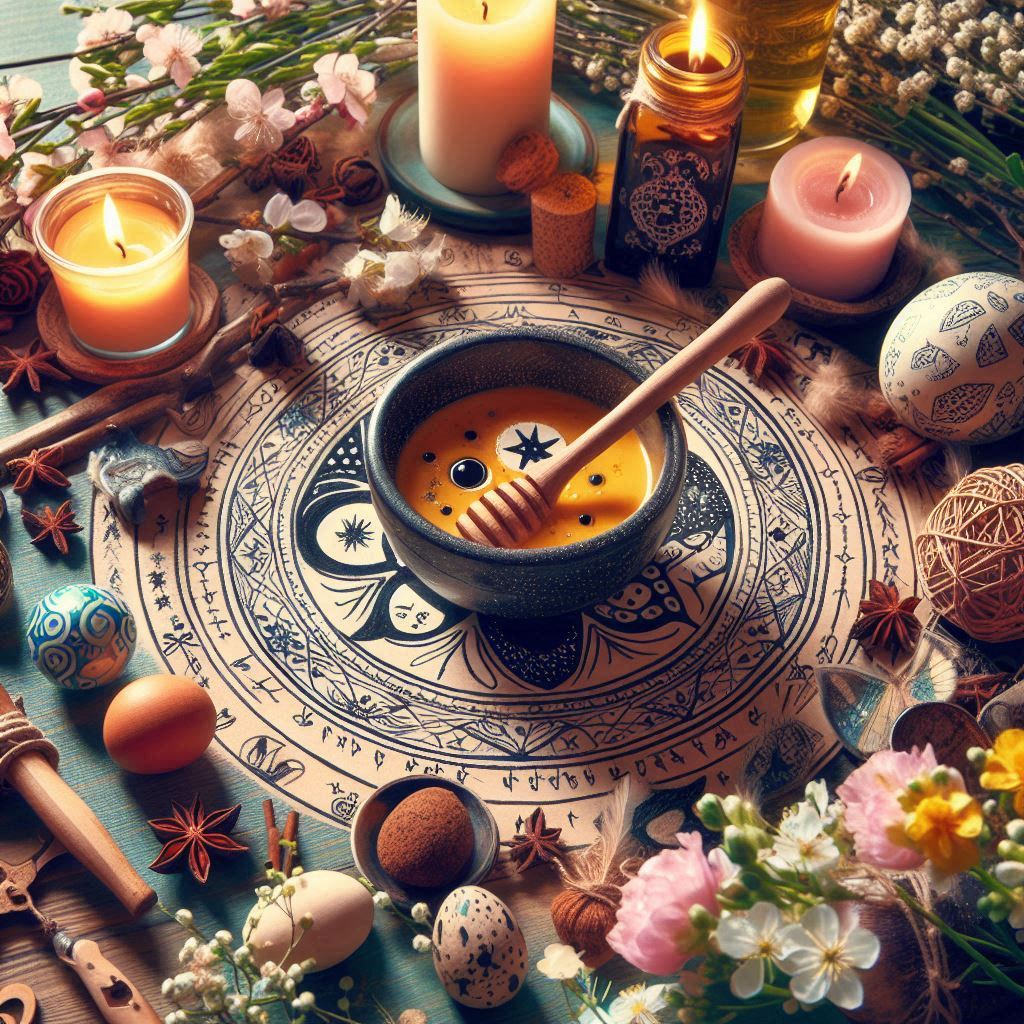
Your Ostara altar should reflect the vibrancy & colors of spring and can be in or outdoors.

Consider:

 โœจ A white or pastel-colored altar cloth.

 โœจ Fresh flowers in a vase.

 โœจ Decorated eggs or a nest of eggs.

 โœจ Images or figurines of rabbits or hares.

 โœจ Seeds or small potted plants.

 โœจ Candles in Ostara colors.

 โœจ Crystals that resonate with the season.

 โœจ A bowl of spring water.

 โœจ A representation of your chosen deities.

_______________________________

๐ŸŒ›Rituals for Ostara

 ๐ŸŒ› Planting Ritual:

Plant seeds or seedlings to symbolize new beginnings and growth. As you plant, speak your intentions aloud.

 ๐ŸŒ› Equinox Meditation:

Find a quiet space and meditate on the balance of light and dark, the renewal of nature, and your own personal growth.

 ๐ŸŒ› Journaling:

Reflect on your goals and intentions for the coming season. Write about what you want to grow and cultivate in your life.

๐ŸŒ› Offering Ritual:

Make offerings to Ostara or your chosen deities, such as flowers, seeds, or honey cakes.

 ๐ŸŒ› Spring Cleansing Ritual:

Cleanse your home and sacred space, both physically and energetically, to make way for new energy. Use sage, palo santo, or spring-scented essential oils.

_______________________________

Solitary Practitioner Activities

 ๐ŸŒŸ Nature Walk:

Spend time in nature, observing the signs of spring. Gather flowers, leaves, or stones to add to your altar.

 ๐ŸŒŸ Crafting:

Create Ostara-themed crafts, such as egg decorations, flower crowns, or nature mandalas.

 ๐ŸŒŸ  Baking:

Bake spring-themed treats, such as honey cakes or egg-rich pastries.

 ๐ŸŒŸ  Dawn Meditation:

Wake up early and greet the sunrise, welcoming the return of the light.

_______________________________

Coven Activities

๐ŸŒŸ Plant a communal garden or tree, symbolizing the coven’s shared growth and intentions.

Continue reading Blooming into Balance: Celebrating Ostara 2025
Posted on

Intuitive Witchcraft

Intuitive witchcraft is a practice within modern witchcraft that places a strong emphasis on intuition, personal connection, and individualized approaches to magic and spirituality. It often diverges from strict ritualistic or traditional practices and encourages practitioners to trust their instincts, emotions, and inner guidance when performing spells, rituals, or other magical work.

In this blog post, I will share with you some key aspects of intuitive witchcraft and how you can incorporate them into your own practice. Whether you are new to witchcraft or have been practicing for a while, I hope you will find something useful and inspiring in this post.

Key aspects of intuitive witchcraft may include:

Personalized Spell work:

Practitioners often create their own spells and rituals based on their intuition, needs, and the symbolism that resonates with them. This means that you don’t have to follow a specific recipe or formula for your spells, but rather use your creativity and imagination to craft your own magical workings. You can use whatever tools, ingredients, or methods that feel right to you, as long as they are aligned with your intention and ethics. You can also experiment with different types of magic, such as candle magic, sigil magic, knot magic, etc., and see what works the best for you.


Nature Connection:

Many intuitive witches have a deep connection to nature and draw inspiration and energy from the natural world. They may work with the elements, the seasons, the moon phases, the planets, the animals, the plants, or any other aspect of nature that they feel drawn to. They may also practice outdoors or in natural settings, such as forests, gardens, parks, beaches, etc., where they can feel closer to the earth and its energies. They may also honor and respect nature by living in harmony with it and taking care of the environment.


Meditation and Visualization:

Meditation and visualization exercises are commonly used to enhance intuition and psychic abilities. They can help practitioners to calm their mind, focus their attention, access their subconscious, raise their vibration, and connect with their inner wisdom. They can also help practitioners to visualize their desired outcome, create their own reality, and attract what they want into their lives. Meditation and visualization can be done in various ways, such as guided meditations, affirmations, mantras, breathing techniques, etc.


Flexibility:

There is a flexible and adaptable approach to tools, correspondences, and traditions, allowing practitioners to blend elements from various sources. This means that you don’t have to stick to one path or system of witchcraft, but rather explore different options and find what resonates with you. You can also mix and match different tools, correspondences (such as colors, herbs, crystals), or traditions (such as Wicca and Paganism) according to your preference and intuition. You can also change or modify your practice as you grow and evolve.


Inner Work:

Intuitive witchcraft often involves self-reflection, shadow work (the process of confronting and integrating one’s repressed aspects), and personal growth as integral parts of one’s magical practice. This means that you don’t just focus on external results or manifestations, but also on internal transformation and healing.

You may use your magic to:

  • support your emotional, mental, spiritual, and physical well-being, as well as your relationships, career, and life purpose
  • overcome your fears, challenges, or obstacles
  • to empower yourself
  • to express your authentic self
  • to align with your true values, passions, and goals

It is crucial to acknowledge that intuitive witchcraft can differ greatly among individuals, as it is highly personalized and centered on individual experiences and beliefs. It is not constrained by rigid regulations or customs, enabling practitioners to investigate and cultivate their distinct magical journey.

Intuitive witchcraft empowers individuals to tap into their own inner wisdom and intuition, allowing them to forge a deep connection with the natural world and the unseen forces that surround us. This personalized approach to magic embraces the notion that each practitioner possesses a unique set of abilities, perspectives, and spiritual beliefs.

Unlike traditional forms of witchcraft that may adhere to specific rituals or spellcasting methods, intuitive witchcraft encourages practitioners to explore and experiment with various techniques, tools, and practices that resonate with their individuality. This freedom to adapt and create their own magical path is what sets intuitive witchcraft apart.

For some, intuitive witchcraft may involve communing with nature, working with herbs and crystals, or harnessing the power of meditation and visualization. Others may find solace in divination tools such as tarot cards or pendulums, using them as a means to gain insight and guidance. The beauty of intuitive witchcraft lies in its flexibility and adaptability, allowing practitioners to blend and combine different elements that feel most aligned with their personal beliefs and intentions.

In this journey of self-discovery and self-expression, intuitive witches often rely on their intuition as their primary guide. They learn to trust their instincts and embrace their innate magical abilities, understanding that the true power of witchcraft lies within themselves. Through introspection, meditation, and deep reflection, they cultivate a profound connection with their inner selves and the energies that flow through the universe.

While intuitive witchcraft may not conform to traditional rules or customs, it is not to be mistaken as a haphazard or careless practice. On the contrary, it requires a deep level of self-awareness, dedication, and respect for the energies at play. Intuitive witches are mindful of their intentions and the impact of their actions, always striving to maintain a harmonious balance between their magical workings and the natural world.

In essence, intuitive witchcraft is a deeply personal and transformative journey that allows individuals to explore and embrace their own unique magic. It encourages practitioners to trust their intuition, honor their individuality, and create a spiritual practice that resonates with their soul. As the path unfolds, intuitive witches continue to evolve, grow, and deepen their connection with the mystical forces that surround us all.

Posted on

Chakra Guide

This guide provides a comprehensive summary of the chakras, which are the energy centers in the body according to ancient Indian philosophy. There are seven main chakras located along the spine, in our astral body, from the base to the crown of the head, each associated with different physical, emotional, and spiritual aspects of life.

“The seven chakras are vortexes of energy that represent our seven levels of consciousness,” explains author, yoga teacher, and certified holistic practitioner Thimela Garcia. “Through these seven chakras, we move from the lower self, or an unconscious state, to the higher self, or conscious state.”

By Thimela Garcia

The chakras radiate a specific colour and energy. Each one coincides with a gland in the physical body. Since each chakra relates to specific spiritual, emotional, psychological, and physical aspects of our being, it is believed that their blockage or malfunction can lead to physical, psychological, and emotional disorders. The conscious awareness and balancing of these energy centers, on the other hand, is believed to lead to well-being and good health.

Mostly, we hear about the โ€˜seven chakrasโ€™ but, there is an infinite number of chakras in the human body. A specific vibration, color, symbol, and sound are associated with all 7 chakras. Depending on whether these energy centers are healthy or blocked, you may experience different attributes of your physical, mental, and emotional health.

A Chakra map.

The 7 Chakras

Root Chakra or the Muladhara Chakra

We will start with the strongest chakra, the Root Chakra, or the Muladhara Chakra, which is located at the base of the spine, between the anus and the genitals, and is the basis of existence and is associated with stability, security, fear, ambition, feelings of groundedness, and connection to the earth. Keep this chakra balanced for overall well-being. Practice grounding exercises, connecting with nature, and practicing mindfulness to achieve this. However, when the Root Chakra is balanced, these are replaced by more positive emotions, and you feel stable, confident, balanced, energetic, independent, and strong. 

Symbol; The Root Chakra symbol consists of a 4-petalled lotus flower, a square, and a downward-facing triangle. Each element is said to represent the 4 aspects of the human mind, uniting to form the birth of the human consciousness. 

Color: Red

Element: Earth 

Deity;ย Lord Ganesha. One worships and asks for his help to activate this chakra.

Gemstones: Any red or red/brown colored stones (e.g. ruby, garnet, hematite, black onyx, smoky quartz, and red jasper)

Essential Oils: Sandalwood, labdanum, olibanum, copal, styrax, white ceremonial sage, frankincense, myrrh

Herbs: Burdock, clove, dandelion, rosemary, paprika, cayenne, allspice, nutmeg


Sacral Chakra or the Svadhishthana Chakra

Moving up, the Sacral Chakra, or the Svadhishthana Chakra, is located in the lower abdomen, about four fingers below the navel, and is connected to creativity, pleasure, emotions, self-worth, and sexuality. It is important for this energy center to maintain emotional balance with activities like dancing, painting, or engaging in hobbies to stimulate this chakra. When balanced, it makes one feel more vibrant, happy, positive, satisfied, compassionate, and intuitive.  

Symbol: The symbol for the Svadhishthana Chakra or Sacral Chakra is made up of multiple circles, a crescent moon, and six lotus flower petals. The circles and crescent moon represent the cyclical nature of life, death, and rebirth, while the 6 petals portray the 6 negative aspects of our nature that we need to overcome to open this chakra. 

Color: Orange

Element: Water

Deity;ย Lord Varun, the God of water (for women it is also associated with the Goddess Saraswatiย connected with the womb area)

Gemstones: Any orange-colored stones (e.g. carnelian, orange sapphire, imperial topaz, Tiger’s Eye, and goldstone)

Essential Oils: Vetiver, black pepper, rosemary, cedarwood, angelica, clove

Herbs: Coriander, calendula, fennel, licorice, cinnamon, vanilla


Solar Plexus Chakra or the Manipura Chakra

Next in line, the Solar Plexus Chakra, or the Manipura Chakra, is located in the upper abdomen, between the navel and the bottom of the rib cage, and is associated with personal power, self-esteem, and confidence, perfectionism, and digestive health. A balanced Solar Plexus Chakra promotes a healthy self-image and assertiveness. Practices like tapping into personal strengths, setting boundaries, and practicing self-care nurture this chakra. By balancing this chakra, we feel more energetic, confident, productive, and focused. 

Symbol: The Solar Plexus Chakra symbol consists of a downward-pointing triangle within a ten-petalled lotus flower. The ten petals symbolize ten negative character traits that we have to conquer, while the triangle is the Agni tattva or fire of kundalini energy which signifies our inner strength. 

Color: Yellow

Element: Fire 

Deity;ย Lord Shiva (rudra)

Gemstones: Any yellow-colored stones (e.g. citrine, yellow pyrite, red creek jasper, sapphire, and amber)

Essential Oils: Lily of the Valley, lemon, helichrysum, juniper, grapefruit, neroli, tea tree

Herbs: Anise, celery, cinnamon, lily of the valley, marshmallow, mint, melissa, turmeric, cumin


Heart Chakra or the Anahata Chakra

Further up, the Heart Chakra, or the Anahata Chakra, situated in the center of the chest, governs love, compassion, and relationships. It is important to keep this chakra open and balanced to experience unconditional love, and trust, and encourage healthy relationships. Rituals like practicing forgiveness, and self-compassion, and engaging in activities that evoke love and joy will help keep this chakra open. By harmonizing this energy center, a person begins to feel more compassionate, caring, optimistic, friendly, and motivated. 

Symbol: In the Heart Chakra symbol, two triangles intersect to form a yantra which represents the balance of yin and yang, or upward and downward forces. Outside, there is a lotus flower with 12 petals symbolizing the twelve divine qualities associated with the heart. 

Color: Green

Element: Air 

Deity;ย Lord Krishna, an avatar of Lord Vishnu, the God of. Balance.

Gemstones: Any green or light pink colored stones (e.g. jade, rose quartz, emerald, and green aventurine)

Essential Oils: Rose, jasmine, cacao, cardamom, palmarosa, bergamot, black spruce

Herbs: Cayenne, hawthorn berries, jasmine, lavender, marjoram, rose, thyme, cilantro, parsley


Throat Chakra or the Vishuddha Chakra

Moving up to the Throat Chakra, or the Vishuddha Chakra, located in the neck region, coincides with the thyroid gland, and is associated with communication, self-expression, and authenticity. It is important to maintain a clear and honest expression of thoughts and emotions for a balanced Throat Chakra. Rituals like journaling, singing, or speaking affirmations to enhance communication and expressiveness will make this chakra happy. When this chakra is balanced, it enables creativity, positive self-expression, constructive communication, and a sense of satisfaction. 

Symbol: The symbol of the Throat Chakra consists of a 16-petalled lotus flower surrounding an inverted triangle which holds a circle within. This represents spiritual growth and the purification of the body, mind, and spirit.

Color: Blue

Element: Space 

Deity;ย Goddess Saraswati, the Goddess of knowledge and illumination.

Gemstones: Any bright or light blue colored stones (e.g. turquoise, aquamarine, blue topaz, and sodalite)

Essential Oils: Petitgrain, blue chamomile, bay laurel, blue yarrow, Peru balsam, fir balsam

Herbs: Coltsfoot, blackberry, elderberry, common sage, salt, lemongrass, bay laurel, chamomile, eucalyptus, geranium


Third Eye Chakra or the Ajna Chakra

Continuing to the Third Eye Chakra, or the Ajna Chakra, situated between the eyebrows, is connected to concentration, intuition, insight, and spiritual awareness. A balanced Third Eye Chakra assists in developing psychic abilities, inner wisdom, and a deeper understanding of oneself and the world. Practices like meditation, visualization, and working with symbols will enhance this chakra. It is said that meditating upon this chakra destroys the karma of past lives and brings liberation and intuitive knowledge. When this chakra is active and balanced, a person feels more vibrant and confident, both spiritually and emotionally. In the absence of the fear of death, one becomes his own master and remains free of all attachment to material things. 

Symbol: The Third Eye Chakra symbol consists of an inverted triangle resting in a circle between two lotus petals. The two petals and the downward-facing pyramid both signify wisdom, emphasizing the Third Eye Chakraโ€™s role in our journey to spiritual awareness. 

Color: Indigo

Element: None 

Deity;ย Lord Shiva

Gemstones: Any dark blue or indigo-colored stones (e.g. amethyst, fluorite, lapis lazuli, sapphire, or tanzanite)

Essential Oils: Mugwort, blue lotus, juniper, cypress, yarrow, opoponax

Herbs: Eyebright, juniper, mugwort, poppy, mandrake root, blue lotus, cypress


Crown Chakra or the Sahastrara Chakra

Lastly, the Crown Chakra, or the Sahastrara Chakra, located at the crown of the head, is associated with spirituality, connection to higher consciousness, and inner peace. Crown Chakra is a connection to supreme power and it is long-lasting happiness and freedom which is achieved by only some great gurus on earth. It is important to integrate spiritual practices, such as meditation, prayer, or contemplation into our lives to activate and balance the Crown Chakra. A balanced Crown Chakra promotes spiritual understanding, inner peace, and a clear perspective on the world.

Symbol: The Crown Chakra symbol is depicted as a ring of a thousand lotus petals surrounding an inverted triangle. This symbolizes the rising of divine energy into the Crown Chakra, bringing spiritual liberation and enlightenment. 

Color: Violet White

Element:ย Noneย 

Shiva; the deity of the crown chakra

Gemstones: Any purple or clear colored stones (e.g. amethyst, quartz, moonstone, and diamond)

Essential Oils: Gotu kola, lavender, pink lotus, palo santo, spikenard, frangipani

Herbs: Gotu kola, lavender, pink lotus, St. Johnโ€™s wort


In conclusion, the guide provides an overview of the seven chakras, emphasizing the significance of maintaining balance in these energy centers for overall physical, emotional, and spiritual well-being. It suggests various practices and techniques to align and harmonize each chakra, enabling individuals to lead a more fulfilled and harmonious life. By learning about the functions and symbols of each chakra, we can identify imbalances or blocks and work to restore balance and harmony within our bodies and minds. Restoring imbalances in the flow of energy can clear emotional disturbances and strengthen your physical body, helping you to operate at your optimal level of physical, emotional, and spiritual well-being.

Chakra Crystal chart
  1. Muladhara = I am
  2. Swadhisthana = I feel
  3. Manipura = I do
  4. Anahata = I love
  5. Vishuddha = I speak
  6. Ajna = I see or I know
  7. Sahasrara = I understand

The seven Chakras and their meanings

The Ultimate Chakra guide image