Posted on 3 Comments

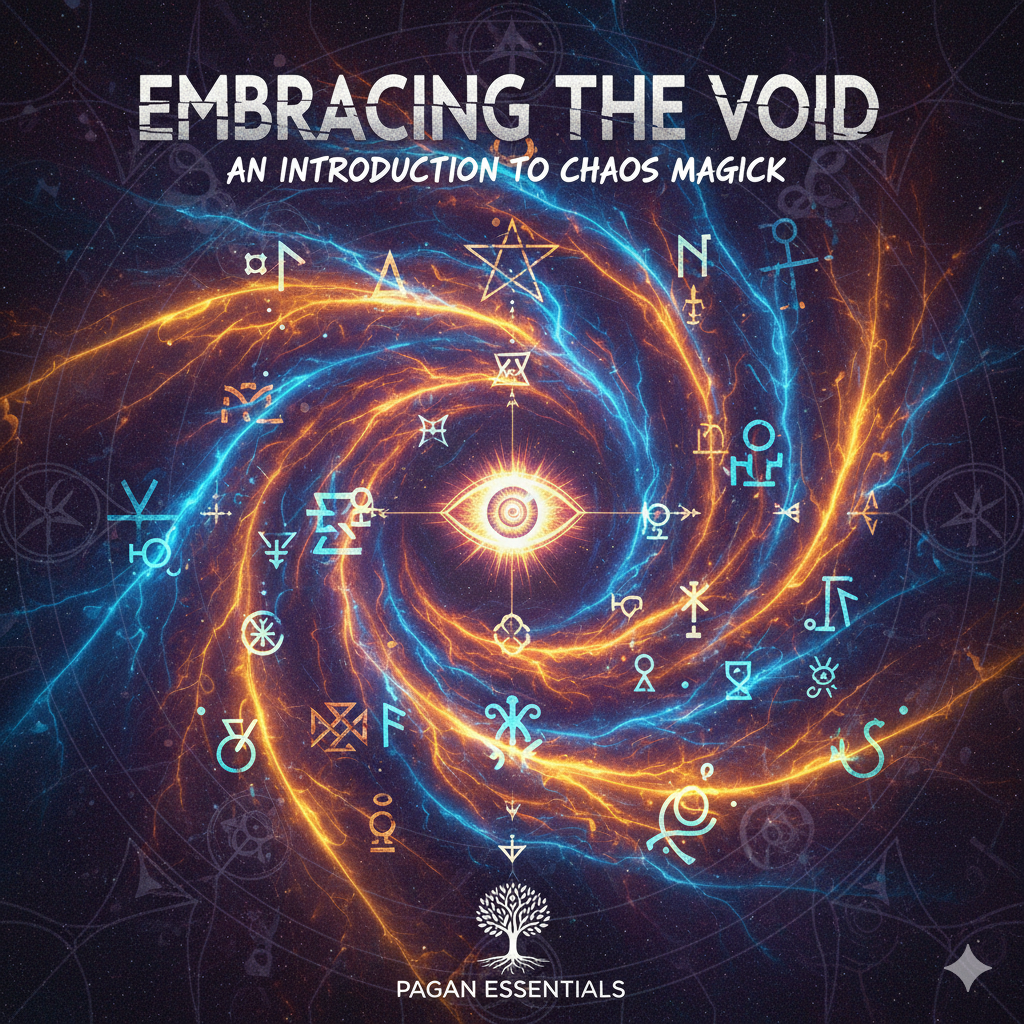
✨ Embracing the Void: An Introduction to Chaos Magick

Hello, seekers! Welcome back to Pagan Essentials. Today, we’re diving into one of the most dynamic, paradigm-bending, and controversial paths in modern occultism: Chaos Magick.If you.’re used to traditional paths with ancient pantheons, strict rituals, and establishe n,cosmologies, prepare to have your mind pleasantly scrambled. Chaos Ma. Ingick (often shortened to “Chaotes” or “CM”) is less a system and more an attitude—a rebellious, practical, and highly effective approach to magical practice.

Chaos Magick emerged in the 1970s in England, primarily influenced by artists, occultists like Austin Osman Spare, and the counter-cultural spirit of the time. It is fundamentally defined by one core principle:The belief is the tool, not the truth.In traditional magick, you might follow a system (like Wicca, Golden Dawn, or Hermeticism) because you believe its underlying cosmology and deities are real and true.

In Chaos Magick, you temporarily adopt a belief system—a paradigm—because it is useful for achieving a specific magical goal. Once the goal is achieved, you drop the paradigm like a hot potato.

This is famously summarized by the phrase: “Nothing is True; Everything is Permitted.”

  • Paradigm Shifting: The ability to effortlessly step into and out of different belief systems. One day you might be working with Cthulhu, the next with a Christian saint, and the day after with quantum physics—whatever works for the desired effect.
  • Gnosis (Altered State of Consciousness): All effective magick is achieved in a state of deep focus, often called Gnosis. This is the moment when the conscious, critical mind is bypassed, allowing the magical intention to be impressed upon the subconscious.
  • Inhibitory Gnosis: Achieved through deep meditation, trance, boredom, or yoga.
  • Excitory Gnosis: Achieved through intense chanting, dancing, drumming, sensory overload, or even sex.Practicality First: If it works, use it. If it doesn’t, discard it. Chaos Magick is deeply results-oriented.
  • Excitory Gnosis: Achieved through intense chanting, dancing, drumming, sensory overload, or even sex.
  • Practicality First: If it works, use it. If it doesn’t, discard it. Chaos Magick is deeply results-oriented.

If Chaos Magick has a single, defining ritual, it is the practice of Sigilization. It’s elegant, simple, and incredibly potent.

A sigil is a symbol created to bypass the conscious mind, which often second-guesses or dilutes magical intent.

  1. Formulate Your Intent: Write down your desire clearly and concisely. It must be stated in the present tense, as if it has already happened. Example: “I desire to receive a new creative opportunity.”
  2. Condense the Letter mms: Remove all repeating letters from your sentence.Example: I D S R E C V A N W T O P Y U (all unique letters)
  3. Design the Symbol: Arrange and stylize these remaining letters into a single, compact, abstract monogram. Make it unrecognizable as the original sentence.
  4. Charge the Sigil: This is where Gnosis comes in. Stare at the sigil until you are in a trance-like state, then deliberately forget what the sigil was designed for.
  5. Release and Forget: The most crucial step! Your conscious mind must forget the sigil’s purpose. Burn it, tear it up, bury it, or toss it into a lake. This ‘launches’ the desire into your subconscious.: “desire to receive a new creative opportunity.

While the freedom of Chaos Magick is liberating, it demands a high degree of personal responsibility and psychological health.

Since you are constantly manipulating your own beliefs, it’s vital to maintain a sense of objective reality. Chaotes must be acutely aware of their own psychological mechanisms to avoid getting trapped in a temporary paradigm or suffering a spiritual crisis. The path is for the intellectually curious and the magically daring.

Chaos Magick is an excellent path if you:

  • Feel constrained by the rules of traditional systems.
  • Are interested in results over dogma.
  • Have a background in philosophy, science, or art (it helps!).
  • ​🛑 Caution: The Shadow Side of Freedom

Example: “I desire to receive a new creative opportunity.”

Posted on

Exploring Chaos Magick: Belief, Rituals, and Empowerment

Chaos Magick is a modern form of magic that emerged in the late 20th century, drawing inspiration from various spiritual and occult traditions such as shamanism, Hermeticism, and Eastern mysticism. Unlike traditional forms of magic, Chaos Magick is distinguished by its emphasis on achieving results without being tied to any specific belief system or tradition.

The aspects of Chaos Magick
Aspects of Chaos Magick
  • Belief as a Tool: Chaos magicians view belief not as an absolute truth but as a flexible tool. They adopt and discard beliefs as needed to achieve specific magickal goals, operating under the premise that belief shapes reality.
  • Pragmatism and Results: The effectiveness of a technique or ritual is judged solely by its results. Chaos Magick is highly pragmatic, focusing on what works rather than adhering to tradition.
  • Personalized Practice: Practitioners often create their own rituals and symbols, borrowing from various traditions or inventing entirely new ones. This personalized approach allows for great creativity and adaptability.
  • Psychological Techniques: Techniques from psychology, such as sigilization (creating and charging sigils), meditation, and altered states of consciousness, are commonly used. These methods help to focus the mind and bypass the conscious mind’s skepticism.
  • Eclecticism: Chaos Magick draws on a wide range of sources, including ceremonial magick, shamanism, pop culture, and even scientific principles. This eclectic mix allows practitioners to tailor their magickal practice to their own preferences and needs.
  • Use of Symbols and Archetypes: Symbols, archetypes, and mythologies from various cultures are often employed. The power lies in the practitioner’s intent and the meaning they ascribe to these symbols.
  • Ritual and Structure: While there is no rigid structure, rituals in Chaos Magick can range from elaborate ceremonies to simple acts of will. The key is that the ritual serves to focus the practitioner’s intent and energy.
  • Experimental Approach: Chaos Magick encourages experimentation and innovation. Practitioners are urged to test different methods and record their results, learning from both successes and failures.
  • Deconditioning: An essential part of the practice is deconditioning oneself from societal, cultural, and personal limitations. This involves breaking down ingrained beliefs and habits to foster a more flexible and empowered mindset.
  • Magickal Record: Keeping a detailed magickal journal or diary is a common practice. This record helps practitioners track their progress, refine their techniques, and understand what methods are most effective for them.
    Chaos Magick is about taking control of one’s own magickal practice, embracing change, and using whatever means necessary to achieve desired outcomes. It’s a path that invites curiosity, creativity, and a willingness to explore the unknown.

The 7 Elements of Chaos Magick🙏
Chaos magic, a practice that emphasizes belief’s power to shape reality, draws from various mystical and occult ideas.

🌈Here are the seven elements associated with it:

  1. Spirit Above: Represents the divine, cosmic forces, and higher consciousness.
  2. Spirit Below: Symbolizes the underworld, subconscious, and hidden energies.
  3. Spirit Within: Refers to personal intuition, inner wisdom, and self-awareness.
  4. Earth: Associated with stability, grounding, and the material world.
  5. Air: Signifies intellect, communication, and mental clarity.
  6. Fire: Represents passion, transformation, and creative energy.
  7. Water: Symbolizes emotions, intuition, and adaptability.
Pagan Essentials Logo
Posted on 1 Comment

The Different Types of Witchcraft

Witchcraft is a diverse and multifaceted practice that encompasses various traditions and practices. Understanding the different types of witchcraft can provide insight into the rich tapestry of this ancient craft. There are several different types of witchcraft, but some of the most common include:

Wicca: Wicca is a modern pagan religion that incorporates elements of witchcraft, nature worship, and magic. It focuses on the worship of the Goddess and the God, along with the practice of rituals, spellcasting, and the observance of the Wheel of the Year. It also adheres to ethical principles such as the Wiccan Rede.

Pagan Witchcraft: Pagan witchcraft draws inspiration from pre-Christian nature-based religions. It emphasizes a deep connection with nature, honoring deities, and celebrating seasonal cycles.

Traditional witchcraft: Traditional witchcraft refers to various pre-modern witchcraft practices that are deeply rooted in folklore and local traditions. It is a practice that has been passed down from generation to generation. It often involves the use of herbs, oils, and crystals for healing and divination and working with spirits, connecting with the land, and folk magic.

Chaos magick: Chaos magick is a type of witchcraft that emphasizes the power of the mind. It is often used for personal transformation and empowerment. Practitioners believe that belief itself is the key ingredient for successful magic rather than adherence to specific rituals or dogmas.

Kitchen Witchcraft: Kitchen Witchcraft is a type of witchcraft that centers around domestic activities, such as cooking, herbalism, and potion=making. Practitioners of Kitchen Witchcraft often incorporate magic into their everyday lives and can be considered the “homemakers” of the magical world.

Hedge Witchcraft: Hedge Witchcraft is associated with connecting and journeying between different realms or dimensions. Hedge Witches often engage in spirit work, divination, healing, and herbalism. They bridge the gap between the physical and spiritual worlds.

Eclectic Witchcraft: Eclectic Witchcraft involves borrowing practices and beliefs from multiple traditions, creating a personalized and flexible approach to witchcraft. Eclectic witches often mix different magical systems, symbols, and rituals to suit their individual preferences.

Shamanic Witchcraft: Shamanic Witchcraft combines elements of shamanism and witchcraft. Practitioners focus on journeying into altered states of consciousness, connecting with their spirit guides or power animals, and using trance work for healing and divination.

Hereditary Witchcraft: Hereditary Witchcraft is passed down through family lineage. It emphasizes ancestral connections, inherited wisdom, and practices specific to a particular family or cultural background.

These are just a few examples of the diverse spectrum of witchcraft practices and there may be variations and subcategories within each. It is important to note that the actual practices and beliefs within each type can vary significantly among individuals and communities.

No matter what type of witchcraft you practice, it is important to remember that it is a spiritual practice. It should be approached with respect and reverence.