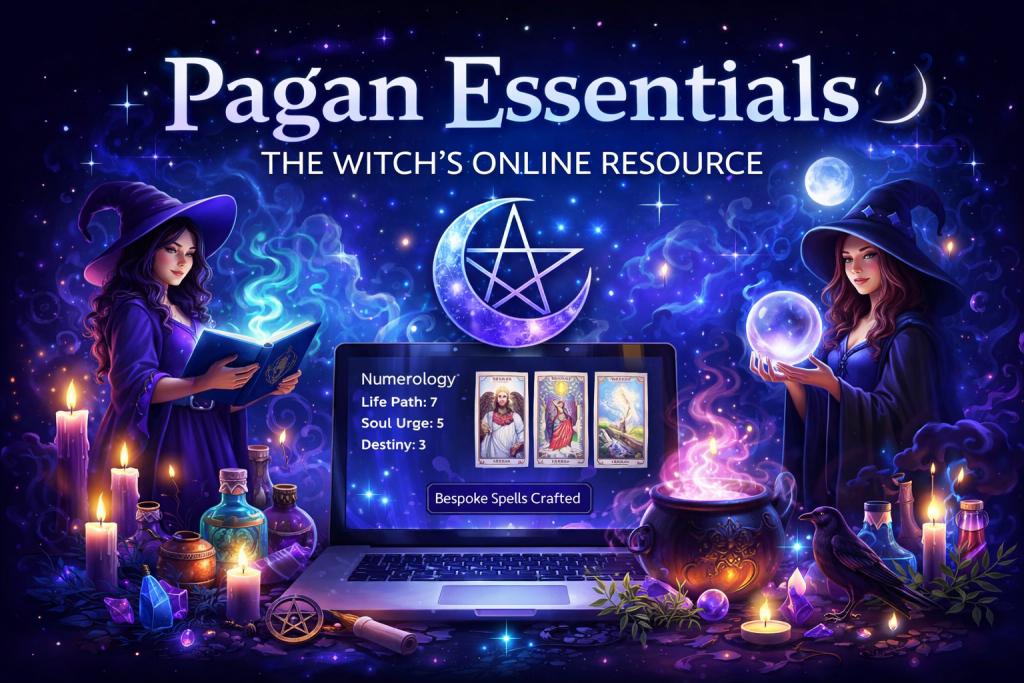
At Pagan Essentials, we take your spiritual growth seriously. Please keep the following in mind while browsing our services:
Free Will: Magick influences energy, but it does not override human free will.
Professional Advice: Our readings and spells are for spiritual guidance and entertainment purposes only. They are not a substitute for legal, medical, or financial advice.
Digital Delivery: All Numerology and Tarot reports are sent via the email provided at checkout. Ensure your "Spam" folder hasn't swallowed your destiny! Dismiss
Chaos Magick is a modern form of magic that emerged in the late 20th century, drawing inspiration from various spiritual and occult traditions such as shamanism, Hermeticism, and Eastern mysticism. Unlike traditional forms of magic, Chaos Magick is distinguished by its emphasis on achieving results without being tied to any specific belief system or tradition.
• Divination: Chaos Magicians use any method that yields meaningful insights, from tarot cards to dice rolls. • Illusion: This involves creating a desired reality through symbolic actions, manipulating perceptions to achieve a goal. • Abjuration: Banishing unwanted influences or energies using symbolic acts and focused intent. • Necromancy: Not necessarily communicating with the dead, but using their symbolism or energy for personal transformation. • Transmutation: Changing aspects of oneself or external situations through focused will and symbolic actions. • Conjuration: Bringing about desired qualities or energies by embodying them in a ritualized way. • Evocation: Similar to conjuration, but with a focus on calling upon a specific entity or archetype for inspiration or influence.
Aspects of Chaos Magick
Chaos Magick encourages witches to break free from rigid traditions and explore what works for them. It’s a dynamic system that empowers witches to forge their own unique magical path. Overall, Chaos Magick offers a flexible and experimental approach to magic, encouraging practitioners to explore their individual beliefs and techniques to achieve their desired outcomes. This modern form of magic provides a platform for personal exploration and empowerment, allowing individuals to tap into their innate magical abilities and shape their reality according to their will.
The Elements of Chaos Magick Chaos Magick is a contemporary, eclectic approach to magick that emphasizes personal experimentation and the practical use of belief systems.
🌙Here’s how Chaos Magic incorporates various practices:☀️
Belief as a Tool: Chaos magicians view belief not as an absolute truth but as a flexible tool. They adopt and discard beliefs as needed to achieve specific magickal goals, operating under the premise that belief shapes reality.
Pragmatism and Results: The effectiveness of a technique or ritual is judged solely by its results. Chaos Magick is highly pragmatic, focusing on what works rather than adhering to tradition.
Personalized Practice: Practitioners often create their own rituals and symbols, borrowing from various traditions or inventing entirely new ones. This personalized approach allows for great creativity and adaptability.
Psychological Techniques: Techniques from psychology, such as sigilization (creating and charging sigils), meditation, and altered states of consciousness, are commonly used. These methods help to focus the mind and bypass the conscious mind’s skepticism.
Eclecticism: Chaos Magick draws on a wide range of sources, including ceremonial magick, shamanism, pop culture, and even scientific principles. This eclectic mix allows practitioners to tailor their magickal practice to their own preferences and needs.
Use of Symbols and Archetypes: Symbols, archetypes, and mythologies from various cultures are often employed. The power lies in the practitioner’s intent and the meaning they ascribe to these symbols.
Ritual and Structure: While there is no rigid structure, rituals in Chaos Magick can range from elaborate ceremonies to simple acts of will. The key is that the ritual serves to focus the practitioner’s intent and energy.
Experimental Approach: Chaos Magick encourages experimentation and innovation. Practitioners are urged to test different methods and record their results, learning from both successes and failures.
Deconditioning: An essential part of the practice is deconditioning oneself from societal, cultural, and personal limitations. This involves breaking down ingrained beliefs and habits to foster a more flexible and empowered mindset.
Magickal Record: Keeping a detailed magickal journal or diary is a common practice. This record helps practitioners track their progress, refine their techniques, and understand what methods are most effective for them. Chaos Magick is about taking control of one’s own magickal practice, embracing change, and using whatever means necessary to achieve desired outcomes. It’s a path that invites curiosity, creativity, and a willingness to explore the unknown.
✨The 7 Elements of Chaos Magick🙏 Chaos magic, a practice that emphasizes belief’s power to shape reality, draws from various mystical and occult ideas.
🌈Here are the seven elements associated with it:⭐
Spirit Above: Represents the divine, cosmic forces, and higher consciousness.
Spirit Below: Symbolizes the underworld, subconscious, and hidden energies.
Spirit Within: Refers to personal intuition, inner wisdom, and self-awareness.
Earth: Associated with stability, grounding, and the material world.
Air: Signifies intellect, communication, and mental clarity.
Fire: Represents passion, transformation, and creative energy.
Water: Symbolizes emotions, intuition, and adaptability.
As the wheel of the year turns and the vibrant energy of spring reaches its zenith, we find ourselves at the threshold of summer, marked by the ancient Pagan Sabbat of Beltane. This festive holiday, celebrated on May 1st in the Northern Hemisphere and October 31st in the Southern Hemisphere, is a time of fire, fertility, and the harmonious balance of energies.
Beltane is a season of heightened spiritual energy. The thinning of the veil between the worlds of the living and the dead is a powerful catalyst for magic and divination, making Beltane an auspicious time to connect with the spiritual realm. During this season, the energies of the natural world and the divine become more accessible, enabling practitioners to tap into deeper spiritual truths and connect with the higher forces of the universe. Beltane represents a unique opportunity to unlock the transformative power of magic and divination, allowing us to break free from old patterns and beliefs and embrace new possibilities for growth and change.
The Essence of Beltane
Beltane, or May Day, is a time when the veil between worlds is thin, similar to its opposite point on the Wheel of the Year, Samhain. It is a day when the Earth is teeming with life, fertility, and the potential for abundant growth. The God and Goddess are often portrayed in equal power during this time, symbolizing the unity of masculine and feminine energies.
Origins of Beltane
Beltane has origins in the Gaelic/Celtic cultures of Ireland, Scotland, and the Isle of Man. The name Beltane comes from the Gaelic language, with “bel” meaning “bright” or “radiant” and “tane” meaning “fire”. It was traditionally celebrated on the night of April 30th and May 1st, which is the halfway point between the spring equinox and summer solstice. The festival marks the beginning of summer and the end of winter, and is a time to celebrate fertility, growth, and the power of the sun. It was also a time for livestock to be driven from their winter pastures to their summer grazing grounds, and for farmers to pray for a good harvest. Over time, Beltane has been influenced by other cultures and religions, such as Christianity, but its origins can still be traced back to the ancient Celtic traditions.
Traditions and Celebrations
One of the most iconic symbols of Beltane is the Maypole. The pole represents the phallus of the God, and the ribbons and the dance around it symbolize the fertility of the Goddess. Communities would rise at dawn to gather flowers and green branches, weave ribbons, and celebrate the fertility of the land.
Setting Up a Beltane altar
There are many creative ways to set up a Beltane altar. Here are a few ideas:
Decorate your altar with brightly colored flowers, such as daisies, primroses, roses, lilacs, and hawthorn blossoms to represent fertility and spring growth.
Add a Maypole to your altar. You can make a miniature version using ribbons, or decorate a larger one with flowers and streamers.
Use a cauldron or chalice to represent the Divine Feminine, the womb of creation, and the element of water. Include a symbol or picture to represent the Horned God who represents male energy and fertility.
Place symbols of fertility on your altar, such as eggs, seeds, and baby animals.
Include fresh herbs: Like rosemary, thyme, lavender, and mint, which can be used for cooking, smudging, or as offerings.
Include candles to represent the element of fire and the sun’s power. Choose bright, warm colors like red, orange or yellow.
Use crystals and gemstones associated with Beltane, such as emerald, rose quartz, and sunstone.
Add symbols of the Green Man and the Goddess, such as statues or pictures.
Include foods associated with Beltane, such as honey, strawberries, and fresh herbs.
Finally, don’t forget to smudge your altar with sage or other cleansing herbs to purify and prepare the space.
Using these symbols on your Beltane altar can help you to tap into the energy of the season and honor the traditions and beliefs of this ancient festival.
Fire Festivals
Fire still plays a prominent role in modern Beltane celebrations. Lighting a bonfire or candle represents the Sun’s life-giving energy. In Scotland, the Beltane Fire Festival is a spectacular event that draws thousands to witness the rekindling of life and light.
Beltane fire festivals have been celebrated for centuries, and the specific details of the celebrations varied depending on the specific region and culture. Here is a general overview of how Beltane fire festivals were set up and celebrated:
Preparation and gathering: In the days leading up to Beltane, preparations were made for the festival. People would clean and decorate their homes, and gather food and other offerings for the celebrations. Communities would come together to prepare for the festivities.
Bonfire: A large bonfire was the focal point of the Beltane celebrations. It was traditionally lit by a sacred fire, which was kindled by friction between two pieces of wood or a fire struck from flint. The fire represented the power of the sun and was seen as a way to purify and cleanse the land and the people.
Dancing and music: The fire was surrounded by dancing, music and revelry. Maypole dancing was a popular activity during Beltane, and people would dance around the maypole holding brightly colored ribbons.
Rituals and offerings: Beltane was a time for making offerings and performing rituals to honor the gods and nature spirits. People would offer food, drink, flowers and other gifts to the sacred fire and other altars that were set up for the festival.
Feasting and celebration: After the rituals and offerings were made, people would gather together to feast and celebrate. Food and drink were shared, and people would continue to dance, sing and make merry around the fire.
Overall, Beltane fire festivals were a time of communal celebration, with people coming together to honor the changing of the seasons, make offerings to the gods and nature spirits, and connect with the power of the sun and the earth. While the specifics of the celebrations varied from place to place, the core elements of feasting, dancing, music and ritual were a part of all Beltane fire festivals.
Handfasting and Fertility Rites
Beltane is also a popular time for handfasting, a traditional Pagan wedding ceremony. Couples would jump over the Beltane fire to bring luck and fertility to their union.
Handfasting is a traditional pagan ritual where a couple publicly acknowledges their love and commitment to each other before the divine, or however they individually define their beliefs. It is often referred to as “tying the knot” and is similar to a wedding ceremony. Beltane is considered a particularly auspicious and appropriate time for handfasting ceremonies for a few reasons:
Fertility and Love: Beltane is a celebration of fertility, love and union. It is believed that the Beltane energy can help to bless the union and increase the fertility of the couple.
Heightened Energy: Beltane falls between the spring equinox and the summer solstice and represents the peak of spring energy. This is seen as a particularly powerful and potent time for magic and rituals.
Celtic Traditions: Handfasting has its roots in Celtic traditions, and the Celtic festival of Beltane was an important celebration in the wheel of the year. Handfasting during Beltane is seen as a way to honor and connect with these traditions.
Connecting to Nature: Beltane celebrates the return of the fertility of the earth, and handfasting during this time is seen as a way to connect with and honor this natural cycle.
Overall, Beltane is seen as a powerful and appropriate time to celebrate love and commitment through handfasting, connecting the couple with the energy of the season to bless their union and honor the greater natural cycles of life.
Modern Celebrations
Today, Pagans continue to celebrate Beltane with fire, dancing, and rituals that honor the balance of energies. It’s a time for planting seeds, both literally in the garden and metaphorically in our lives. Beltane invites us to embrace the passion and potential within and around us, to engage in the dance of life with joy and anticipation for the summer to come.
Modern-day Beltane Sabbats are celebrated differently from traditional or ancient celebrations, as it has adapted itself to modern-day cultures, practices, and beliefs. Here are a few ways in which modern-day Beltane Sabbats may be celebrated:
Community Events: Modern pagan communities often have Beltane Sabbat celebrations that bring people together to celebrate the season with music, dancing, and other festivities. These events may include workshops, performances, and other forms of entertainment.
Personal Rituals: Many people celebrate Beltane through personal rituals that may involve meditation, lighting candles, making offerings to the earth, or performing a spell or ritual.
Maypole Dancing: Maypole dancing is still a popular practice in many modern-day Beltane celebrations. People dance around a maypole, weaving ribbons around it to symbolize the union of the masculine and feminine energies.
Feasting: The tradition of feasting and sharing food is still an important part of many modern-day Beltane celebrations. People gather with loved ones and friends to enjoy the bounty of the earth and celebrate spring.
Nature Walks: Many people celebrate Beltane by taking walks in nature, visiting local gardens or parks, and connecting with the earth. Some may also participate in outdoor activities like hiking, camping, or nature photography.
Integrating Eco-friendly rituals: With the growing awareness of the environmental impact of human activities, many pagan communities are working to integrate environmentally sustainable practices into their Beltane celebrations. As a community that honors nature and the earth, it is essential that we seek to minimize our ecological footprint and promote the health of the planet. Some ways we can achieve this include using biodegradable or reusable materials for decorations, reducing waste by using compostable plates and utensils, and choosing locally sourced or seasonal food for feasting. We can also incorporate eco-friendly rituals, such as offering seeds or plants to the earth as a symbol of regeneration, or engaging in outdoor activities that connect us with nature. Integrating such environmentally sustainable practices in our Beltane celebrations is a way of honoring the earth and deepening our connection with the natural world.
Overall, modern-day Beltane Sabbats offer a variety of ways for people to celebrate the season in a way that is meaningful and relevant to their individual practices and beliefs. While the specifics of the celebrations may vary, the core themes of fertility, renewal, and community continue to be celebrated and honored.
Beltane is a reminder of the enduring cycle of life, death, and rebirth. As we celebrate, we connect with our ancestors and the natural world, recognizing the fires of creativity and life that burn within us all.
I trust that you relished this elucidation on the Beltane celebration. Should you desire any particular facets to be expounded upon or incorporated into your blog, kindly apprise me and I shall gladly oblige. 🌷🔥
Ostara is the celebration of the Spring Equinox and is a time of renewal and rebirth. In 2024, Ostara will occur on March 19th (for the Northern Hemisphere and September 19th for the Southern Hemisphere), marking the day when day and night are of equal length, symbolizing balance and harmony in the natural world123.
Celebrating Ostara 2024
As the snow melts and the first green shoots emerge, Ostara invites us to embrace the new life that surrounds us. It’s a time to plant seeds, both literally in our gardens and metaphorically in our lives, setting intentions for the growth we wish to see in the coming months.
Rituals & Traditions
Spring Cleaning: Clear out the old to make way for the new. This can be a physical cleaning of your living space or a digital decluttering of your devices.
Garden Blessings: Plant seeds for a future harvest. Whether it’s flowers or vegetables, gardening connects us to the earth and the cycle of life.
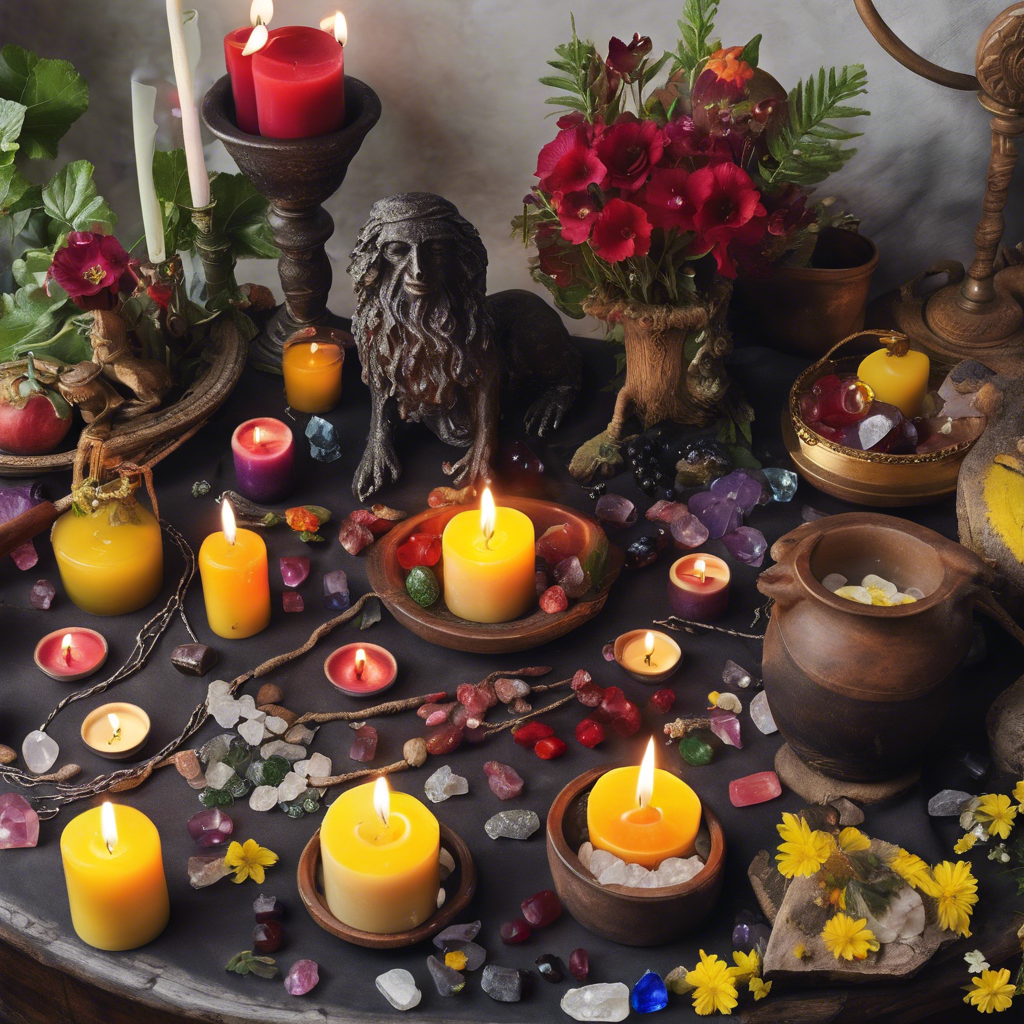
Altar Decoration: Create an altar with symbols of spring such as eggs, rabbits, and spring flowers to honor the season and the goddess Eostre, from whom Ostara gets its name1.
Foods &
Colors
Foods: Celebrate with foods that represent the season like eggs, honey, sprouted greens, and baked goods. These foods are not only delicious but also symbolize fertility and new beginnings1.
Colors: Decorate with the colors of spring—green, pink, and blue. These colors reflect the fresh growth, warm sunlight, and clear skies that the season brings1.
Community & Self-Care
Tea Parties: Host a gathering with a spring theme. Share food, stories, and laughter with friends and family.
Nature Walks: Take a walk in nature and observe the signs of spring. Witnessing the earth’s awakening can be a powerful reminder of the cycles of growth and renewal.
Meditation and Journaling: Reflect on your personal goals and aspirations. What do you want to cultivate in your life? Use this time to focus on your intentions.
Corres-pondence
Here’s a list of correspondences for Ostara, which can be used to enhance your celebration and rituals:
Animals
Butterflies
Chicks
Dragons
Lambs
Mermaids & Mermen
Rabbits/Hares
Robins
Pegasus
Serpents
Unicorns
Colors
Green
Pastel colors
White
Yellow
Crystals
Amethyst
Aquamarine
Jasper
Moonstone
Rose quartz
Foods
Cheese
Chocolate
Cream
Custards
Dandelion Greens
Edible Flowers
Eggs
Egg Salad
Hard Boiled Eggs
Fish
Honey Cakes
Hot Cross Buns
Ice Cream
Jelly beans/eggs
Lassi
Maple Syrup & Sugar Candies
Milk
Milk punch
Nettle Tea
Olives
Pine Nuts
Pumpkin Seeds
Salads
Seasonal, local fruits and vegetables
Sprouts
Sunflower Seeds
Yogurt
Goddesses
Aphrodite
Astarte
Athena
Aurora
Eos
Eostre
Gaia
Hera
Ishtar
Kore (maiden form)
Maiden Goddesses
The Muses
Persephone (maiden form)
Venus
Gods
Adonis
Ares
Cernunnos
Green Man
Mars
Narcissus
Odin
Osiris
Pan
Thoth
Herb & Plants
Any budding or sprouting plants
Ash
Alder
Birch
Cinquefoil
Daffodil
Dogwood
Four-leaf clover
Honeysuckle
Iris
Narcissus
Olive
Peony
Primrose
Tulips
Violet
Incense
Incence
African Violet
Jasmine
Rose
Sage
Strawberry
Oils
Ginger
Lavender
Lotus
Rose
Spells
Balance
Celebration of Life & Universal Love
Fertility
Growth
Increasing Power
Long-term manifestation
Marriage
New Growth
Opening up
Rebirth
Renewal
Sexuality
Women’s Health
Symbolism
Acknowledgement of natural cycles
Acknowledgement of feminine cycles
Beginning of Spring
Eggs as fertility
New growth where nothing once grew
The power behind the union of balance
The power behind physically energizing your goals
This list can help you create the vibrations and vibe of Ostara in your sacred space. Enjoy your celebrations
Conclusion
Ostara 2024 is an opportunity to celebrate the balance of light and dark, to welcome the warmth of the sun, and to prepare for the abundance of summer. It’s a time to come together, to share in the joy of the earth’s renewal, and to plant the seeds for a fruitful future.
Embrace the spirit of Ostara, and may your celebrations be filled with joy, growth, and harmony.
For those interested in learning more about Ostara and how to celebrate it, consider exploring resources such as the free Ostara E-Course offered by Mabon House1, or the comprehensive holiday calendars available for Wiccans and Pagans2. These can provide valuable insights and ideas for making the most of this vibrant and meaningful time of year.
**Ivy Jaded WyldFyre**, based in **Manitowoc, WI**, is a multi-talented individual with a fascinating blend of interests and skills. Let us explore her diverse background:
**Author and Writer**:
Ivy is a writer who weaves words into captivating stories, poems, and other literary works. Her creativity knows no bounds, and her writing reflects her deep connection to mystics and magicals.
– As an author, she explores themes related to spirituality, witchcraft, and esoterics. Her words resonate with those that seek wisdom and inspiration.
**Tarot Reader**:
– Ivy delves into the ancient art of tarot reading. Through the symbolism of tarot cards, she provides insights, guidance, and intuitive interpretations for those who seek clarity.
– Her tarot readings are like opening a door to hidden realms, where each card reveals a piece of cosmic puzzle.
**Website Designer**:
– Ivy’s skills extend beyond written words. She is a website designer crafting digital spaces that reflect her unique aesthetics and purpose.
– Whether it is a personal blog, an online store, or a platform for spiritual exploration, Ivy brings her artistic flair into every web design project.
**Pagan Essentials**:
Ivy is associated with **Pagan Essentials**, a platform that invites seekers to discover the secrets of magick and nature.
– Pagan Essentials offers an extensive range of resources, including information on lunar phases, gemstone properties, candle colors, herb characteristics, essential oils, and more⁵.
– It is a haven for those drawn to earth-based spirituality and the mystical arts.
**Numerology**:
Ivy’s connection to numerology is fascinating. She resonates with the **Master Number 11** in numerology.
– Master Numbers hold immense power and meaning. The number 11 represents intuition, spiritual awakening, and enlightenment.
As an #11, Ivy embodies these qualities, channeling them into her creative endeavors.
**Year of the Dragon**:
– Born in the year of the Dragon, Ivy carries the fiery energy associated with this mythical creature.
– Dragons symbolize strength, transformation, and wisdom. Ivy’s journey aligns with the dragon’s spirit: bold, fierce, and ever evolving.
In summary, Ivy Jaded WyldFyre is a modern-day enchantress: a writer, tarot reader, web designer, and keeper of ancient wisdom. Her path is illuminated by flames of creativity, and she invites others to join her in exploring the mystical tapestry of existence. 🌟🔮🐉
Have you ever wondered how to use the power of the full moon to attract more prosperity and abundance into your life? If so, you’re not alone. Many people practice full moon rituals for prosperity, believing that the full moon is a time of heightened energy and manifestation. In this blog post, I’ll share with you some of the most popular and effective full moon rituals for prosperity that you can try at home.
What are full moon rituals and why are they important?
The full moon is a powerful time for harnessing energy and setting intentions. In witchcraft, many practitioners believe that the full moon is a time of heightened power and manifestation. This makes it the perfect time to perform rituals for prosperity and abundance.
Full moon rituals are practices that people perform during the full moon phase to harness its energy and align with its cycles. Full moon rituals can vary depending on one’s beliefs, preferences, and intentions, but they usually involve some elements of reflection, release, gratitude, and manifestation.
Full moon rituals are important because they can help people to connect with nature, themselves, and the universe. The full moon is a time of heightened power and illumination, which can reveal what needs to be changed, healed, or celebrated in one’s life. By performing full moon rituals, people can tap into this energy and use it to enhance their well-being, creativity, and spirituality. Full moon rituals can also help people to create a sense of rhythm, harmony, and balance in their lives, as they sync with the natural cycles of the moon.
How to create a prosperity altar for your full moon ritual:
One popular full moon ritual for prosperity involves creating a prosperity altar. Start by selecting items that represent wealth and abundance. You will need:
A small table or surface that you can dedicate to your intention for prosperity.
Green candles to represent wealth and abundance.
Coins to symbolize money and prosperity.
Stones like citrine or green aventurine to attract wealth and abundance.
Dried basil leaves, representing prosperity and financial growth.
Cinnamon sticks, symbolizing abundance and success.
A pinch of ginger root, activating the energies of prosperity and money attraction.
Any other items that resonate with you and your intention for prosperity.
Next, light your green candle and focus on your intention for prosperity. Visualize yourself surrounded by abundance and prosperity in all areas of your life. You can also speak or write down affirmations related to wealth and abundance to further strengthen your intention.
As you sit in front of your altar, meditate on the energy of the full moon and how it can amplify your intentions for prosperity. Feel the energy and abundance of the full moon washing over you, filling you with its powerful energy.
How to perform a manifestation ritual for prosperity:
A manifestation ritual for prosperity is a way of using your intention, visualization, and gratitude to attract more wealth and abundance into your life. There are different ways to perform a manifestation ritual, but here is one possible method:
Find a quiet and comfortable place where you can focus on your ritual. You can also prepare some items that represent prosperity, such as money, coins, bills, or checks. You can also use crystals, candles, incense, or herbs that are associated with wealth, such as citrine, green aventurine, cinnamon, or basil.
Write down your intention for prosperity on a piece of paper. Be specific and positive about what you want to manifest, and avoid using words like “want”, “need”, or “lack”. For example, you can write something like “I am grateful for the abundance of money that flows into my life easily and effortlessly.”
Hold the paper in your hands and close your eyes. Visualize yourself living in your desired state of prosperity. Imagine how it feels, what it looks like, what you hear, smell, and taste. Feel the joy and gratitude of having everything you need and more.
Say your intention out loud or in your mind and affirm that it is already done. You can also add a phrase like “And so it is”, “Thank you, universe”, or “This or something better” to seal your intention.
Burn the paper in a fire-safe dish or tear it into small pieces and bury it in the ground. This is a way of releasing your intention to the universe and trusting that it will manifest in the best way possible.
Express your gratitude for the prosperity that is already present in your life, and for the prosperity that is on its way. You can also do something to celebrate your manifestation, such as dancing, singing, or treating yourself to something nice.
This is one example of a manifestation ritual for prosperity, but you can also customize it to suit your preferences and beliefs. The most important thing is to have a clear and positive intention, and to feel the emotions of having what you desire. You can also repeat this ritual as often as you like, especially during the full moon, which is a powerful time for manifestation.
How to end your Full Moon Ritual with gratitude:
Remember to thank the universe, your guides, or any deities you work with for their assistance in manifesting prosperity into your life. Ending your ritual with gratitude can help to solidify your intentions and show your appreciation for the abundance that is already present in your life.
Full moon rituals for prosperity can be a powerful tool for manifesting wealth and abundance in your life. By harnessing the energy of the full moon and setting clear intentions, you can create a powerful ritual that can help you attract prosperity into your life.
**Ivy Jaded WyldFyre**, based in **Manitowoc, WI**, is a multi-talented individual with a fascinating blend of interests and skills. Let’s explore her diverse background:
**Author and Writer**:
Ivy is a writer who weaves words into captivating stories, poems, and other literary works. Her creativity knows no bounds, and her writing reflects her deep connection to the mystical and magical.
As an author, she explores themes related to spirituality, witchcraft, and the esoteric. Her words resonate with those seeking wisdom and inspiration.
The phrase “witchcraft” refers to a broad range of customs, beliefs, and activities involving the use of magical or supernatural abilities. Witchcraft can be found in various historical eras and civilizations, and depending on the situation, it can serve a variety of functions. We’ll look at several common definitions and features of witchcraft in this blog, along with some prevalent myths and stereotypes about it.
Crystal Ball
The Origins and Etymology of Witchcraft
The word Witchcraft comes from the Old English wiccecraeft, which means “the craft or skill of a Witch”. A Witch is someone who practices Sorcery or Magic, and the word derives from the Old English Wicca (masculine) or wicce (feminine), which are pronounced “witchah” and “witchuh”, respectively. The origin of these words is uncertain, but some scholars suggest that they may be related to the Proto-Indo-European root “weik-, which means “to bend or turn”. This could imply that Witches were seen as people who could manipulate or influence reality with their will or power.
Witchcraft has similar words in other European languages, such as sorcellerie (French), Hexerei (German), stregoneria (Italian), and brujeria (Spanish), but none of them exactly translates another. Each word has it’s own connotations and nuances, and reflects the cultural and historical context of witchcraft in different regions and periods.
The Diversity and Variability of Witchcraft
Witchcraft is not a monolithic or homogeneous phenomenon, but rather a complex and diverse one that can vary according to time, place, culture, religion, and individual. There is no single or universal definition of Witchcraft, but rather multiple and sometimes contradictory ones.
Some of the factors that can influence the meaning and practice of Witchcraft are:
The source and nature of the supernatural or magical power: Some witches may claim to derive their power from natural forces, such as herbs, stones, animals, or elements; others may invoke the assistance of spirits, ancestors, deities, or demons; and others may rely on their own innate abilities, such as intuition, psychic skills, or charisma.
The purpose and intention of the Witchcraft: Some witches may use their power for good, such as healing, protection, divination, or fertility; others may use it for evil, such as harming, cursing, or manipulating; and others may use it for neutral or ambiguous ends, such as personal gain, revenge, or justice.
The perception and reaction of the society: Some witches may be accepted, respected, or even revered by their communities, such as shamans, healers, or wise women; others may be feared, hated, or persecuted by their societies, such as heretics, outcasts, or scapegoats; and others may be ignored, tolerated, or ridiculed by their peers, such as eccentric, delusional, or fraudulent.
The Stereotypes and Misconceptions of Witchcraft
Witchcraft has often been misunderstood, misrepresented, or maligned by various sources, such as folklore, literature, media, or propaganda. Some of the common stereotypes and misconceptions of witchcraft are:
Witchcraft is always evil or satanic: This is a false and biased view that stems from the Christian demonization of witchcraft, especially during the European witch hunts of the 14th to 18th centuries, when thousands of people, mostly women, were accused, tortured, and executed for allegedly practicing witchcraft and worshipping the Devil. However, witchcraft is not inherently evil or satanic, and many witches do not believe in or worship the Devil at all. In fact, some witches may identify as Christians, Jews, Muslims, or other religions, and practice witchcraft as a form of spirituality, devotion, or mysticism.
Witchcraft is always female or feminist: This is a false and simplistic view that stems from the association of witchcraft with women, especially in the Western context, where witchcraft has often been seen as a form of female empowerment, resistance, or subversion against the patriarchal and oppressive society. However, Witchcraft is not always female or feminist, and many witches are men, or do not conform to the binary gender categories. Moreover, some witches may not identify as feminists, or may have different views on feminism and gender issues.
Witchcraft is always ancient or traditional: This is a false and romantic view that stems from the assumption that witchcraft is a relic of the past, or a survival of the pre-modern or pre-Christian cultures and religions. However, witchcraft is not always ancient or traditional, and many witches are modern or contemporary, or even futuristic. Witchcraft is not static or fixed, but dynamic and adaptable, and it can change and evolve according to the social, historical, and cultural context. Furthermore, some forms of witchcraft are relatively new or recent, such as Wicca, which emerged in the 1940s in England, and is the original form of modern Pagan Witchcraft.
Conclusion:
Witchcraft is a fascinating and complex topic that cannot be easily defined or explained. It is a multifaceted and diverse phenomenon that can have different meanings and manifestations depending on the perspective and situation. Witchcraft can be seen as a practice, a belief, a tradition, a religion, a culture, an identity, or a lifestyle. Witchcraft can be a source of power, knowledge, wisdom, healing, creativity, or joy. Witchcraft can also be a challenge, a struggle, a risk, a mystery, or a paradox.
Witchcraft is what you make of it, and what it makes of you.
 Pagan Essentials




 Celebrating Ostara 2024