At Pagan Essentials, we take your spiritual growth seriously. Please keep the following in mind while browsing our services:
Free Will: Magick influences energy, but it does not override human free will.
Professional Advice: Our readings and spells are for spiritual guidance and entertainment purposes only. They are not a substitute for legal, medical, or financial advice.
Digital Delivery: All Numerology and Tarot reports are sent via the email provided at checkout. Ensure your "Spam" folder hasn't swallowed your destiny! Dismiss
Tomorrow night, the sky transforms. A Full Blood Moon (a Total Lunar Eclipse) occurs when the Earth passes directly between the Sun and the Moon, casting a deep, copper-red shadow across the lunar surface. In the craft, this is more than just an astronomical event; it is a potent “cosmic reset” button.
While a standard Full Moon is about amplification and celebration, the Blood Moon brings a raw, transformative energy. It represents the Crone aspect of the Goddess, the thinning of the veil, and the courage to face our own shadows.
🗝️ Blood Moon Correspondences
To align your practice with tomorrow’s energy, consider these associations:
f you aren’t ready for a full ritual, these simple activities can help you tap into the lunar frequency:
Shadow Journaling: Write down a habit or fear that has haunted you for years. Under the red light, tear the paper into pieces to symbolize breaking its hold
Ancestral Altar Update: The Blood Moon is a bridge to those who came before. Clean your altar and leave an offering of dark wine or cool water.
Charge Your Tools: This is “high-octane” moonlight. Place your athames, scythes, or divination tools on a ywindowsill to imbue them with protective, fierce energy.
🌑 The Ritual of the Crimson Veil
A ritual for release and reclaiming power.
Items Needed:
One red candle (for the moon’s face).
A bowl of water with a pinch of sea salt.
A small piece of dark thread or cord.
The Rite:
Grounding: Stand beneath the moon (or by a window). Visualize roots growing from your feet into the earth, stabilizing you against the intense eclipse energy.
The Binding: Take the dark thread. Tie three knots into it, visualizing a specific burden or toxic connection you are ready to leave behind.The
Cleansing: Dip your fingers into the salted water and flick it toward the moon, saying:”As the shadow passes, so passes my grief. As the light returns, I find my relief.”
The Release: Safely burn the thread in the candle flame (or bury it in the earth) to signal the finyality of your intent.
Closing: Extinguish the candle and stand in silence for a moment, feeling the shift in the air.
A Note on Safety: Eclipse energy can be volatile. If you feel overwhelmed or “buzzy,” hold a piece of Black Tourmaline or eat a heavy meal (root vegetables are best) to ground your physical body.
Spells are often portrayed as mysterious words spoken at the right moment, but real witchcraft is far more grounded—and far more powerful—than that. At its core, spellwork is about alignment: aligning your intent, your energy, and your timing with the outcome you seek.This article breaks down how spells really work, cutting through Hollywood fantasy and focusing on practical, everyday magic you can apply in your own practice.
The Foundation of All Spellwork🌟
Every successful spell rests on three pillars:
Intent – What you want and why you want it
Energy – The power you raise and direct
Timing – When the spell is performed
When even one of these is unclear or ignored, results can be weak or unpredictable.
When all three are aligned, magic flows naturally.
Intent: The Heart of the Spell
💙
Intent is the why behind your magic. It is not just a wish—it is a focused decision.
Clear vs. Vague Intent👍👎
A vague intent like “I want things to get better” lacks direction. A clear intent such as “I am drawing stable income and financial security into my life” gives your spell something solid to work with.
Ask yourself:
What exactly do I want?
Is this aligned with my values?
Am I emotionally ready for the outcome?
Spells do not respond well to mixed emotions or hidden doubts. If part of you fears success, loss, or change, that resistance will show up in the results.
Ethical Intent Matters💫
In many Pagan and witchcraft traditions, intent also includes responsibility. Manipulative or harmful workings tend to create energetic backlash, lessons, or unexpected consequences. Magic works best when it supports growth rather than control.
Energy: The Fuel Behind the Magic🔥
Intent sets the destination; energy is the vehicle that gets you there.
Energy can come from many sources:
Your own emotional and physical energy
Nature (moonlight, sunlight, earth, water)
Tools (candles, herbs, crystals, symbols)
Movement, breathwork, chanting, or visualization
Raising Energy
🌐
Before directing energy, it must be raised.
Common methods include:
Grounding and centering
Drumming or rhythmic breathing
Visualization of light or elemental forces
Emotional focus (joy, determination, peace)
Energy raised without focus disperses quickly. Energy raised with intent becomes magic.
Directing Energy
Once raised, energy must be guided toward your goal. This is often done through:
Spoken words or chants
Visualization of the desired outcome
Physical actions such as knot-tying, candle lighting, or sigil creation
The spell ends when the energy is released—sent into the universe, the earth, or the situation itself.
Timing: Working With Natural Cycles
Timing determines how easily your spell flows. While spells can be done at any time, working with natural cycles strengthens results.
Lunar Timing
The moon is one of the most commonly used timing tools in witchcraft:
New Moon – Beginnings, intentions, planning
Waxing Moon – Growth, attraction, building momentum
Full Moon – Power, manifestation, culmination
Waning Moon – Release, banishing, breaking habits
Days and Seasons
Some witches also align spells with:
Days of the week (for planetary influence)
Sabbats and seasonal shifts
Personal cycles, intuition, or emotional readiness
Timing is not about superstition —it’s about energy availability. Certain moments naturally support certain types of magic.
Why Some Spells Don’t Work
When spells fail, it is rarely because magic isn’t real. More often, it’s because:
The intent was unclear or conflicted
The energy was weak or unfocused
The timing worked against the goal
The practitioner wasn’t grounded or ready for change
Spellwork is a skill, not a shortcut. Like any craft, it improves with practice, reflection, and patience.
Magic as Everyday Practice
Spells are not separate from life—they are an extension of it. The most effective witches understand that mundane action supports magical work. Casting a prosperity spell while avoiding financial responsibility sends mixed signals to the universe.True magic happens when intention, action, and awareness work together.
Final Thoughts
Spells are not about forcing reality to bend—they are about aligning yourself with possibility. When intent is clear, energy is focused, and timing is respected, magic becomes less about chance and more about conscious creation.
At Pagan Essentials, we believe witchcraft should be practical, empowering, and rooted in wisdom—not fear or fantasy.
✨ Magic works best when you do too. ✨—Explore more beginner-friendly guides, grounding techniques, and practical spellcraft at Pagan Essentials — The Witch’s Online Resource.
Awaken Your Inner Fire: Ancient Wisdom and Eclectic Magic from the Path of the Fire Dragon
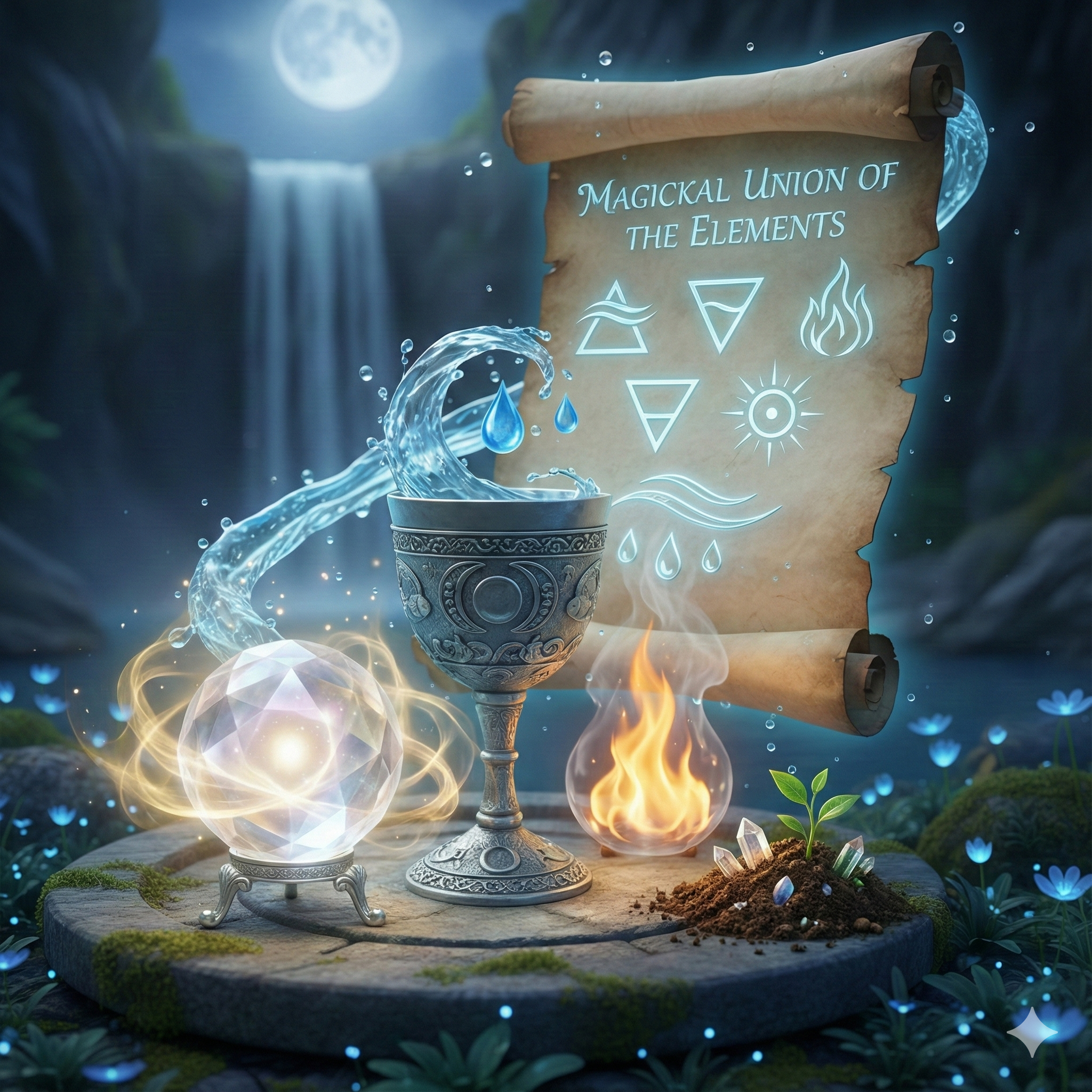
Earth, air, fire, and water are the essential building blocks of magical practice that witches have worked with for thousands of years. These primal forces don’t just exist around us—they flow within us, shaping our connections to the natural world and enhancing our magical abilities.
Throughout history, practitioners of witchcraft have developed intricate systems of correspondence for each element, using them as foundations for powerful magick. Indeed, understanding these elemental energies and their unique properties allows witches to create balance in their practice and tap into specific energies for different magical purposes. From grounding rituals with earth to transformative spells with fire, each element offers distinct tools for spiritual growth.
In this guide, we’ll explore the ancient wisdom behind elemental magic, examining how these four fundamental forces can be harnessed in modern magical practice. Additionally, we’ll uncover practical ways to identify, connect with, and balance these energies in your everyday life and spell work. Whether you’re drawn to the stability of earth, the clarity of air, the passion of fire, or the intuition of water, this exploration will deepen your understanding of the elements that power our magical world.
The Origins of Elemental Magic
The concept of elemental magic traces back thousands of years, with its foundations firmly rooted in ancient philosophical thought. These primal energies have shaped magical practices across cultures and throughout time, creating a framework that continues to influence modern witchcraft.
Greek philosophy and the fourfold root
Ancient Greek philosophers were among the first to formally classify the universe into fundamental building blocks. In the fifth century BCE, Empedocles proposed that all matter consisted of four basic “roots” (rhizōmata) – earth, water, air, and fire. This revolutionary idea emerged as philosophers debated which substance was the primary element from which everything else originated. While Thales favored water and Anaximenes championed air, Empedocles concluded that no single element was supreme – rather, all four worked together.
Empedocles demonstrated air’s existence through a simple yet profound experiment: inverting a bucket in water and observing that it didn’t fill completely. He proposed that these elements never truly changed or disappeared but merely combined in different proportions to create everything in existence. Furthermore, he theorized that two opposing forces – love (attraction) and strife (repulsion) – governed how elements interacted.
Aristotle later refined this system, describing each element with specific qualities: earth was cold and dry, water cold and moist, air moist and warm, and fire warm and dry. These relationships created a complex network of interactions that explained natural phenomena and formed the backbone of magical correspondences.
Spirit or Aether
Element of Spirit or Aether
While the four terrestrial elements explained earthly matter, Aristotle introduced a fifth element – aether (αἰθήρ) – to account for celestial bodies. Unlike the four changeable earthly elements, aether was considered perfect and unchanging. It moved in circular patterns rather than linear ones and possessed none of the qualities of terrestrial elements – being neither hot nor cold, wet nor dry.
In Greek mythology, aether represented the pure essence breathed by gods, filling the heavenly spaces. Over time, this concept evolved in medieval alchemy, where quintessence (the Latinate name for the fifth element) was sought as a purifying substance with medicinal properties.
In modern witchcraft, this fifth element transformed into Spirit (also called Akasha), representing the connecting force that binds the other four elements togethe. Spirit embodies consciousness, divine energy, and the magical current that animates all things. As the “breath between worlds,” it transcends physical form while providing balance and coherence to magical workings.
How elements shaped magical traditions
Throughout history, elements have formed the foundation of numerous magical systems. The 16th-century alchemist Paracelsus made significant contributions by describing elements as energies linked to a person’s spirit, emotions, and thoughts. He personified these forces through elemental beings – gnomes (earth), undines (water), sylphs (air), and salamanders (fire).
Various cultures developed their own elemental systems. Chinese philosophy identified five phases: wood, earth, fire, water, and metal. Indian Ayurvedic traditions recognized earth, air, fire, water, and ether. These systems influenced healing practices based on balancing elemental energies within the body.
The elements eventually became central to modern witchcraft traditions. In Wicca and other nature-based spiritual practices, elements correspond to directions, tools, seasons, and magical operations. The pentagram, a prominent symbol in witchcraft, often represents the five elements with Spirit at the top position, unifying the other four.
From ancient philosophy to contemporary magical practice, the elements have provided a framework for understanding both the physical world and the unseen energies that witches work with in their craft.
Earth: The Foundation of Stability and Growth
The Earth Element
Mother Earth serves as the cornerstone element in magical practice, offering practitioners a foundation upon which all other elemental work can flourish. As the most tangible of the four elements, Earth provides us with stability, comfort, and strength—acting as the nurturing mother from which all life emerges.
Symbolism and magical correspondences
In witchcraft traditions, Earth is associated with the northern direction and represents receptive feminine energy. This element corresponds to the winter season and nighttime hours, when the world grows still and reflective. Earth primarily connects with the sense of touch and resonates deeply with the root chakra, grounding our energy and stabilizing our magical workings.
The symbolic colors of Earth include rich greens, blacks, browns, and occasionally gold—all reflecting the natural hues found in soil, plants, and minerals. Those working with Earth magick often utilize pentacles, platters, salt, soil, and various gemstones as magical tools. Zodiac signs ruled by Earth include Taurus, Virgo, and Capricorn, with Saturn and Venus serving as Earth’s governing planets.
Earth energy finds representation in animals such as bears, wolves, bulls, foxes, and burrowing creatures—all beings that maintain strong connections to the land. Plant correspondences encompass oak, fern, ivy, patchouli, vetiver, myrrh, grains, and cypress. For crystal work, practitioners gravitate toward emerald, jade, hematite, malachite, jet, onyx, quartz, and amethyst.
Earth deities include goddesses like Demeter, Gaia, Rhiannon, and Cerridwen, alongside gods such as Pan, Cernunnos, and Adonis—all representing various aspects of fertility, abundance, and natural cycles.
Earth-based rituals and grounding practices
Connecting with Earth energy forms an essential practice for witches seeking balance. Grounding—the process of eliminating excess energy by transferring it into the Earth—serves a fundamental technique for both beginning and seasoned practitioners. This practice helps regulate personal energy and establish emotional stability.
A simple yet powerful grounding ritual involves:
Sitting or standing on the bare ground, preferably outdoors
Visualizing roots extending from your body into the Earth’s center
Directing excess and negative energy downward while receiving stable Earth energy
Expressing gratitude to Mother Earth for the exchange
Beyond ritual work, witches can incorporate Earth magic into daily life through gardening, cooking with seasonal ingredients, barefoot walking (earthing), collecting natural materials, and practicing seasonal living. These actions acknowledge Earth’s role as a provider and deepen our magical connection to this element.
Earth-centered rituals particularly excel for workings related to money, prosperity, abundance, confidence, career success, stability, fertility, and physical healing. Many practitioners perform specialized ceremonies at seasonal turning points to honor Earth’s cycles of growth, abundance, and rest.
Emotional and spiritual influence of Earth
At its core, Earth energy affects our emotional landscape by fostering stability, centeredness, and patience. Those with balanced Earth energy typically demonstrate dependability, thoroughness, and practical wisdom. Conversely, Earth imbalance might manifest as dullness, laziness, melancholy, or stagnation.
For the spiritual practitioner, Earth provides grounding that prevents “spaciness” during magical work. It helps establish boundaries while remaining open to connections—a balance essential for healthy spiritual development. Through Earth, we learn discernment, separating what nourishes us from what depletes us.
In Traditional Chinese Medicine, Earth governs acquiring everything needed for life—not merely physical necessities but emotional fulfillment through love, support, and community. This element handles taking things in, processing them, and establishing healthy boundaries—skills crucial for magical practitioners.
By honoring Earth as more than mere soil but as a living, conscious entity with which we can communicate, witches establish reciprocal relationships that enhance both magical practice and everyday existence. Through this sacred connection, we find ourselves rooted in something greater—a foundation supporting our growth toward magical mastery.
Air: The Breath of Thought and Communication
The Air Element
Invisible yet ever-present, Air embodies the realm of thought, intellect, and communication in magical practice. This element flows through our very breath, connecting us to the unseen currents of knowledge and inspiration that shape our magical workings.
Air’s role in divination and clarity
Air governs the realm of the mind, making it particularly powerful for divination practices. Aeromancy—the ancient art of reading atmospheric phenomena—interprets clouds, wind patterns, thunder, and lightning as spiritual messages. Moreover, the related practice of augury reads bird flight patterns to identify omens.
In practical terms, air divination helps practitioners gain insight into questions or situations by observing wind currents. For instance, when performing divination, you might ask questions mentally rather than aloud, So, your breath doesn’t influence smoke patterns. The magical realm of air functions somewhat like a network, where thoughts travel as messages across invisible strands connecting us to others.
Air magic primarily supports mental clarity, effective communication, and the generation of new ideas Through visualization techniques, practitioners can envision scenarios that positively impact mental states—such as imagining golden light entering the mind, clearing distractions, and fostering focus.
Tools and herbs aligned with Air
The wand (sometimes athame, depending on tradition) serves as Air’s primary magical tool. Other air-associated implements include feathers, incense, censors, bells, and wind chimes. Feathers, especially, can direct energy into written spells or sweep away creative blocks.
Breath itself functions as one of the most potent forms of Air magic, containing your personal energy. Techniques like insufflation and exsufflation—ritual acts of blowing—symbolize the exhalation or inhalation of energies.
Air-aligned herbs and plants include lavender, sage, mugwort, yarrow, peppermint, dandelion, and lemongrass. Crystal correspondences encompass clear quartz, amethyst, yellow jasper, topaz, and lapis lazuli. Air connects with the throat chakra (communication) and crown chakra (spirituality).
Balancing Air energy in your practice
For those experiencing excess Air energy—manifesting as anxiety, racing thoughts, or feeling ungrounded—incorporating Earth-based practices helps restore balance. Consequently, grounding exercises become essential when air pulls you “out of your body” and into your head.
To increase Air influence, open windows, use feathers and wind chimes, burn sage or cedar incense, and wear loose-fitting clothing. Simple breathing exercises align you with air energy: sit quietly, inhale through your nose visualizing clarity filling your body, and exhale through your mouth releasing tension.
Air rituals work best at dawn, during spring, or on windy days—particularly effective for spells involving travel, knowledge, communication, mental clarity, and creativity.
Fire: The Spark of Passion and Transformation
The Fire Element
Of all the elemental forces, Fire stands as the most captivating yet paradoxical—the only element that creates and destroys simultaneously, consuming what it touches while birthing something new. Unlike its elemental siblings, Fire cannot exist without transformation, making it the perfect ally for magical change.
Fire in Spell work and Ritual
Fire magic shines in rituals involving transformation, protection, courage, energy, and banishing negativity. Different forms of fire serve distinct magical purposes. Balefires or bonfires excel at cleansing, protection, and burning spell ingredients while serving as gathering points for community rituals. Candle magic allows for personalization through color, carving, and anointing with oils for specific intents. Meanwhile, hearthfires connect to kitchen witchery, ancestral work, health, and creativity.
Many practitioners incorporate fire as a rite of passage. As one practitioner recalls, “I vividly remember the day I became an adult… my dad handed me a pack of matches… It was a mythic, life-changing moment!”
Simple fire rituals can be powerful tools for personal transformation. For instance, writing fears or unwanted situations on paper and safely burning them symbolizes their release. As one witch describes: “In ceremony, I place a small piece of wood in the fire, and I offer up, speaking aloud, my fear, my anxiety… Letting it all go.”
Common fire correspondences and tools
In the realm of magick, Fire is the element of pure transformation, passion, and the will to manifest. It is the spark of life that drives us forward and the heat that forges our intentions into reality. When we work with Fire, we are tapping into a primal force that represents both destruction and creation—clearing away the old to make fertile ground for the new. Whether you are performing a ritual for courage, creativity, or personal power, understanding the specific vibrations of Fire can help you direct its flickering energy with precision.
Sacred Timing and Alignment
To fully align your practice with this radiant element, look toward the South, where the sun reaches its peak strength. Fire finds its home in the vibrant heat of Summer and the clarity of Noon, making these the most potent times for solar-powered magick. Visually, you can draw Fire onto your altar using a palette of red, orange, yellow, and gold. These colors don’t just represent flames; they embody the life-giving energy of the Sun and the assertive, protective drive of Mars.
Celestial Heat and Ritual Tools
Astrologically, Fire is grounded in the bold spirits of Aries, Leo, and Sagittarius. These signs bring a sense of leadership, theatrical flair, and adventurous seeking to any spellwork. To physically ground this energy in your sacred space, you might reach for your Athame or Wand to direct your intent, or light candles and lamps to serve as a beacon for the spirits of the flame. By incorporating these tools, you create a tangible bridge between your inner spark and the cosmic fire that fuels the universe.
Fire-aligned crystals include carnelian, fire agate, sunstone, ruby, and obsidian (volcanic glass). Herbs associated with Fire include cinnamon, peppers, ginger, basil, sunflowers, and nettle. Fire deities encompass Brigid, Hestia, Pele, Prometheus, and Belenus, honored at fire festivals like Beltane.
When Fire energy is too much or too little
Balanced Fire energy manifests as confidence, motivation, passion, and healthy boundaries. Nevertheless, excess Fire may cause anxiety, insomnia, hyperactivity, irritability, and physical symptoms like inflammation or palpitations. Alternatively, deficient Fire results in low energy, lack of enthusiasm, emotional withdrawal, poor circulation, and feeling disconnected from others.
To harmonize overabundant Fire, try grounding practices that incorporate Earth energy. For those needing to ignite their inner flame, consider activities that spark passion—dancing, competitive sports, or creative projects. Above all, remember that Fire requires respect; it should be “treated with respect at all times. Otherwise, you’ll burn your face and trust me…that sucks.”
Water: The Flow of Emotion and Intuition
The Water Element
Throughout history, Water has been the most primal medicine, flowing through our bodies and souls as the element of emotions, intuition, and psychic connection. Before humans worked with plants or stones, they turned to water for healing—a practice that continues in magical traditions today.
Water’s connection to healing and dreams
Water embodies purification and spiritual restoration across diverse cultures. The deep connection between water and divine feminine energies has shaped magical practices worldwide, with rivers and springs often developing identities tied to goddesses or saints. In traditional healing, water’s temperature and purity determine its application—cold water for clearing ailments like scrofula, hot water for driving out sickness like pneumonia.
Dreams exist primarily within water’s domain, accessing our emotional depths and soul energies. Water witches often experience prophetic dreams and possess natural gifts for dream interpretation. Additionally, many demonstrate talent for soul energy healing and communicating with earth-bound spirits.
Using water in cleansing and scrying
Water rituals create powerful cleansing experiences. For a simple yet effective ritual bath, add Epsom salts, crystals, and herbs to bathwater while visualizing negativity washing away. Alternatively, program water with specific intentions, place it in a mist bottle, and spray it throughout your space to raise energetic vibrations.
Scrying—divination through gazing—finds its perfect medium in water. For effective water scrying:
Use a black bowl filled with water (or specialized Blk Water)
Create a comfortable environment with dim lighting
Clear your mind and enter a relaxed state
Ask spirits for guidance and let images form naturally
Record impressions to distinguish between ego and true messages
Signs of water imbalance and how to fix it
Balanced water energy manifests as emotional connection, intuitive guidance, and spiritual openness. Excess water may cause emotional overwhelm, moodiness, or getting lost in fantasy. Conversely, deficient water results in emotional distance, numbness, or creative blockages.
To rebalance overwhelming water energy, incorporate earth practices for grounding or fire elements for motivation. If water energy feels lacking, spend time near natural water sources, practice dreamwork, or engage in intuitive activities like scrying.
Conclusion
Throughout the ages, elemental magic has remained a cornerstone of witchcraft practice, offering practitioners powerful tools for spiritual growth and magical workings. Each element carries its unique energy signature – Earth grounds and stabilizes, Air clarifies and communicates, Fire transforms and energizes, while Water flows and heals. Together, they create a balanced framework for understanding both our inner landscape and the natural world around us.
Most importantly, these elements exist not just as abstract concepts but as living energies we can work with daily. After all, true magical mastery comes from recognizing which elemental energies need balancing in your life and practice. Therefore, observe when you might need Earth’s stability during chaotic periods or Fire’s passion when motivation wanes.
Ancient witches understood what modern practitioners continue to discover – elemental magic works because these forces flow within us as much as they surround us. Consequently, developing relationships with each element allows for more precise and effective magical workings. Additionally, these connections deepen your understanding of natural cycles and your place within them.
The magical journey always begins with awareness. Certainly, noticing which elements naturally call you reveals much about your magical strengths. Likewise, identifying which elements feel challenging points toward areas for growth and balance. Undoubtedly, this ancient system provides not just magical tools but a profound path for self-knowledge.
Whether you’re drawn to Earth’s abundant prosperity, Air’s intellectual clarity, Fire’s passionate transformation, or Water’s intuitive depths, these primal forces offer endless potential for spiritual exploration. Thus, by honoring all four elements while developing special relationships with each, you embrace the fullness of magical practice that witches have refined over millennia.
Hey, magical friends! As we approach the last new moon of the year—falling on December 20th, 2025—it’s time to gather your crystals and intentions for a truly special night. Here at Pagan Essentials, “The Witch’s Online Resource,” we’re all about making every lunar event meaningful and memorable.
The December new moon is sometimes called the Long Night Moon or Winter Moon. It marks a period of deep reflection as we prepare for Yule and the turning of another wheel. The energy is perfect for setting intentions that will carry you into the new year with clarity and purpose.
Herbs ~ Pine (purification), sage (cleansing), cinnamon (warming energy)
Activities to Try:
Journaling about what you want to release before year’s end
Cleansing your altar or magical tools
Crafting a vision board for your goals in 2026
Meditating under the dark sky with a cup of spiced tea
December New Moon RitualExample:
The New Moon on December 20th, 2025, is a potent moment for “shadow-clearing” and seed-planting. Falling just one day before the Winter Solstice (Yule), this moon carries the energy of the Deep Stillness.
This ritual, titled “The Hearth of the Hidden Seed,” focuses on releasing the burdens of 2025 and preparing your internal soil for the coming year.
Ritual Preparation:
Moon Phase: New Moon (0% illumination).
Theme: Introspection, ancestral wisdom, and the “Void.”
Colors: Black (the void), Silver (the moon), and Deep Green (everlasting life).
Tools:
A small bowl of soil, a scrap of paper, and a pen.
A single white candle.
Dried bay leaves or cedar (for cleansing).
The Ritual Steps:
1. Creating the Sacred Space
Cleanse your area by burning your herbs or using a bell. Imagine a circle of silver light expanding from your chest, sealing the room.
Incantation: “Between the years, in the dark of the moon, I stand in the silence, the sacred commune. The old cycle fades, the shadows run deep, I wake the intentions that the winter shall keep.”
2. The Great Release (The Shadow Work)
Reflect on 2025. What was the heaviest burden you carried? On your scrap of paper, write down the one habit, memory, or fear you refuse to carry into 2026.
Hold the paper over the soil. Visualize that energy draining out of your hands and into the paper. Carefully burn the paper (using a fire-safe dish) and mix the ashes into the bowl of soil. The earth will compost this energy into something neutral and fertile.
3. Planting the “Hidden Seed”
The New Moon is not for the “bloom,” but for the “seed.” Close your eyes and hold the bowl of soil. Ask yourself: What is the one thing I want to nourish in the dark? (e.g., peace, resilience, a new project).
Whisper your intention into the soil. Imagine it as a glowing speck of light buried deep within the earth.
4. Lighting the Path
Light your white candle. This represents the “Return of the Light” that begins at the Solstice tomorrow.
Affirmation:”The seed is set, the path is clear. I welcome the magic of the coming year. As the moon is hidden, so my power grows, From the dark of the winter, the future flows.”
5. Closing
Sit in the candlelight for a few moments of meditation. When you are ready, ground yourself by touching the floor. Place the bowl of soil on a windowsill or near your altar until the first Full Moon of January.
This last new moon is all about fresh starts wrapped in winter’s quiet magic. However you choose to celebrate it, may it bring you peace and powerful beginnings!
Welcome, fellow seekers of light! As the Wheel of the Year turns to its darkest point, we arrive at the beautiful and hopeful Sabbat of Yule. This is a powerful, transformative time when we honor the deepest dark and celebrate the miraculous return of the light.
Yule 2025 Details
Event
Date & Time
Yule
Sunday, December 21st 2025, at 6:02 am CST
Traditional Duration
The celebration often lasts for 12 days, extending to January 1st (The 12 days of Yule)
Significance
The longest night and the official rebirth of the Sun, signaling the shift towards longer days
What is Yule? (History & Explanation)
Yule, or Yuletide, is one of the oldest and most universally recognized winter celebrations, marking the Winter Solstice. It is the shortest day and the longest night of the year in the Northern Hemisphere.
Ancient Roots:
Yule’s roots are deep, tracing back to the Norse, Germanic, and Scandinavian traditions. Originally called Jól (pronounced ‘yohl’), it was a midwinter festival that involved feasting, drinking, and honoring the gods (like Odin/Jolnir) and ancestors during the harshest part of the year.
The Great Cycle:
In Wicca and many other Pagan paths, Yule marks the second Sabbat on the Wheel of the Year. We see it as the time when the Oak King (the God of Light and the waxing year) triumphs over the Holly King (the God of Darkness and the waning year). Though the land is still dormant, this victory ensures that the Sun will grow stronger each day until the Summer Solstice. It is a festival of hopeful paradox: recognizing the darkness while celebrating the promise of light, warmth, and life’s continuation.
Yule Correspondences
When preparing your space and practice for Yule, incorporating these traditional correspondences helps align your energy with the Sabbat’s themes of renewal and hope.
The Yule Log, Sun Wheels, Evergreens, Wreaths, Bells, Candles, Deer/Stag, Goats
Yule Altar Setup Ideas
Creating a dedicated space for Yule focuses your intent and energy. Here are some ideas for your Altar:
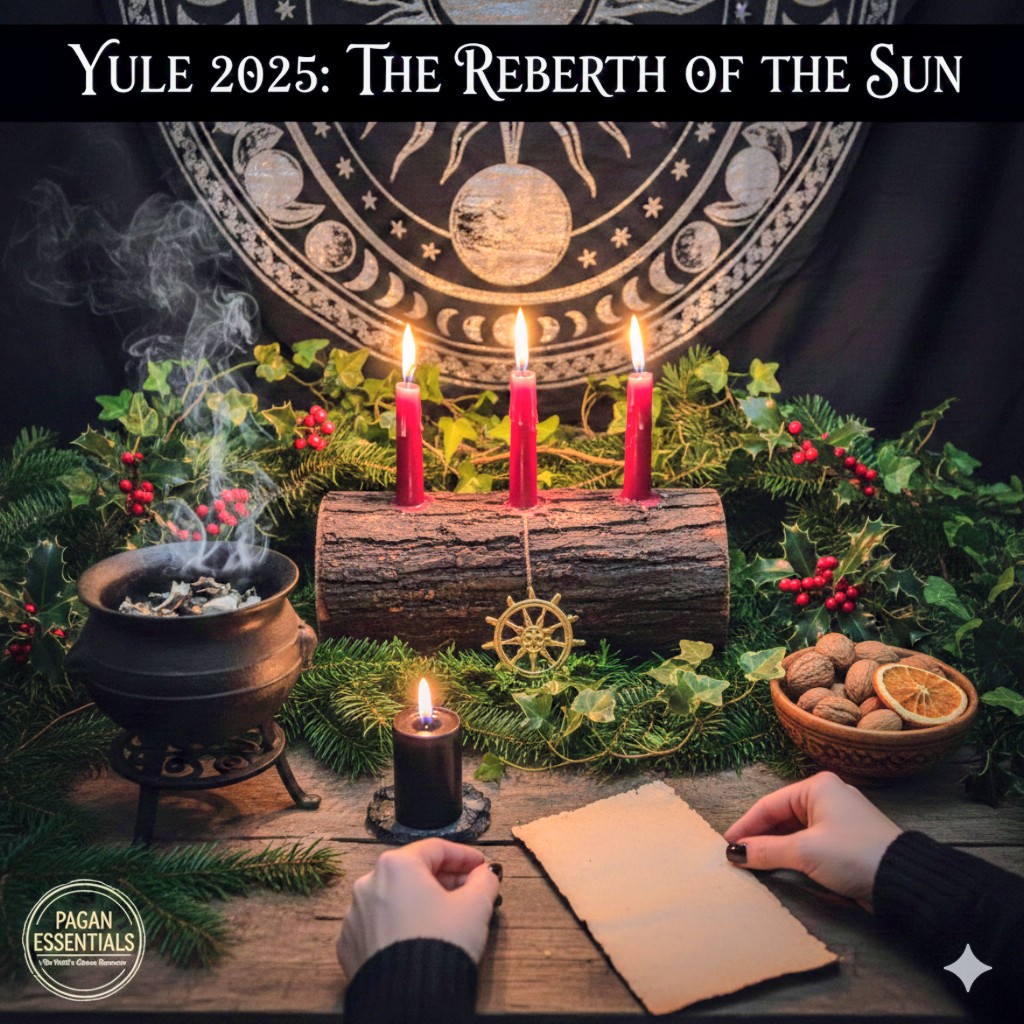
Emphasize Light: Place a central Gold or Yellow candle to represent the newly born Sun. Flank it with red and green candles. If you have a small wooden base, drill three holes and place the candles to create a mini, symbolic Yule Log.
Bring in the Green: Decorate heavily with Evergreens—pine boughs, cedar sprigs, holly, and ivy. These non-dying plants symbolize the promise of eternal life and the resilience of nature in the darkest season.
Natural Offerings: Set out bowls of Nuts (walnuts, hazelnuts) and Seasonal Fruit (oranges, apples, pomegranates). The circle shape of fruit and the hidden potential in nuts beautifully represent the Wheel and the sleeping energy of the Earth.
Solar Symbols: Include items that represent the Sun: a gold disk, sun-shaped ornaments, or a piece of Citrine or Pyrite (Fool’s Gold).
Divination Tools: This is an excellent time for prophecy. Place your Tarot decks, Runes, or Scrying mirror on the altar to ask for guidance for the year ahead.
Celebration Activities
Yule is a time for joyful celebration and deep, quiet reflection.
Burn the Yule Log: This is the most traditional activity. Historically, a log was burned for 12 days. Today, you can use a small log carved with wishes or intentions for the new year. Light it on the Solstice night to help pull the Sun back toward the Earth.
Lights, Lights, Lights: Light every candle and string of lights you own! Drive out the symbolic darkness by making your home a beacon of warmth and cheer.
Intention Setting: Use the quiet, introspective time of the longest night to reflect on the lessons of the past year and set clear intentions for the waxing year ahead. Write these down.
Feasting and Wassailing: Host a Yule Feast with seasonal foods. The tradition of “wassailing” (toasting to health and prosperity) with spiced drinks is a wonderful way to connect with loved ones.
Gift Making: Exchange small, handmade gifts infused with magical intent (like a protective charm or a jar spell) rather than mass-produced items.
A Simple Yule Ritual: The Release and Renewal
This ritual is designed to be performed on the night of December 21st to release the darkness and welcome the Sun’s return.
What You’ll Need:
Altar Setup: Your prepared Yule altar.
Candles: One Black candle (to represent the waning year/darkness) and one Gold/Yellow candle (to represent the reborn Sun/waxing year).
Paper & Pen: For writing down what you want to release.
Fire-safe dish: a cauldron or metal bowl.
Evergreen sprig: Pine or Cedar.
The Ritual Steps:
Preparation and Grounding: Light a bit of cinnamon or pine incense. Take three deep, cleansing breaths. Light your Black Candle first, acknowledging the darkness of the year that is ending.
Release the Dark: Take your paper and pen. Spend a few minutes reflecting on any fears, disappointments, negative habits, or resentments you wish to leave behind in the old year. Write them down one by one.
Incantation: Hold the list over the black candle (safely!) and say:”Holly King, Lord of Darkness, thank you for the lessons learned in the waning light. I release these burdens to the longest night.
“Carefully and mindfully, place the paper in your fire-safe dish and allow it to burn completely to ash, visualizing the negativity dissolving.
Welcome the Light: Extinguish the Black Candle completely, symbolizing the end of the long night and the darkness you have released. Now, light your Gold/Yellow Candle.
Incantation: As you light the Gold Candle, say:”Oak King, Lord of Light, I welcome you! With the Sun’s rebirth, I am reborn. I accept the strength, hope, and warmth you bring. Let the days lengthen and my spirit soar.”
Infuse with Life: Take your Evergreen sprig. Hold it over the flame of the Gold Candle (without touching the flame) and focus on the vitality of the plant—it remains green even in winter. Visualize the Sun’s energy flooding into it.
Affirmation: Place the evergreen sprig on your altar or near a window. Spend a final few minutes in silence, basking in the light of the Gold Candle and feeling the energy of renewal fill you.
Closing: Thank the elements and the spirits of the season. Let the Gold Candle burn down safely or extinguish it when you are ready, knowing the light has returned.
We hope this resource helps you plan a powerful and meaningful Yule celebration! May the returning Sun bring you warmth, abundance, and renewed light in the coming year!
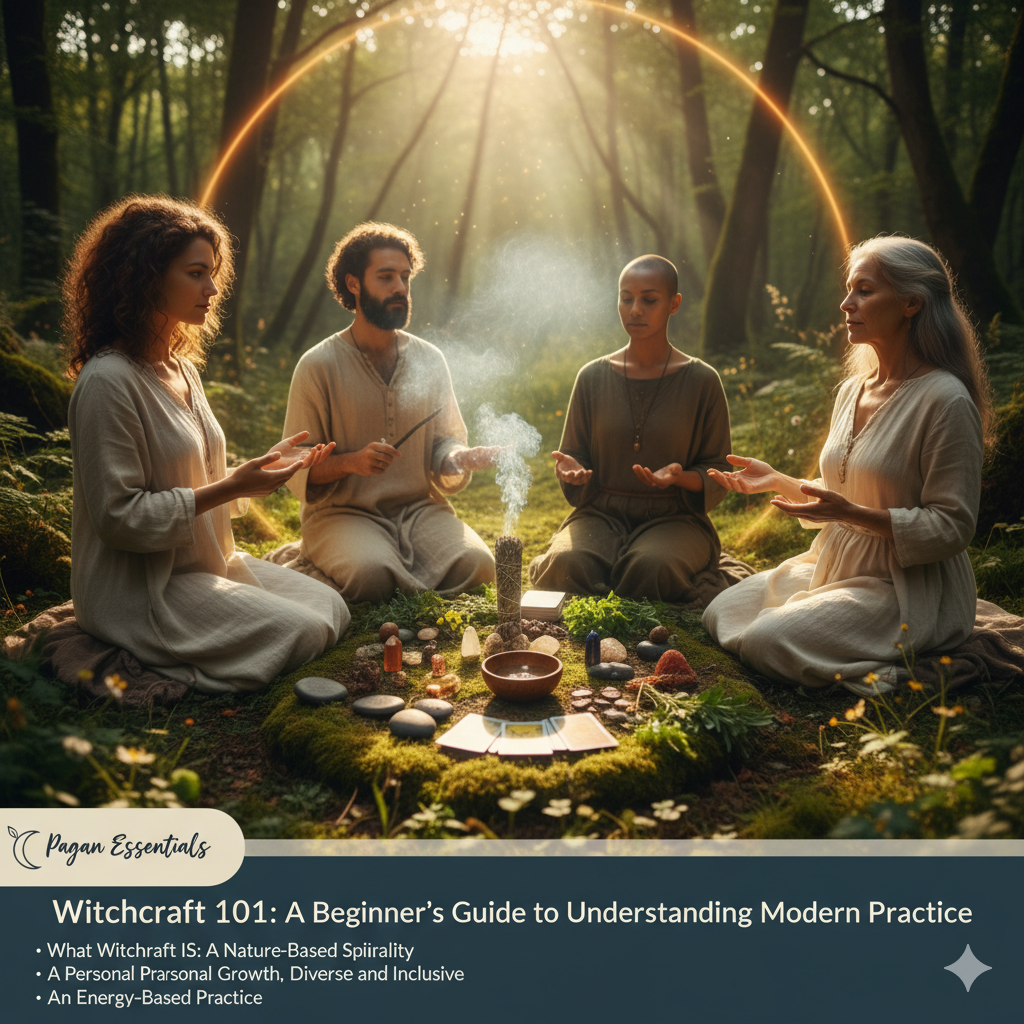
Demystify what witchcraft is (and isn’t), dispel common misconceptions.
Welcome, seekers, to Pagan Essentials! Today, we’re diving into the mystical world of “Witchcraft 101: A Beginner’s Guide to Understanding Modern Practice.”
For many, the word “witchcraft” conjures images of cackling hags, bubbling cauldrons, and spooky spells. But let’s demystify things a bit, shall we? Modern witchcraft is far from the sensationalized Hollywood portrayal. It’s a diverse and often deeply personal spiritual path that celebrates nature, intuition, and personal power.
What Witchcraft IS:
A Nature-Based Spirituality: At its heart, modern witchcraft often revolves around a deep connection to the earth, its cycles, and its energies. Witches often honor the changing seasons, the moon phases, and the natural world as sacred.
A Personal Practice: There’s no single dogma or holy book in witchcraft. It’s highly individualized, with practitioners developing their own unique understanding and expression of their craft.
Focused on Personal Growth and Empowerment: Many witches use their practice to foster self-awareness, personal responsibility, and spiritual development. It’s about taking charge of your life and manifesting your intentions.
Diverse and Inclusive: Witchcraft encompasses a wide array of traditions, paths, and beliefs. You’ll find Wiccans, eclectic witches, traditional witches, and many more, all with their own unique approaches. It’s generally a very open and welcoming community.
An Energy-Based Practice: Witches often work with energy – their own, the energy of nature, and universal energies – to create change and manifest desired outcomes. This can involve meditation, visualization, ritual, and spellwork.
What Witchcraft ISN’T:
Evil or Satanic: This is perhaps the biggest misconception. Modern witchcraft has absolutely no connection to Satanism. Witches do not worship the devil. In fact, many witches don’t even believe in a devil figure.
About Curses or Harm: While the media loves to portray witches casting hexes, the vast majority of modern witches adhere to ethical guidelines, often summarized by the Wiccan Rede: “An’ it harm none, do what ye will.” The focus is on healing, protection, and positive manifestation, not causing harm.
Just for Women: While historically, the term “witch” has been associated with women, people of all genders practice witchcraft.
A Cult: Modern witchcraft is not a cult. It doesn’t demand allegiance to a single leader or ideology, nor does it isolate its practitioners from society.
A Fantasy-Only Endeavor: While rich in symbolism and imagination, modern witchcraft is grounded in personal experience and practical application, not just make-believe.
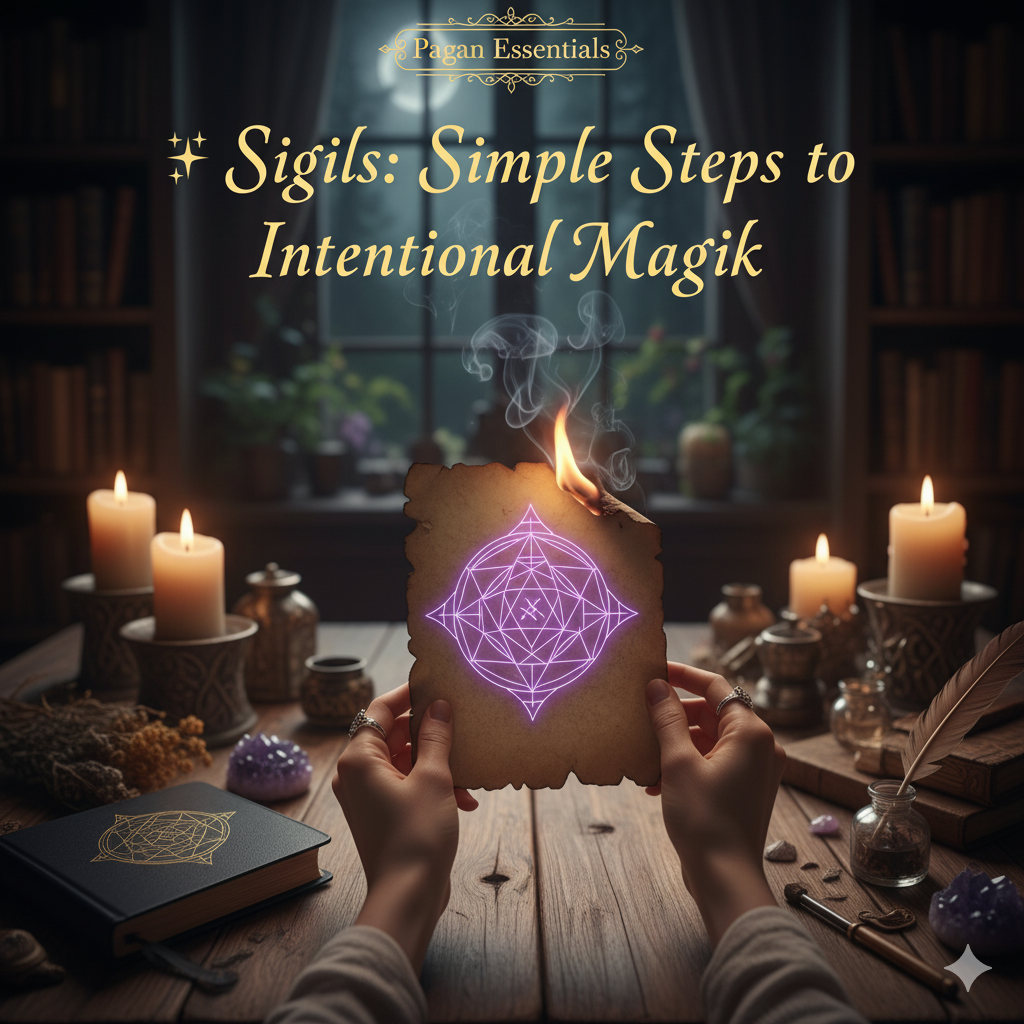
Sigils are perhaps one of the most accessible and effective forms of practical magick available to the modern practitioner. Whether you’re a seasoned witch or just starting out, learning to create and activate sigils is an essential skill in your magical toolkit.
🔮 What Exactly is a Sigil?
At its heart, a sigil is a magical symbol that is intentionally created to represent a specific desire or focused intent. Think of it as a magical monogram or a spiritual shorthand.
Instead of writing out a whole spell or invoking a deity, you compress a complex intention (like “I attract abundance,” or “I am protected from negative energy”) into a simple, abstract symbol. This bypasses the conscious mind and speaks directly to your subconscious, which is the engine of your personal magick.
🖋️ The Simple 5-Step Method for Creating a Sigil
There are many ways to create a sigil, but the Word Method (developed by artist and occultist Austin Osman Spare) is the most common and easiest to start with.
Step 1: Write Your Intention
Start with a clear, positive statement of what you want. It must be phrased in the present tense as if it is already true.
❌ Avoid: “I will have a new job.” (Too future-focused)
✅ Use: “I am finding a fulfilling job.”
Step 2: Eliminate Repeating Letters
Take your statement and write out all the letters, then cross out any duplicates.
Intention: I A M F I N D I N G A F U L F I L L I N G J O B
Remaining Letters: I A M F N D G U L J O B
Step 3: Sketch and Combine
This is the creative part! Take the remaining letters and start layering, overlapping, and combining them into a single, cohesive, and abstract design.
*You don’t need to make the original letters recognizable.
*Focus on creating a symbol that feels right to you.
*Keep it simple.
Tip: You can remove any letters that are difficult to incorporate or add small flourishes (circles, lines, dots) for aesthetics.
Step 4: Charge and Activate
Once your sigil is complete, the symbol needs to be charged or activated with energy. The most traditional and effective way is to enter a state of Gnosis (a mind-empty state).
The goal is to focus intensely on the sigil until your mind is completely blank, and then release the energy in a burst.
Methods to achieve Gnosis:
*Intense meditation, dancing, chanting, or even sensory overload (like staring at the symbol for a long time).
Activation:
Once Gnosis is achieved, focus your intent into the symbol for a moment, then immediately destroy the paper (burning is popular) or draw the sigil on your body/an object.
Step 5: Forget It!
This is the most crucial step! For a sigil to work, your conscious mind must forget what the sigil represents. If you constantly think, “Is my job sigil working yet?”, you keep the energy anchored to your conscious mind.
*Draw it and let it go. The sigil is working its magick in the background.
🌙 Where to Use Your Sigils
Once activated, you can place sigils in various places to keep their energy flowing:
*In Your Grimoire/Book of Shadows: As a bookmark or drawn on a relevant page.
*On Your Body: Drawn with anointing oil or temporary marker.
*On Objects: Engraved into candles, written on sticky notes hidden in your wallet (for abundance), or drawn on the back of your phone.
*As Protection: Drawn on the entrances to your home or car.
Sigil magick is all about intentionality and focus. Start with a simple intent, and enjoy the profound results of this powerful, personalized form of spellcraft!
The time of Samhain may have just passed, but the cosmos are giving us one last, bright burst of energy before the deep winter truly sets in. Get ready, Witches, for a spectacular celestial event! On the morning of Wednesday, November 5th, 2025, at 7:19 AM CST, we welcome the Full Beaver Super Moon—and this one is truly special! As the closest and brightest Super Moon of the entire year, its powerful, magnified light is set to illuminate our paths, emotions, and intentions in a major way.
♉ Grounding in the Sign of the Bull
This powerful Full Moon is shining its spotlight in the grounded, sensual, and security-focused sign of Taurus. The Full Moon phase is always a time of culmination, harvest, and release. When paired with the energy of Taurus, the focus becomes crystal clear:
Security and Stability: Taurus rules your material world, personal resources, and sense of security. This Super Moon invites you to look at your foundations. What have you built since the spring? What is working and what is causing unnecessary stress or instability?
Values and Self-Worth: Taurus governs your core values and how you embody your self-worth. This lunation is a potent time to ask: Are my actions and relationships truly aligned with what I value? If you’ve been compromising your worth, the moon’s light is guiding you to set firm, loving boundaries.
Embodiment and Sensuality: As an Earth sign, Taurus is deeply connected to the physical body and the five senses. Use this energy to slow down, get grounded, and nurture yourself with comforting, sensuous rituals.
Magickal Work for the November Super Moon
🧙♀️ The Beaver Moon earns its name from the traditional time when beavers finish their preparations for winter. It’s a time of industriousness, preparation, and securing your spiritual and physical home. This Super Moon in Taurus amplifies that energy, making it a powerful time for:
Security and Abundance Spells ~ Now is the moment to reinforce your foundations.
Financial Stability Jar ~ Create a jar with herbs like basil and cinnamon, coins, and a written petition for continued financial security throughout the winter months.
Home Protection Grid ~ Set up a crystal grid near your front door or in the center of your home using grounding stones like Black Tourmaline, Jasper, or Selenite for an aura of protective stability.
2. Grounding and Embodiment Rituals ~ Reconnect with the Earth and your own body.
Taurus Moon Bath: Draw a bath with Epsom salts, rose petals (for love and comfort), and a few drops of grounding essential oils like Patchouli or Vetiver. Meditate on your self-worth and the value you bring to the world.
Barefoot Grounding: If the weather permits, stand barefoot on the Earth (or place your hands on a potted plant) and ask the Earth to pull any lingering anxiety or instability from your energy field.
3. Releasing What Doesn’t Serve Your Value ~ Full Moons are for letting go, especially of things that undermine your worth.
“Deed of Release” Fire Ceremony: Write down any self-limiting beliefs, toxic habits, or draining commitments that compromise your time and energy. Safely burn the paper under the light of the Super Moon (or its last night of fullness on the 5th) to banish the pattern from your life.
A Note on Viewing ~ While the exact peak illumination is in the morning, the Moon will appear strikingly full and bright on both the evenings of November 4th and November 5th. For the most dramatic view, look for the Moon just after sunset as it rises above the horizon—the “Moon Illusion” will make this Super Moon look truly colossal! Embrace the stable, powerful energy of this beautiful celestial event. May your foundations be strong, your worth be honored, and your path be illuminated!
What magick are you planning for the closest Super Moon of the year? Share your intentions in the comments below!
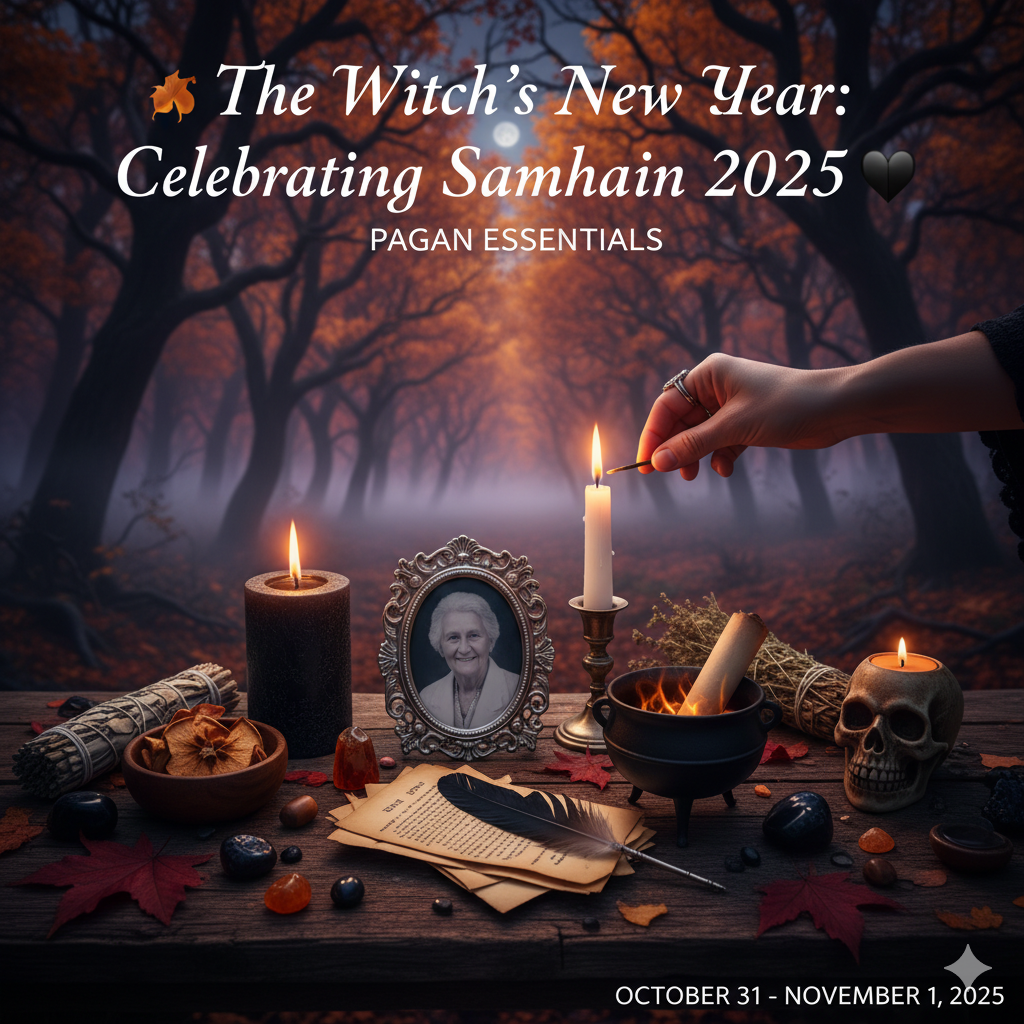
Samhain (pronounced Sow-in or Sah-win) is arguably the most sacred and magically potent of the eight Sabbats on the Wheel of the Year. It marks the final harvest, the death of the Summer God, and the transition into the dark half of the year. For many witches and pagans, it is considered the Witch’s New Year.
This is a time for deep reflection, honoring our ancestors, and embracing the mysteries of the Veil.
When to Celebrate Samhain 2025
Samhain is traditionally celebrated starting on the evening of October 31st and concluding on November 1st
In the Northern Hemisphere, your celebration will officially begin on Friday evening, October 31, 2025.
The History and Significance of Samhain
Samhain is an ancient Celtic fire festival with roots in Ireland, Scotland, and the Isle of Man. Its name is believed to come from the Old Irish word for “summer’s end.”
The Thinning Veil
The central theme of Samhain is that the veil between the physical world and the spirit world (or Otherworld) is at its absolute thinnest. This makes it a powerful time for communication with the dead and for deep divination.
A Festival of the Dead
For the ancient Celts, Samhain was a time to revere the dead. They would light great bonfires, wear costumes to ward off or disguise themselves from harmful spirits, and leave food and drink offerings for both the benevolent spirits of their ancestors and other otherworldly beings. Many of the traditions we see in modern Halloween—like costumes, bonfires, and carved gourds—have direct roots in Samhain practices.
The Celtic New Year
As it marked the end of the harvest and the agricultural year, Samhain was also considered the Celtic New Year. This transition from the light half of the year to the dark half symbolizes a fresh start, a time to shed the old and prepare for a period of inward growth.
Samhain Correspondence
Working with the right magical correspondences can help you attune to the energy of the Sabbat.
Themes ~ death, rebirth, the ancestors, divination, reflection, releasing the old, the final harvest, the Shadow Self
Colors ~ black (absorption, protection), orange (harvest, fire), purple (psychic ability), red (life force)
Deities ~ Gsds and Goddesses of the Dead (Hecate, Hades, the Morrigan, Anubis), Crone aspects, Underworld deities
Gemstones ~ Obsidian, Black Tourmaline, Jet, Amethyst, Smokey Quartz
🕯️ Samhain Activities for the Witch
Embrace the energy of Samhain with these traditional and modern activities:
Create an Ancestor Altar: Dedicate a space to your beloved dead. Place photos, mementos, and offerings (like their favorite food or drink) on the altar. Light a candle to welcome their presence.
Host a Dumb Supper: A Dumb Supper is a meal eaten in complete silence, with an extra place set for the honored dead. The dead’s plate is offered first, allowing for quiet reflection and communion with your ancestors.
Practice Divination: With the veil thinned, your intuition is heightened. This is the perfect time for a deep Tarot or Rune reading, scrying, or attempting communication with the other side.
Perform a Release Ritual: Samhain is the New Year, so it’s time for a deep cleansing. Write down the negative habits, thoughts, emotions, or relationships you wish to release from your life. Safely burn the paper in a cauldron or fireproof bowl, visualizing the energy transforming into smoke and releasing into the universe.
Take a Nature Walk: Observe the natural death and decay of the season. Collect fallen leaves, acorns, and seed pods to decorate your home or altar, honoring the cycle of life, death, and rebirth.
✨ Simple Samhain Ancestor Honoring Ritual
This ritual is perfect for beginners and focuses on gratitude, remembrance, and release.
You Will Need:
* A quiet, undisturbed space.
A photo or memento of a loved one who has passed.
A Black Candle (for release, protection, and the dark half of the year).
A White Candle (for honoring ancestors and guiding spirits).
A piece of paper and a pen.
A fireproof bowl or cauldron.
The Ritual:
1. Set the Space: Cleanse your space using smoke (like Sage or Mugwort) or sound (like a bell). Place your candles, memento, paper, and bowl on an altar or table. Take three deep, grounding breaths.
2. Light the Black Candle (Release): Light the black candle. On the piece of paper, write down anything you wish to let go of from the past year—fear, regret, unhealthy habits, etc. Hold the paper and say:
“As the Wheel of the Year turns, I release what no longer serves me. I let go of the old to welcome the new.”
Safely light the paper from the flame of the black candle and drop it into the fireproof bowl to burn completely. Observe the smoke carrying your burdens away.
3. Light the White Candle (Welcome and Honor): Light the white candle. Pick up the memento of your loved one. Take a moment to remember them, speaking their name aloud and sharing a favorite memory or two. You may ask for their guidance in the coming year.
“On this night when the veil is thin, I light this flame to honor you, my ancestors. May your wisdom guide my path and your memory be a blessing.”
Place the memento beside the white candle.
4. Quiet Reflection: Sit in quiet meditation between the two candles. Reflect on the death of the old year and the birth of the new. Allow any thoughts or messages to come through without judgment.
5. Closing: When you are ready, express gratitude to your ancestors and to the universe for the lessons of the past year.
“The ritual is done. I am safe and blessed. The season of darkness has begun, and I welcome its wisdom.”
Allow the candles to burn down safely, or extinguish them with a snuffer. Leave the Ancestor Altar in place for at least a few days to honor the season.
💀Blessed Samhain, and Happy New Year! May your reflections be deep and your ancestors’ blessings be abundant.
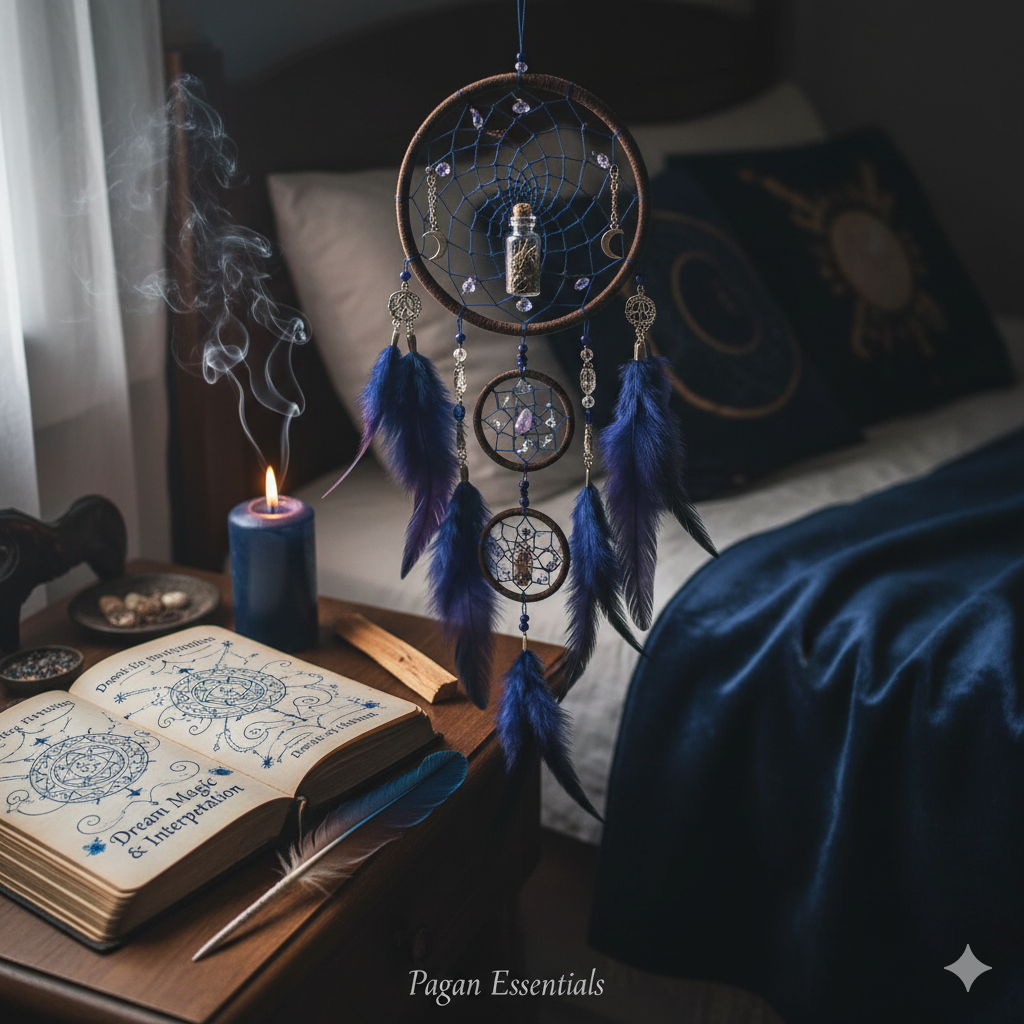
Dream Magic and Interpretation: Techniques for Using Your Dreams for Divination and Personal Insight
Dreams are more than just the brain’s nightly clean-up; they are a direct line to your subconscious, a portal to the collective unconscious, and a powerful tool for divination. For centuries, practitioners have treated the dream state as a sacred space—a place where the veil is thinnest, and divine messages are easily received. Welcome to the art of Dream Weaving, where we transform fleeting images into actionable wisdom.
1. Preparing the Sacred Sleep Space
Successful Dream Magic begins before your head even hits the pillow. Creating a dedicated liminal space prepares your mind to be receptive.
The Dream Pouch: Create a small muslin or cotton bag filled with herbs known to enhance psychic dreams. Mugwort is the undisputed champion, but you can also include Lavender for peace, Bay Leaf for prophecy, or a piece of Amethyst for spiritual clarity. Place this under your pillow or on your nightstand.
A Cleansing Ritual: Before sleep, take a moment to clear your energy. Light a stick of Palo Santo or Sage and gently smudge your bedroom, focusing on clearing away the stress of the day. State an intention aloud: “I open my mind to the wisdom of the night.”
Dream Journal Prep: Keep a dedicated journal and pen right next to your bed. Do not use your phone; the blue light and distraction can sever the connection. Your first few waking moments are crucial for capturing the dream’s essence.
2. Setting an Intentional Dream Quest
Dream divination can be passive (interpreting what comes naturally) or active (asking a specific question). The latter is known as a Dream Quest.
Formulate Your Question: Be specific, yet open-ended. Instead of: “Will I get a new job?” try: “Show me the path I need to take to achieve professional fulfillment,” or “What is the core issue blocking my abundance?”
The Visualization Anchor: Spend 5-10 minutes visualizing a symbol that represents your question. If you are seeking advice on a relationship, visualize two interwoven cords. If it’s a decision, visualize a fork in the road. Repeat your question three times.
The Invocation: Before closing your eyes, recite a simple invocation, calling on the spirit of the dream space, your ancestors, or your patron deities. (Example: “Spirits of the deep night, guide my eyes to the truth I seek.”)
3. Techniques for Interpretation
Waking up is only the halfway point. Now comes the hard work of turning images into insight.
The ‘Feeling’ Filter
The feeling of a dream is often more important than the literal imagery.
Tension/Relief: Did the dream leave you with a sense of dread, urgency, or profound peace? This emotional residue is your first key. If a dream of flying leaves you anxious, it may point to a fear of freedom, not literal elevation.
Color Symbolism: Pay attention to the dominant colors. Deep Red can signify passion or anger; Gold can represent success or a need for ego work; muted Greys can point to uncertainty.
The Triad of Interpretation
Use these three lenses to analyze a key symbol or event from the dream:
Personal Meaning (The Mirror): What does this symbol mean to you? If you dream of an owl, what is your immediate, unfiltered association? Wisdom? Fear? Your grandmother?
Universal/Archetypal Meaning (The Library): What does this symbol mean in common lore or mythology? An owl is a classic symbol of Athena, wisdom, and shadow work.
The Contextual Clue (The Scene): Where did the symbol appear? Was the owl in a beautiful forest or a dilapidated basement? The setting gives the symbol its current relevance to your life.
4. Integrating Dream Wisdom
A dream is just a story until you apply its wisdom.
The Action Step: After interpreting a dream, commit to a small, tangible action. If your dream showed you a blocked doorway, the action might be to have a difficult conversation you’ve been avoiding.
The Ritual: If the dream was particularly potent or unpleasant (a nightmare that feels like a warning), perform a small ritual to acknowledge and neutralize or empower the message. Draw the key symbol on a piece of paper, work a simple knot spell, or light a candle dedicated to the dream’s guidance.
The night is a fertile ground for magic. By approaching your dream state with reverence and intention, you transform your sleep into a powerful divinatory practice.
As the Wheel of the Year turns, we arrive at Mabon, the Autumn Equinox, a time of balance, gratitude, and the second harvest. For those of us in the Northern Hemisphere, this Sabbat marks the official start of autumn, when day and night stand in perfect equilibrium before the nights begin to lengthen.
When is Mabon 2025?
In 2025, Mabon in the Northern Hemisphere will occur on Monday, September 22nd.
The History of Mabon
While the name “Mabon” itself is a modern invention coined by Aidan Kelly in the 1970s, the celebration of the Autumn Equinox is ancient and deeply rooted in agricultural societies. Across various cultures, this time of year has always been dedicated to giving thanks for the bounty of the harvest, preparing for the colder months ahead, and acknowledging the changing seasons. It was a time of feasting, community gathering, and honoring the generous Earth.
Correspondences of Mabon
Mabon is rich with symbolic correspondences that reflect its themes of harvest, balance, and gratitude.
Colors: Red, orange, yellow, brown, gold, deep greens, maroon.
Creating a Mabon altar is a wonderful way to honor the Sabbat and bring its energy into your home. Here’s an idea for inspiration:
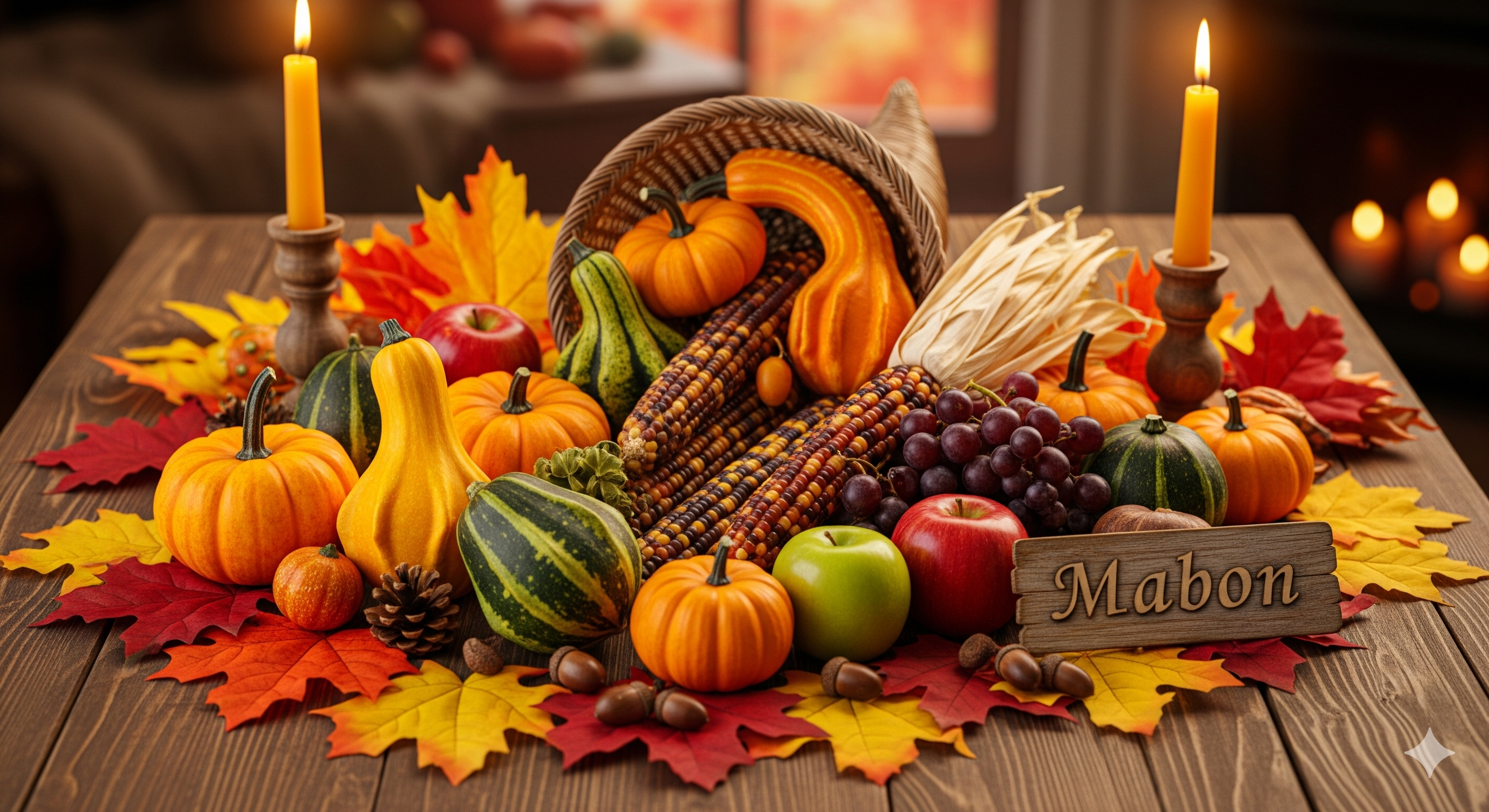
Set out a rich, autumnal-colored cloth, perhaps in deep red or orange. In the center, place a cornucopia overflowing with small gourds, miniature pumpkins, apples, and ears of corn. Add candles in colors like gold, brown, or deep green. You might include representations of deities associated with Mabon, such as a statue of Demeter or a symbol of the Horned God. Scatter fallen leaves, acorns, and pinecones around the base. Include any crystals that resonate with Mabon’s energy, and perhaps a small chalice for offerings of cider or wine.
Mabon Activities to Participate In
There are many ways to celebrate Mabon and connect with its energies:
Harvesting & Foraging: If possible, gather late-season herbs, fruits, or nuts. Even a trip to a local apple orchard or pumpkin patch can be a wonderful way to connect with the harvest.
Feasting: Prepare a special meal using seasonal ingredients like apples, squash, corn, and root vegetables. Share it with loved ones as an act of gratitude for abundance.
Nature Walks: Spend time in nature, observing the changing leaves and feeling the shift in the air. Collect fallen leaves, acorns, and other natural treasures.
Autumn Decorating: Adorn your home with natural elements like gourds, pumpkins, dried corn, and colorful leaves.
Gratitude Practice: Take time to reflect on the blessings and harvests in your life, both tangible and intangible. Keep a gratitude journal.
Canning & Preserving: Engage in the traditional act of preserving food for the winter months, symbolizing preparation and self-sufficiency.
Sabbat Cleaning: Just as nature is letting go, consider decluttering and cleansing your home to make space for new energies.
Baking: Bake apple pies, pumpkin bread, or corn muffins as offerings or to share.
An Example Mabon Ritual: A Simple Gratitude Offering
This simple ritual can be performed alone or with others.
Supplies Needed:
A small piece of bread (homemade if possible)
A cup of cider, wine, or water
A quiet space, preferably outdoors or near your altar
A candle (optional)
The Ritual:
Center Yourself: Find a comfortable position. Take a few deep breaths, grounding yourself to the Earth. If using a candle, light it now.
Acknowledge the Season: Say aloud: “The wheel turns, and day and night stand in perfect balance. We welcome Mabon, the time of the second harvest, a moment of gratitude and reflection.”
Offer the Bread: Hold the piece of bread in your hands. Reflect on the bounty it represents – the sun, rain, earth, and labor that brought it forth. Say: “For the gifts of the Earth, for the abundance in my life, for the nourishment of body and spirit, I am thankful.” Break off a piece and place it outside (if safe for wildlife) or on your altar as an offering.
Offer the Drink: Hold the cup. Reflect on the sustenance and joy it brings. Say: “For the flowing waters, for the fruits of the vine, for health and vitality, I give thanks.” Pour a small amount outside or on your altar.
Personal Gratitude: Take a moment to silently or audibly list specific things you are grateful for in your life right now.
Release and Balance: Acknowledge the balance of Mabon. Say: “As light and dark find equilibrium, I seek balance within myself. I release what no longer serves me and embrace the wisdom of the changing seasons.”
Closing: Thank the spirits of the season, your guides, or the divine as you understand them. Take a final deep breath. If you lit a candle, safely extinguish it.
May your Mabon be filled with abundance, gratitude, and perfect balance!
Do you have any specific Mabon traditions you’d like to share, or would you like to see an image of a Mabon altar?
Welcome, fellow seekers, to Pagan Essentials, where we delve into the heart of magical practice. One of the most fundamental skills for any witch is the ability to raise, direct, and release energy for spellwork. Without a concentrated burst of power, even the most beautifully crafted spell can fall flat.
Think of it like charging a battery before you use it. Your own power is the most potent tool in your arsenal, and learning to build it up is key to successful magical work. Whether you’re a solitary practitioner or part of a coven, there are countless ways to get your energy flowing.
Here are some of the most effective techniques for raising power before you cast:
Physical and Emotional Techniques
Energy isn’t just a mental construct; it’s a very real force that can be felt and moved with your body.
Chanting and Rhythm: Repetitive sound is a powerful tool. Chanting an incantation, mantra, or simple phrase can build a palpable vibration in your body and your space. Adding a drum or clapping your hands can intensify this effect.
Movement and Dance: Dancing, spinning, or even just bouncing in place can help stir up your inner energy. Don’t worry about looking graceful—this is about feeling the power build within you.
Stirring Emotion: Emotions like passion, joy, anger, or deep love are raw energy. Tapping into an intense emotion that aligns with your spell’s intention can provide a huge boost of power.
Sexual Energy: Often considered one of the most powerful forms of energy, sexual energy can be channeled and directed into spellwork. The moment of orgasm can be used to release and send your intention with incredible force.
Mental and Spiritual Techniques
A strong mind is a witch’s greatest ally. These techniques focus on internal work to generate power.
Grounding and Centering: Before you begin, connect to the Earth (grounding) and find your internal balance (centering). This prevents you from becoming overwhelmed and provides a stable foundation from which to draw power. Visualize roots extending from your feet into the earth, anchoring you.
Visualization: This is the act of seeing your intention manifest. Visualize energy as a swirling ball of light or a flowing river, gathering within you or between your hands. See it grow brighter and more potent with every breath.
Cone of Power: A classic group technique, the cone of power is a collective visualization where a group of witches join hands and chant or dance to build a cone-shaped column of energy that rises from their circle. At its peak, the energy is released to be sent toward a common goal.
Deity Invocation: If you work with gods, goddesses, or other spirits, you can call upon their power to lend strength to your work. This is an act of co-creation, where you combine your energy with theirs.
Working with Elements and Tools
The world around you is full of energy, and you can tap into it.
Elemental Energy: Draw power from the four classical elements. Focus on the steady, grounding power of Earth; the sharp, focused power of Air; the passionate, transformative power of Fire; or the flowing, intuitive power of Water.
Crystals and Herbs: Certain crystals and herbs are natural energy conductors. Hold a piece of quartz to amplify your own power, or use a specific herb like cinnamon or cayenne to add a fiery kick to your spell.
Magical Tools: Your tools are not just props; they can be charged with energy. A wand can be used to direct and focus the power you’ve raised, while an athame can cut and shape it.
No matter which techniques you choose, the most important part is to find what resonates with you. Your personal connection to the practice is what truly brings the magic to life.
Welcome, fellow seekers, to Pagan Essentials! I’m Ivyjaded Wyldfyre, and today we’ll delve into the enchanting connection between the moon’s celestial dance and the potency of our magickal workings. The moon, our luminous neighbor, doesn’t just illuminate the night sky; it casts a subtle yet powerful influence upon our world and, most importantly, our spells. Understanding and aligning your craft with the lunar cycle can significantly amplify your intentions and bring forth more potent results.
The Ever-Changing Face of the Moon:
Just as the tides ebb and flow with the moon’s pull, so too do the energetic currents that weave through our existence. Each phase of the moon carries its own unique vibrational signature, making certain phases more conducive to specific types of magick. Let’s explore the primary lunar phases and how to harness their energy:
New Moon (Dark Moon): This is the phase of introspection, new beginnings, and planting seeds of intention. The energy is subtle, inward-focused, and perfect for shadow work, banishing unwanted influences, and conceiving new projects or goals. Spells for setting intentions, breaking bad habits, and seeking clarity are particularly potent now.
Waxing Crescent: As a sliver of light begins to grow, so does the energy around your intentions. This phase is ideal for attracting positive influences, setting goals in motion, and nurturing new ventures. Spells for growth, attraction, and inspiration thrive during this time.
First Quarter: This phase brings a surge of dynamic energy and a push to take action on the intentions set during the New Moon. It’s a time for courage, overcoming obstacles, and making decisive moves. Spells focused on strength, motivation, and taking action are well-suited here.
Waxing Gibbous: The light continues to expand, and the energy builds towards fullness. This is a time for refinement, growth, and bringing your intentions closer to fruition. Spells for abundance, prosperity, healing, and manifestation are particularly effective.
Full Moon: The peak of lunar energy! The veil between worlds is thin, making this the most potent time for almost any form of magick. Emotions are heightened, and energy is abundant. Spells for charging tools, divination, love, healing, protection, and manifestation are incredibly powerful. Be mindful of the amplified energy and ground yourself.
Waning Gibbous: As the light begins to recede, the energy shifts towards releasing and banishing. This is a time for gratitude for what has manifested and for gently letting go of what no longer serves you. Spells for releasing negativity, breaking ties, and diminishing unwanted influences are favored.
Third Quarter (Last Quarter): The energy continues to decline, making it a potent time for banishing, releasing, and cleansing. This phase supports inner reflection, letting go of burdens, and preparing for a new cycle. Spells for banishing, protection, and breaking hexes are effective now.
Balsamic Moon (Darkening Moon): The final phase before the New Moon, this is a time for deep rest, reflection, and releasing the last vestiges of the previous cycle. It’s not typically a time for casting new spells but rather for inner work and preparation for the new beginnings to come.
Aligning Your Practice:
To effectively work with lunar energies, start by observing the moon’s phases. Many calendars and lunar apps can help you track its cycle. Once you know the current phase, consider how its energetic qualities align with your magickal intentions.
Match Your Intentions: Choose spellwork that resonates with the energy of the current moon phase. For example, don’t try to banish something on the Waxing Crescent, as the energy is geared towards growth and attraction.
Charge Your Tools: Place your crystals, tarot decks, and other magickal tools under the light of the Full Moon to cleanse and charge them with potent lunar energy.
Time Your Rituals: If possible, schedule your rituals to coincide with the most appropriate lunar phase for your desired outcome.
Incorporate Lunar Symbolism: Use moon imagery, colors associated with the moon (silver, white, grey), and lunar deities in your spells and rituals.
By consciously aligning your magickal practices with the cycles of the moon, you tap into a powerful and consistent source of energy, enhancing the effectiveness and flow of your spells. May your craft be illuminated by the wisdom of the lunar light!
Blessings of the Moon, Ivyjaded Wyldfyre Pagan Essentials
Celebrating Lughnasadh/Lammas: The First Harvest of Abundance By Pagan Essentials
As the Wheel of the Year turns, we arrive at Lughnasadh, also known as Lammas, the first of the three harvest festivals. This potent Sabbat, celebrated on August 1st, 2025, marks the beginning of the grain harvest, a time of gratitude for the Earth’s bounty and the culmination of the year’s growth. For Witches and Pagans, it’s a moment to honor sacrifice, abundance, and the interconnectedness of life.
What is Lughnasadh/Lammas?
Lughnasadh (pronounced Loo-nah-sah), named after the Celtic sun god Lugh, is a fire festival celebrating the first fruits of the harvest, particularly grains like wheat, barley, and oats. Lammas, derived from the Old English “hlaf-mas” meaning “loaf mass,” emphasizes the tradition of baking the first bread from the newly harvested grain. Both names speak to the same core theme: the gift of the land providing sustenance, often through the “sacrifice” of the grain god, who dies to nourish the people. It’s a time of both joy for the harvest and a poignant acknowledgment of the turning wheel, as the sun begins its slow decline towards winter.
Correspondences of Lughnasadh/Lammas
To truly connect with the energy of this Sabbat, consider incorporating these correspondences into your celebrations:
Colors:
Gold, yellow, orange, red (representing the sun and ripe grains)
Light brown, green (representing the earth and growing crops)
Crystals & Stones:
Carnelian, Sunstone, Citrine, Peridot, Amber, Pyrite (for solar energy, abundance, and warmth)
Agate, Jasper (for grounding and earth connection)
Herbs & Plants
Grains: Wheat, Barley, Oats, Corn
Sunflowers, Marigolds, Goldenrod (for solar energy and beauty)
Rosemary, Thyme, Sage, Cinnamon (for protection, prosperity, and warmth)
Apples, Pears, Plums, Blackberries (first fruits of the season)
Grapes and Grapevines
Symbols & Tools
Sheaves of grain, Corn dolls
Loaves of bread, Baskets, Cornucopias
Sickles, Scythes (harvesting tools)
Beeswax candles
The Sun, Bonfires
Deities:
Lugh (Celtic God of craftsmanship, arts, and the sun)
Ceres (Roman Goddess of agriculture)
Demeter (Greek Goddess of the harvest)
The Corn Mother/Grain Mother
John Barleycorn (personification of the grain)
How to Create a Lammas Altar
Choose a central cloth: Opt for colors like gold, orange, or a rich green to set the tone.
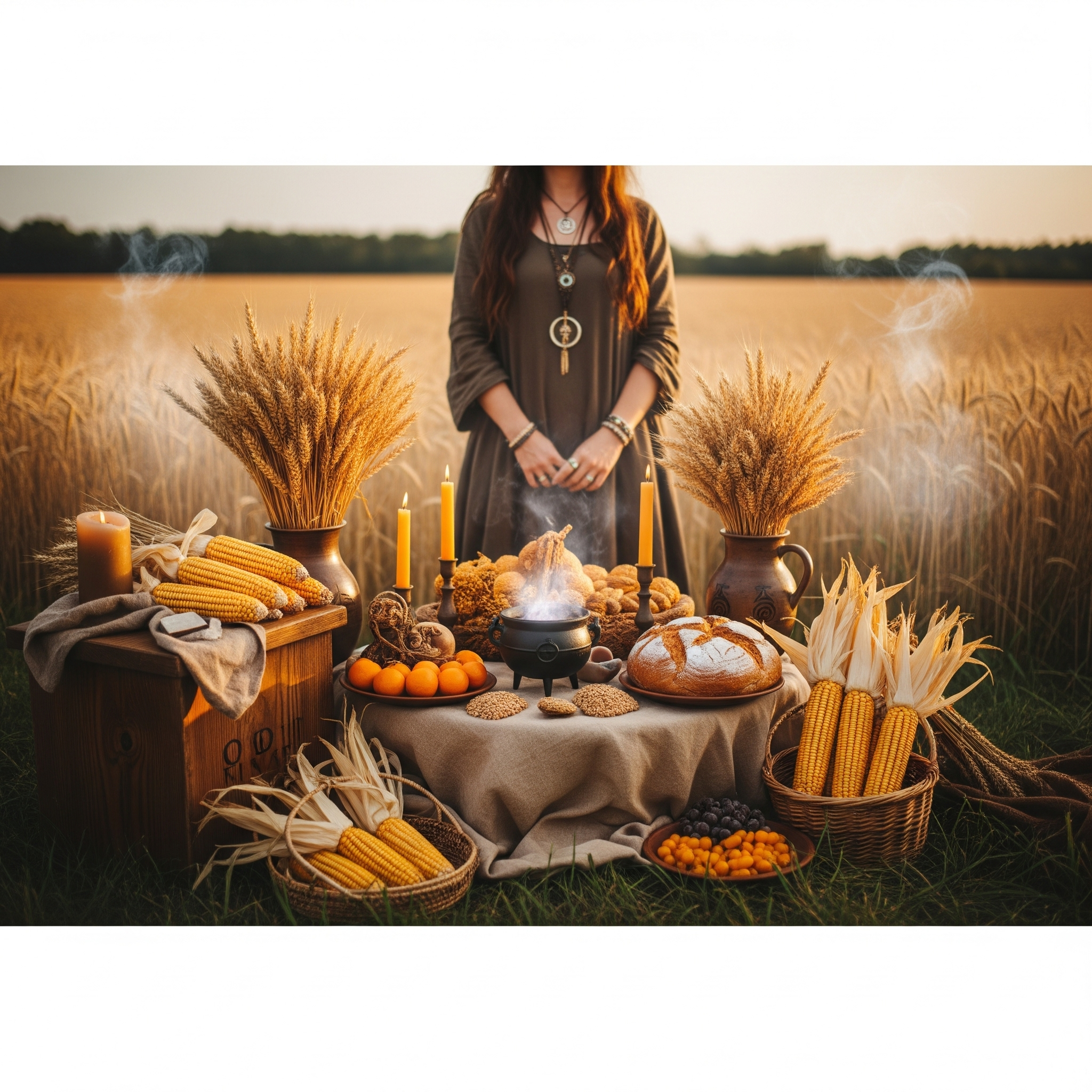
Feature grains prominently: Place sheaves of wheat, stalks of corn, or a small bowl of mixed grains.
Add baked goods: A freshly baked loaf of bread (especially one you’ve made yourself with intention) is central to a Lammas altar. Honey cakes or other grain-based treats are also wonderful.
Include seasonal fruits and vegetables: Arrange a bounty of apples, berries, plums, or any other fruits and vegetables that are ripe in your area.
Incorporate solar symbols: Yellow, orange, or red candles are perfect for representing the sun’s power. Sunflowers or marigolds can also be added.
Place crystals: Arrange your chosen Lammas crystals (Carnelian, Citrine, etc.) to amplify the energy of abundance and gratitude.
Add images or representations of deities: If you work with specific harvest deities like Lugh, Demeter, or Ceres, include their images or symbols.
Include tools of the harvest: A small sickle (if you have one), miniature baskets, or even a symbolic corn doll can represent the work of the harvest.
Personal touches: Add anything that resonates with you and signifies abundance, hard work, or gratitude. This could be a journal to write down your blessings, or a small offering bowl for nature.
Activities to Celebrate Lammas Lammas is a wonderful time for celebration, reflection, and connecting with the Earth. Here are some activities you can do:
Bake Bread: This is perhaps the most iconic Lammas activity. Bake a loaf of bread from scratch, infusing it with gratitude for the harvest. Share it with loved ones.
Visit a Farmer’s Market: Support local farmers and enjoy the bounty of the season by purchasing fresh, seasonal produce.
Make Corn Dolls: Crafting corn dolls from dried corn husks is a traditional Lammas craft, representing the spirit of the grain.
Harvesting & Foraging: If you have a garden, gather your harvest. If not, go berry picking or find a safe place to forage for wild edibles (with proper identification!).
Feast of Abundance: Prepare a meal featuring seasonal ingredients, especially grains, fruits, and vegetables. Share it with friends and family, expressing gratitude for all you have.
Nature Walk: Spend time in nature, observing the ripening fields and the vibrant colors of late summer. Offer thanks to the Earth.
Journaling for Gratitude: Reflect on your accomplishments and blessings from the year so far. What “seeds” have you planted that are now coming to fruition?
Crafting & Creativity: Channel Lugh’s energy by engaging in a creative pursuit, whether it’s pottery, woodworking, writing, or any other craft.
Example Lammas Ritual: The Loaf of Thanks This simple ritual can be performed alone or with a small group to honor the essence of Lammas. Materials:
A freshly baked loaf of bread (homemade is ideal)
A chalice of water or mead
A yellow or gold candle
A small offering bowl
Optional: A small sprig of wheat or corn Preparation:
Set up your Lammas altar with your chosen correspondences.
Cleanse your space and yourself as you normally would before ritual.
Center and ground yourself. The Ritual:
Light the Candle: Light the yellow or gold candle, saying:
Your Lammas altar is a sacred space to honor the harvest and express gratitude. Here’s how to create one:
“Flame of the Sun, giver of life, I light this flame to honor your strength and your sacrifice, which brings forth the harvest.”
Hold the Bread: Take the loaf of bread in your hands, feeling its warmth and weight. Focus on the journey of the grain from seed to sustenance. Say: “From the Earth, through sun and rain, comes this sacred grain. Transformed by hand and fire, it becomes our nourishment. I give thanks for the abundance, for the cycle of life, death, and rebirth.”
Offer a Piece: Break off a small piece of the bread and place it in the offering bowl, saying: “To the Earth Mother, to Lugh, and to all spirits of the harvest, I offer this first gift of your bounty. May our gratitude be received.”
Share the Bread (if with others) or Eat a Piece (if alone):
With Others: Pass the loaf around, with each person breaking off a piece, saying what they are grateful for.
Alone: Take a bite of the bread, savoring its taste and truly feeling the gratitude.
Raise the Chalice: Lift your chalice of water or mead. “As the waters quench our thirst, so too does the harvest sustain us. May this abundance continue, and may we remember our connection to the land.” Take a sip.
Reflection: Take a few moments to sit in quiet contemplation. Reflect on what you have harvested in your life this year – not just physically, but also in terms of personal growth, relationships, and wisdom gained.
Closing: Thank the deities, the elements, and the Earth. “The harvest is blessed, and our hearts are full. We honor the cycle, and give thanks for all gifts. So mote it be.”
Extinguish the Candle: Safely extinguish the candle. You may leave the offering outside for the animals or return it to the Earth.
Lammas is a powerful time to acknowledge the fruits of your labor and the generosity of the Earth. May your celebration be filled with gratitude, abundance, and connection!
Lammas is a powerful time to acknowledge the fruits of your labor and the generosity of the Earth. May your celebration be filled with gratitude, abundance, and connection.
The world of witchcraft is incredibly diverse, with many different paths and traditions. Finding out “what type” of witch you are is less about fitting into a rigid category and more about understanding your own inclinations, strengths, and the practices that resonate most deeply with you.
Here’s a breakdown of ways to explore and understand your own unique witchcraft:
1. Self-Reflection and Introspection:
* What are you naturally drawn to? Think about your hobbies, interests, and what makes you feel connected and alive. Are you drawn to nature, history, art, helping others, knowledge, or something else entirely? These natural inclinations often weave into your craft.
* What kind of magic feels most intuitive to you? Do you feel a pull towards working with herbs, crystals, energy, deities, spirits, the elements, or something else?
* What are your values and ethics? Your magical practice should ideally align with your core beliefs.
* What kind of impact do you want your magic to have? Are you interested in personal growth, healing, protection, manifestation, community work, or something else?
* How do you best connect with the spiritual or magical? Is it through meditation, ritual, spending time in nature, art, music, or other means?
2. Exploring Different Paths and Traditions:
Research different types of witchcraft to see what sparks your interest. Keep in mind that these are not always strict categories, and many witches blend aspects from different paths:
* Eclectic Witchcraft:
This is a very common path where individuals draw inspiration and practices from various traditions and create their own unique blend.
* Hereditary Witchcraft:
Practices and knowledge passed down through family lines.
* Traditional Witchcraft:
Often focuses on folklore, spirit work, and historical practices of a specific region.
* Gardnerian/Wiccan:
Initiatory traditions with specific structures, rituals, and deities.
* Dianic Witchcraft:
Often focuses on the Divine Feminine and may be women-centered.
* Hedge Witchcraft:
Often solitary practitioners who work closely with nature, herbs, and folk magic.
* Kitchen Witchcraft:
Magic woven into everyday tasks, especially cooking and home care.
* Green Witchcraft:
Focuses on plants, herbs, and nature-based magic.
* Crystal Witchcraft:
Working with the energy and properties of crystals.
* Sea Witchcraft:
Drawing power from the ocean and its tides.
* Cosmic Witchcraft:
Working with celestial energies and astrology.
* Death Witchcraft:
Working with spirits of the dead and ancestor veneration (this is a serious path and requires respect and understanding).
3. Experimentation and Practice:
* Try different things: Don’t be afraid to experiment with various forms of spellwork, divination, and ritual. See what feels right and what yields results (even small ones).
* Keep a journal: Document your experiences, observations, and feelings during your magical workings. This can help you identify patterns and what resonates with you.
* Connect with nature: Spend time outdoors and observe the cycles of the earth. This can inform your practice, regardless of your specific path.
4. Learning and Research:
* Read books: Explore a wide range of books on witchcraft from different perspectives. Be discerning and look for reputable authors.
* Take workshops or courses: If available in your area or online, these can provide structured learning and connect you with other practitioners.
* Explore online communities: Engage with online forums and groups, but be mindful of the information shared and prioritize critical thinking.
5. Trust Your Intuition:
Ultimately, the most important aspect of finding your “type” of witch is listening to your own inner voice and intuition. What truly calls to you? What feels authentic and powerful?
It’s important to remember:
* Labels can be helpful but aren’t always necessary. You might find that you resonate with aspects of several different paths, and that’s perfectly okay.
* Your path may evolve over time. As you learn and grow, your practice may shift and change.
* There’s no right or wrong way to be a witch. Authenticity and ethical practice are key.
Take your time, be patient with yourself, and enjoy the journey of discovering your own unique magical identity. It’s a deeply personal and rewarding exploration! Since you’re in Manitowoc, Wisconsin, you might also consider looking for local metaphysical shops or pagan gatherings (if you feel comfortable) as a way to connect with others on similar paths.
Welcome, seeker. As the wheel turns and the earth softens, we approach one of the most vibrant lunations of the year. On April 2nd, 2026, the sky will be graced by the Full Pink Moon. Despite its name, the moon won’t literally turn a rosy hue, but its spiritual “color” is one of undeniable growth,… Read more: The Pink Moon: Blossoming into Your Power
Happy Friday the 13th, Seekers! 🖤While the rest of the world might be walking cautiously around ladders, we’re leaning into the magic. For the modern practitioner, Friday the 13th isn’t a day of “bad luck”—it is a potent alignment of divine feminine energy and manifestation. Why this day is sacred to Witchcraft: * The Day… Read more: 🌙 Friday the 13th: The Goddess’s Lucky Day
Tomorrow night, the sky transforms. A Full Blood Moon (a Total Lunar Eclipse) occurs when the Earth passes directly between the Sun and the Moon, casting a deep, copper-red shadow across the lunar surface. In the craft, this is more than just an astronomical event; it is a potent “cosmic reset” button. While a standard… Read more: 🌕 The Blood Moon: Embracing the Crimson Tide
Dragon Magick is not for the faint of heart. It is a path of high energy, deep wisdom, and personal transformation. While pop culture often depicts dragons as monsters to be slain, in the world of witchcraft, they are ancient, powerful astral beings who act as guardians, mentors, and catalysts for change.
Welcome, dear seekers, to the vibrant heart of spring! As the days lengthen and the earth bursts forth in a riot of color, we arrive at Beltane, a Sabbat brimming with life, passion, and the promise of summer’s bounty. Here at Pagan Essentials, we delve into the essence of this joyous festival, exploring its rich tapestry of correspondences, practices, altar inspiration, and a sample ritual to ignite your own Beltane celebrations.
Beltane, also sometimes called May Day, marks the halfway point between the Spring Equinox (Ostara) and the Summer Solstice (Litha). It’s a time when the veil between the worlds thins, and the potent energies of fertility and growth are at their peak. Our ancestors celebrated this fiery festival with bonfires, dances, and rituals honoring the burgeoning life force of nature. Today, we carry that spirit forward, weaving our own magic into this ancient tapestry.
Unveiling the Correspondences of Beltane
Understanding the energies and symbols associated with Beltane can deepen our connection to the Sabbat. Consider incorporating these correspondences into your celebrations:
* Themes: Fertility, passion, love, joy, vitality, blossoming, new beginnings, the union of the God and Goddess, protection.
* Deities: The May Queen and the Green Man (or their local equivalents), Flora, Pan, Cernunnos, any deities associated with love, fertility, and the sun.
* Colors: Green (for growth and abundance), red (for passion and vitality), white (for purity and new beginnings), yellow (for the sun’s energy).
* Stones & Crystals: Rose quartz (for love), carnelian (for passion), emerald (for growth), citrine (for joy and abundance).
* Animals: Bees (for community and sweetness), rabbits (for fertility), cattle (representing prosperity).
Embracing Beltane Practices
Beltane offers a multitude of ways to connect with its vibrant energy:
* Dance the Maypole: This iconic tradition symbolizes the union of the God and Goddess and the intertwining of energies. Weave ribbons around a pole, infusing it with your intentions for the season.
* Leap the Bonfire: Historically a purification and fertility rite, jumping over a small bonfire (with safety as your utmost priority, of course!) can symbolize letting go of the old and embracing new possibilities. Even gazing into the flames can be a powerful meditative practice.
* Gather May Dew: Collect dew from plants and flowers at dawn on Beltane morning. It’s said to bring beauty, luck, and healing.
* Create Flower Crowns and Garlands: Adorn yourself and your sacred space with the vibrant blossoms of the season. This act honors the beauty of the earth and connects you to its life force.
* Feast and Celebrate: Share a meal with loved ones, incorporating seasonal foods like fresh greens, dairy products, and honey. Raise a toast to the abundance of life.
* Handfasting Rituals: Beltane is a traditional time for handfastings, a commitment ritual that can last for a year and a day or for eternity.
* Decorate Your Home: Bring the spirit of Beltane indoors with fresh flowers, green foliage, and colorful ribbons.
Crafting Your Beltane Altar
Your altar serves as a focal point for your Beltane workings. Consider these elements when setting it up:
* A Green or Floral Altar Cloth: To represent the lushness of the season.
* Candles in Beltane Colors: Green, red, white, and yellow to embody the Sabbat’s energies.
* Flowers and Greenery: Freshly gathered blossoms, leaves, and branches.
* Symbols of the God and Goddess: A small statue or representation of the May Queen and the Green Man, or symbols like a wand and a chalice.
* Offerings: Honey, milk, spring fruits, flower petals, or a small craft you’ve made.
* Beltane Correspondences: Incorporate stones, herbs, and other symbolic items from the list above.
* Ribbons: Drape colorful ribbons across your altar or tie them to branches.
* A Maypole (Miniature or Drawn): If space allows, a small Maypole can be a beautiful addition. Alternatively, draw or print an image of one.
Beltane Ritual
This is a simple ritual you can adapt to your own needs and traditions.
You will need:
* Your Beltane altar set up.
* A red candle (representing passion and vitality).
* A green candle (representing growth and abundance).
* Incense (frankincense or a floral blend).
* A bowl of water and a bowl of salt (representing the elements).
* Flowers or a flower crown.
The Ritual:
* Prepare Your Space: Cast your circle if you usually do so. Take a few deep breaths to center yourself and connect with the energy of the season.
* Opening: Stand before your altar. Say:
“The wheel turns, and the vibrant energies of Beltane awaken the land. The earth is fertile, the sun is strong, and life bursts forth in glorious abundance.”
* Honoring the Elements:
– Sprinkle a little salt into the bowl of water. Say:
“I honor the element of Water, the flow of emotions, the wellspring of life.”
– Light your incense. Say:
“I honor the element of Air, the breath of inspiration, the winds of change.”
* Invoking the Deities (Optional): If you feel called to, invoke the deities of Beltane. For example:
“Great Goddess, in your guise as the May Queen, radiant and fertile, I welcome your life-giving presence. Green Man, Lord of the Forest, wild and untamed, I honor your vital energy.”
* Lighting the Candles: Light the green candle. Say:
“With this flame, I ignite the spark of growth and abundance within and around me.”
– Light the red candle. Say:
“With this flame, I embrace passion, vitality, and the joy of life.”
* Working Your Magic: This is the time for any specific workings you wish to do. You might focus on intentions related to love, fertility, creativity, or new beginnings. Visualize your desires taking root and blossoming. You can also dance, sing, or play music.
* Connecting with Nature: If possible, step outside and connect with the natural world. Feel the sun on your skin, the earth beneath your feet, and the gentle breeze. Offer thanks for the beauty and abundance around you. You might place your flower crown upon your head as a symbol of connection to the May Queen.
* Closing: Give thanks to the elements and any deities you invoked. Say:
“Thank you, Water, for your nurturing flow. Thank you, Air, for your inspiring breath. Thank you, Great Goddess and Green Man, for the gifts of life and love. May the blessings of Beltane be upon us all.”
* Grounding and Centering: Take a few moments to ground yourself. You can do this by visualizing roots extending from your feet into the earth.
* Closing the Circle (If Cast): Release the circle in your usual manner.
–
Beltane is a time of joy, celebration, and embracing the vibrant energy of life. May your celebrations be filled with warmth, passion, and the blossoming of all that you desire. Blessed Be!
The air is changing. A gentle warmth replaces the winter’s chill, and the world awakens with a vibrant burst of life. Ostara, the Spring Equinox, is upon us! This Pagan Sabbat marks the moment when day and night are of equal length, a perfect balance before the sun’s power begins to dominate. In 2025, we’ll be celebrating Ostara on Thursday, March 20th.
Ostara is a time of renewal, rebirth, and growth. It’s a celebration of the Goddess Ostara (or Eostre), associated with dawn, spring, and fertility, and a welcoming of the returning sun. Let’s delve into how you can celebrate this vibrant Sabbat, whether you’re a solitary practitioner or part of a coven.
💫 Correspondences of Ostara
💫 Deities:
Ostara/Eostre, Persephone, Flora, Green Man, any deities associated with spring, dawn, and fertility.
💫 Colors:
Pastel shades of green, yellow, pink, white, and light blue.
Daffodils, tulips, crocuses, violets, honeysuckle, sage, and anything new and green.
💫 Stones:
Rose quartz, aquamarine, moonstone, and any light-colored crystals.
💫 Incense/Oils:
Floral scents like jasmine, rose, and violet, as well as light, fresh scents like lemon and sandalwood.
💫Foods:
Eggs (decorated and plain), leafy greens, spring vegetables, seeds, honey cakes, and fruit.
_______________________________
✨ Altar Setup
Your Ostara altar should reflect the vibrancy & colors of spring and can be in or outdoors.
Consider:
✨ A white or pastel-colored altar cloth.
✨ Fresh flowers in a vase.
✨ Decorated eggs or a nest of eggs.
✨ Images or figurines of rabbits or hares.
✨ Seeds or small potted plants.
✨ Candles in Ostara colors.
✨ Crystals that resonate with the season.
✨ A bowl of spring water.
✨ A representation of your chosen deities.
_______________________________
🌛Rituals for Ostara
🌛 Planting Ritual:
Plant seeds or seedlings to symbolize new beginnings and growth. As you plant, speak your intentions aloud.
🌛 Equinox Meditation:
Find a quiet space and meditate on the balance of light and dark, the renewal of nature, and your own personal growth.
🌛 Journaling:
Reflect on your goals and intentions for the coming season. Write about what you want to grow and cultivate in your life.
🌛Offering Ritual:
Make offerings to Ostara or your chosen deities, such as flowers, seeds, or honey cakes.
🌛 Spring Cleansing Ritual:
Cleanse your home and sacred space, both physically and energetically, to make way for new energy. Use sage, palo santo, or spring-scented essential oils.
_______________________________
Solitary Practitioner Activities
🌟 Nature Walk:
Spend time in nature, observing the signs of spring. Gather flowers, leaves, or stones to add to your altar.
🌟 Crafting:
Create Ostara-themed crafts, such as egg decorations, flower crowns, or nature mandalas.
🌟 Baking:
Bake spring-themed treats, such as honey cakes or egg-rich pastries.
🌟 Dawn Meditation:
Wake up early and greet the sunrise, welcoming the return of the light.
_______________________________
Coven Activities
🌟 Plant a communal garden or tree, symbolizing the coven’s shared growth and intentions.
For those yearning to cement their ties to Yule and its relevance to witchcraft, understanding its rituals and correspondence is crucial. From adorning an altar with emblems such as evergreen branches and candles that symbolize the returning sun to enacting sanctified customs that laud nature’s cycles, a myriad of ways exist to exult this enchanted period.
Incorporating Yule correspondences, such as mistletoe for protection or holly for luck, can embellish your rituals or spell work during this season. Delving into conventional Yule ceremonies, such as kindling a Yule log or fashioning a wreath, can also impart a profound and meaningful significance to your celebrations.
Be it that you are a novice in witchcraft or an adept practitioner, embracing the energy of Yule confers an opportunity for soul-searching, acknowledgment of blessings, and renewal. By integrating these festive concepts into your practice, you can establish a poignant bond with this age-old Sabbat that honors both nature’s pattern and your own spiritual odyssey.
There is no definitive set of intentions for witches to set during Yule celebrations, as everyone’s path and goals may differ. However, Yule is generally considered a time for reflection and renewal, and witches may use this opportunity to set intentions that align with the energy and symbolism of the season. Some common intentions that witches might set during Yule include:
1. Seeking inner light and guidance: As the winter solstice marks the longest night of the year, many witches focus on setting intentions around personal growth and illumination.
2. Honoring the cycles of nature: Yule is a time to reflect on the ebbs and flows of the natural world and set intentions that support and align with the changing seasons.
3. Setting intentions for prosperity and abundance: Yule is also associated with the return of the sun, so it can be a powerful time to focus on attracting abundance, success, and good fortune into one’s life.
4. Expressing gratitude and appreciation: Yule is a season of giving and generosity, so many witches use this time to reflect on all they have to be thankful for and set intentions around sharing their blessings with others.
Ultimately, the intentions that witches set during Yule will depend on their personal beliefs, values, and goals. However, by setting intentions that align with the energy and symbolism of the season, witches can tap into the power of Yule and manifest positive change in their lives.
Connecting with Witchcraft during the Yule Season
One can deepen their connection with Yule in witchcraft by comprehending its rituals and correspondences. This includes decorating an altar with symbols like evergreen branches and candles representing the returning sun, using Yule correspondences for rituals and spells, and performing sacred rituals that honor nature’s cycles. Traditional Yule practices like lighting a Yule log or creating a wreath can also add depth and meaning to celebrations. By incorporating these celebration ideas and embracing the energy of Yule, one can create a meaningful connection with this ancient Sabbat and honor both nature’s cycles and their own spiritual journey.
Some Yule correspondences for rituals and spells include evergreen boughs or branches, cinnamon sticks, pinecones, cloves, oranges, and nutmeg. Mistletoe is also a popular Yule correspondence for its protective properties, as well as holly for its luck-bringing qualities. In addition, colors such as red, green, and gold are representative of Yule and can be used in rituals and spells. These correspondences can be incorporated into altar decorations, spells, and rituals to amplify the intention and energy behind them during the Yule season.
The colors that are representative of Yule and can be utilized in spells and rituals include red, green, and gold. Red reflects the energy of passion, love, and warmth, while green represents nature, renewal, and prosperity. Gold symbolizes the returning sun and the promise of abundance and success. These colors can be used in altar decorations, candle magic, and ritual dress during the Yule season to amplify the energy and intention behind spells and rituals.
Rituals to celebrate Yule:
1. Lighting a Yule log: This traditional ritual involves lighting a log and letting it burn throughout the night to symbolize the light and warmth returning to the world.
2. Creating a Yule wreath: Making a wreath from evergreen boughs, holly, and other Yule correspondences can be a lovely way to celebrate the season and bring the energy of nature and renewal into your home.
3. Holding a Yule feast: Gather with friends and family to share a meal, celebrate the season, and set intentions for the coming year.
4. Setting up a Yule altar: Decorate your altar with symbols of the season, such as candles, evergreen branches, and Yule correspondences, and spend time in meditation or prayer to connect with the spirit of the season.
5. Honoring the elements: Spend time in nature, make an offering to the earth, or simply reflect on the cycles of nature and the changing of the seasons.
These rituals and others can be a wonderful way to deepen your connection with the energy of Yule and celebrate the turning of the year.
Yule Celebration Ideas:
1. Hosting a Yule gathering or potluck: Invite friends and family over for a festive meal, exchange gifts, and share stories or traditions related to Yule and the winter season.
2. Making crafts or decorations together: Creating Yule crafts or decorating the home with Yuletide symbols like wreaths, candles, or seasonal greenery can be a fun and creative way to spend time with loved ones.
3. Caroling or singing Yule songs: Singing or performing Yule carols or other seasonal songs can bring joy and uplift the mood of the gathering.
4. Performing group rituals or spells: Organizing a group ritual or spell for the winter solstice or during the Yule season can be a powerful way to connect with the energy of this sacred time and set intentions for the coming year.
5. Giving back to the community: Participating in volunteer work or donating to a charity can be a meaningful way to embody the spirit of giving and generosity that is often associated with Yule.
These are just some ideas to consider, but the most important thing is to spend time with loved ones, share meaningful experiences, and honor the energy of this special time of year.
In conclusion, the Witch’s Sabbat of Yule is an ancient celebration that has been observed by witches and pagans throughout history. At its core, Yule represents the turning of the year and the promise of light and warmth returning to the world. By incorporating Yule correspondences such as evergreen boughs, holly, and candles into rituals and spells, witches can deepen their connection with the energy of the season and honor nature’s cycles. Yule is also a time for gathering with friends and family, sharing joy and fellowship, and setting intentions for the year ahead. Whether celebrating through traditional Yule practices like lighting a Yule log or creating a wreath, or through modern rituals and traditions, the witch’s observance of Yule provides a profound opportunity to connect with the earth, the seasons, and one’s own spiritual journey.
We are standing on the precipice of a rare and beautifully intense celestial event. On May 31, 2026, the night sky will host a Calendrical Blue Moon.
When a single calendar month is gifted with two full moons, the second is historically and modernly dubbed a “Blue Moon.” Because May 2026 began with the Flower Moon on May 1st, we close out the month with this bonus lunation. Adding to this night’s unique magic, this specific lunation is technically a micromoon—occurring at apogee, the point in the moon’s orbit farthest from Earth.
Though she may look about 10% dimmer and 6% smaller to the naked eye, don’t let the physical distance fool you. In witchcraft, a Blue Moon represents an amplification of power, a celestial wildcard, and a potent time for manifestation, absolute closures, and spiritual course corrections.
Magical Correspondences for the May Blue Moon
Because a Blue Moon acts as a spiritual amplifier, it is deeply tied to double-potency, hidden truths, and breaking out of stagnant cycles. This particular lunation sits in the fiery, truth-seeking sign of Sagittarius, making it highly dynamic.
* Herbs & Plants ~ Mugwort, lavender, sage, rosemary, and blue lotus
* Crystals ~ Moonstone, labradorite, lapis lazuli, and clear quartz
The Esoteric Meaning:
While regular full moons are excellent for monthly upkeep and routine cleansing, a Blue Moon is a threshold. It is the perfect energetic storm for working on long-term goals, casting major life-changing spells, or cutting chords that you haven’t been strong enough to sever before.
The “Once in a Blue Moon” Pivot Ritual
This ritual is designed to tap into the Sagittarius energy of this Blue Moon to help you make a major breakthrough or redirect your life’s path where you need it most.
Prerequisites & Tools:
* 1 Blue or White Candle (representing the pure, high-vibration lunation) * A piece of paper and a pen * A small heat-proof bowl or cauldron * A pinch of mugwort or dried rosemary (for clarity and psychic sight) * A crystal of your choice (ideally labradorite or moonstone)
The Ritual Steps:
* Ground and Cast Your Circle
Find a quiet space where the moonlight can touch you or your altar. Take three deep breaths, visualizing tree roots extending from your spine into the earth. Ground your energy. Cast your sacred circle or declare your space protected in whatever way fits your practice.
* Awaken the Amplified Flame ~ Annointing the Candle
Hold your blue or white candle in your hands. Visualize the intense, bright silver light of the micromoon pouring down from space, packing itself into the wax. Rub a drop of your favorite ritual oil (or simple olive oil) from the center of the candle outward to both ends. Light the candle and say:
“By the light of the second crown, what was hidden is now found. Power doubled, power true, bless this moon of rarest blue.”
* Write Your Quantum Pivot ~ Intentional Writing
On your paper, write down one major thing you want to completely close out or manifest over the next two and a half years (the time until the next Blue Moon). Be specific. If it is a release, write it boldly. If it is a goal, write it in the present tense (e.g., I am stepping fully into my personal sovereignty and career alignment.)
* The Fire Transmutation ~ Releasing into the Cauldron
Safely hold the edge of the paper to the candle flame. As it catches fire, carefully drop it into your heat-proof bowl or cauldron. Sprinkle your pinch of mugwort or rosemary directly over the burning ashes to send your intention out into the astral plane. Watch the smoke carry your intent up to the sky.
* Ground and Close ~ Integrating the Energy
Sit in meditation until the paper finishes smoldering. Thank the Moon and the elements for their presence, then officially close your circle. Let the candle burn down safely, or snuff it out (don’t blow it out!) to save the remaining wax for future workings tied to this intention.
Blessed be your workings under this rare, beautiful sky!
Welcome, seeker. As the wheel turns and the earth softens, we approach one of the most vibrant lunations of the year. On April 2nd, 2026, the sky will be graced by the Full Pink Moon. Despite its name, the moon won’t literally turn a rosy hue, but its spiritual “color” is one of undeniable growth, heart-centered healing, and the courage to be seen.
🌕 Lunar Mechanics: When to Look Up
In 2026, the Pink Moon reaches peak illumination at 02:11 UTC on April 2nd. Depending on your time zone, you may see the peak on the night of April 1st or the early morning of April 2nd.
* Peak Time (UK/BST): April 2, 3:11 AM
* Peak Time (US/ET): April 1, 10:11 PM
* Zodiac Sign: Libra ♎
* Element: Air
This is a Paschal Full Moon, meaning it is the first full moon following the Spring Equinox. It serves as the celestial marker that determines the date of Easter (April 5th) and other sacred spring festivals across many paths.
🌸 The Lore of the “Pink” Moon
The name “Pink Moon” originates from the Wild Ground Phlox (Phlox subulata), one of the first wildflowers to carpet the North American landscape in early spring. In the “Pagan Essentials” tradition, we recognize this moon by many names, each reflecting a different facet of the season:
* The Awakening Moon: For the stirrings of the Fae and the land.
* The Egg Moon: Symbolizing the potential of new life.
* The Seed Moon: A time to nourish the intentions we planted at the Equinox.
✨ Spiritual Significance: The Libra Influence
The 2026 Pink Moon sits in the sign of Libra, the scales. This brings a specific magical “flavor” to our workings this month. While April is usually about wild growth, the Libra influence asks us to find harmony in that growth.
Little Witch
Themes for this Lunation
* Balance: Are you giving as much as you are receiving?
* Relationships: Healing rifts and strengthening soul-bonds.
* Justice: Standing in your truth and advocating for what is right.
* Aesthetics: Infusing your craft and your home with beauty.
🕯️ Ritual Ideas for the Pink Moon
To harness the energy of April 2nd, try one of these simple yet potent practices:
1. The Heart-Opening Rose Bath
Since the Pink Moon is tied to beauty and Libra, a ritual bath is perfect.
* Ingredients: Pink Himalayan salt, dried rose petals, and a few drops of jasmine oil.
* Intent: As you soak, visualize any “winter frost” around your heart melting away.
2. Charging “Pink” Moon Water
* Place a jar of spring water on your altar or windowsill.
* Surround it with crystals like Rose Quartz (for love) or Opal (for Libra balance).
* Use this water throughout the month to water your magical herbs or to wash your face for a “glamour” boost.
3. The Justice Petition
With the Moon in Libra, it is an ideal time for spells involving legal matters or social fairness.
Write your petition on a piece of paper, fold it toward you three times, and place it under a pink candle. Let the candle burn down completely.
📓 Journal Prompts for Self-Reflection
* What part of my life is currently “budding” but needs more nourishment to bloom?
* In which relationship am I losing my sense of balance?
* How can I show up more authentically as my “bloomed” self this spring?
Witch’s Tip:
This Pink Moon occurs during a busy celestial week! Keep your grounding stones (like Black Tourmaline or Smoky Quartz) nearby if the “Air” energy of Libra makes you feel a bit flighty.
Happy Friday the 13th, Seekers! 🖤 While the rest of the world might be walking cautiously around ladders, we’re leaning into the magic. For the modern practitioner, Friday the 13th isn’t a day of “bad luck”—it is a potent alignment of divine feminine energy and manifestation.
Why this day is sacred to Witchcraft:
* The Day of Freya: The word “Friday” comes from Frigg or Freya. It is a day traditionally dedicated to the Norse Goddess of love, fertility, and magic.
* The Power of 13: There are 13 lunar cycles in a year. The number 13 represents the divine feminine and the cycles of the Moon.
* A Temporal Reset: Occurring in March, this specific Friday the 13th sits right on the edge of the Spring Equinox (Ostara). It’s the perfect time to shed the last of winter’s shadows and plant seeds for what you want to grow.
Witch Tip: Today is a powerhouse for manifestation spells, divination, and glamour magic. Instead of fearing the “unlucky,” use this energy to claim your own power.
This ritual is designed to flip the script on “bad luck” by reclaiming the day’s sacred feminine energy. It focuses on drawing in abundance, protection, and the “luck” that comes from being perfectly aligned with your path.
Items You’ll Need:
* A Green or Gold Candle: For prosperity and “golden” opportunities.
* A Small Bowl of Water: To represent the fluid, lunar nature of the number 13.
* 13 Small Coins or 13 Seeds: To symbolize the 13 lunar cycles of the year.
* Cinnamon or Mint: Herbs known for “fast luck” and drawing energy toward you.
The Ritual Steps:
1. Clear the Space Since it is the eve of the 13th, start by clearing any lingering “heavy” energy. You can use bells, incense, or simply clap your hands in the corners of your room to break up stagnant vibes.
2. Call in the Day Light your candle. As the flame grows, visualize a shimmering green or golden light expanding from the wick until it fills the room. Speak or think:
“On this Friday of Freya, I reclaim the power of thirteen. I do not fear the shadow; I command the light. Luck flows to me as naturally as the tide.”
3. The Offering of 13 Take your 13 coins (or seeds) one by one. Drop them into the bowl of water. With each “plink,” name one thing you are grateful for or one goal you want to manifest this spring.
Example: “I am grateful for my intuition. I manifest a new creative breakthrough.”
4. The Quickening Sprinkle a pinch of cinnamon or mint into the water. Stir the water clockwise three times with your dominant hand, visualizing your intentions spinning into reality.
5. Seal the Luck Anoint your wrists or your front door frame with a drop of the ritual water (be careful with surfaces!). Extinguish the candle (or let it burn down safely) and keep the coins/seeds on your altar until the Spring Equinox.
🗝️ Witch’s Tip: Because this Friday the 13th falls in March, it carries the energy of “The Quickening”—the moment just before everything blooms. If you feel stuck, use this ritual tonight to “jumpstart” your luck before the sun rises tomorrow.
Dragon Magick is not for the faint of heart. It is a path of high energy, deep wisdom, and personal transformation. While pop culture often depicts dragons as monsters to be slain, in the world of witchcraft, they are ancient, powerful astral beings who act as guardians, mentors, and catalysts for change.
What is Dragon Magick?
At its core, Dragon Magick involves calling upon the energy and wisdom of “The Dragon” as a collective force or working with specific Draconian entities. Unlike some spirits, dragons are fiercely independent. They do not “serve” the practitioner; instead, they choose to work with those who prove themselves dedicated, honest, and disciplined.
The Draconian Code
Before diving into rituals, most practitioners follow a set of ethics known as the Draconian Code. Dragons value:
Honesty: Being true to oneself and others.
Responsibility: Taking full ownership of your magic and its consequences.
Wisdom: Seeking knowledge over mere power.
The Elemental Dragons
In many traditions, dragons are categorized by the four classical elements. Understanding these personalities helps you know which energy to call upon for your specific intent.
Dragon Type
Element
Best for…
Sairys
Air
Wisdom,
Fafnir
Fire
Protection, courage, passion, and breaking habits.,
Naelyan
Water
Healing, intuition, emotions, and divination
Grael
Earth
Grounding, prosperity, stability, and growth.
How to Start Your Practice
If you feel the “call” of the dragon, you don’t need an elaborate hoard of gold to begin. You simply need intent and respect.
Create a Dedicated Space: You don’t need a new altar, but adding a symbol of a dragon (a statue, a card, or an image) to your existing space signals your intent to connect.
Meditation: This is the primary way to meet a dragon guide. Visualize yourself in a cave or a high mountain peak and simply ask for a presence to make itself known.
Offerings: Dragons appreciate offerings of energy. This can be through burning high-quality incense (Dragon’s Blood resin is a favorite), lighting candles, or dedicating a period of intense study to them.A Note of Caution: Dragon energy is “heavy” and can be overwhelming for beginners. If you feel dizzy or over-stimulated after a ritual, be sure to ground yourself immediately by eating something earthy or placing your hands on the bare ground.
A Note of Caution:
Dragon energy is “heavy” and can be overwhelming for beginners. If you feel dizzy or over-stimulated after a ritual, be sure to ground yourself immediately by eating something earthy or placing your hands on the bare ground.
Conclusion
Dragon Magick is a lifelong journey of self-discovery. By aligning yourself with these ancient forces, you aren’t just casting spells; you are tapping into the very ley lines of the earth and the stars.
 Pagan Essentials