Posted on — 1 Comment

How Do I Start? Resources for New Witches: A Step-by-Step Guide

Welcome, curious soul, to the path of witchcraft! If you’re feeling drawn to the ancient wisdom, the power of nature, and the magic within, you’ve come to the right place. The journey into witchcraft is deeply personal and incredibly rewarding. Here at Pagan Essentials, we’re thrilled to offer you a starting point. Let’s dive in!

The very first step on any magical path is to simply explore. There’s no single “right” way to be a witch, and the vastness of traditions and practices can be exciting!

  • ​Read, Read, Read: Immerse yourself in different perspectives. Start with general introductions to witchcraft, then delve into specific traditions that pique your interest, such as Wicca, Traditional Witchcraft, Green Witchcraft, or Chaos Magic.
  • ​Listen and Learn: Podcasts, documentaries, and reputable online articles can be excellent resources.
  • ​Keep a Journal: As you explore, jot down your thoughts, feelings, and any concepts that resonate with you. This will become an invaluable tool on your journey.
  • ​”Wicca: A Guide for the Solitary Practitioner” by Scott Cunningham (a classic, though focused on Wicca)
  • ​”Psychic Witch: A Metaphysical Guide to Meditation, Magick & Manifestation” by Mat Auryn
  • ​”Protection & Reversal Magick” by Jason Miller
  • ​”The Inner Temple of Witchcraft” by Christopher Penczak (comprehensive and great for structured learning)

Before you cast a single spell or invoke a deity, mastering grounding and meditation is crucial. These practices will help you center yourself, manage your energy, and connect with your inner wisdom.

  • Grounding: Think of grounding as rooting yourself to the Earth, like a tree. It helps dissipate excess energy, brings you into the present moment, and provides stability. There are many techniques, but a simple one is to visualize roots extending from the soles of your feet deep into the Earth, drawing up its calm, stable energy.
  • ​Meditation: This isn’t about emptying your mind, but rather observing your thoughts without judgment and focusing your awareness. Start with just 5-10 minutes a day, focusing on your breath. Meditation enhances intuition, concentration, and psychic abilities – all vital for magical work.

Magic is powerful, and with great power comes great responsibility. Before engaging in any spell work, it’s essential to consider the ethical implications.

  • The Threefold Law/Rule of Return: Many traditions adhere to the idea that whatever energy you send out (positive or negative) will return to you threefold. While not universally adopted, it’s a valuable reminder to act with intention and integrity.
  • ​Do No Harm: This is a fundamental principle for many witches. Consider the potential impact of your actions on yourself, others, and the environment.
  • ​Consent: Never attempt to influence someone’s free will without their explicit consent. This includes love spells, mind manipulation, or any form of coercive magic.
  • ​Personal Responsibility: You are accountable for your magic. Take time to reflect on your intentions and the potential consequences of your workings.

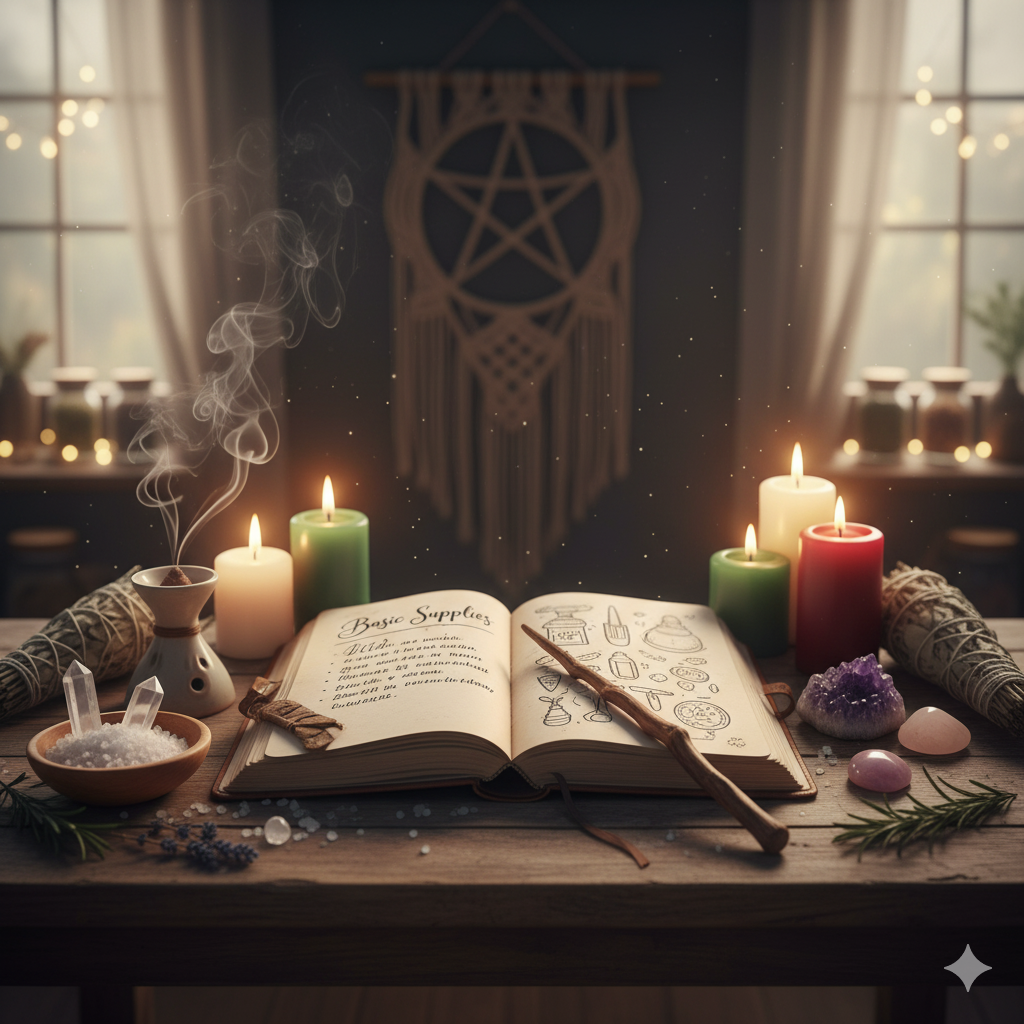
​You don’t need anything to be a witch – your most potent tools are your mind and spirit. However, certain items can enhance your practice and create a sacred atmosphere.

  • Journal/Book of Shadows: A place to record your spells, rituals, dreams, and magical insights.
  • ​Candles: Different colors correspond to different intentions (e.g., white for purity, green for prosperity, red for passion).
  • ​Incense/Herbs: For cleansing, offering, or setting the mood. Sage, palo santo, and frankincense are popular choices.
  • ​Salt: A powerful purifier and protector.
  • ​Wand or Athame: (Optional) These are tools to direct energy, not for cutting. A simple stick found in nature can serve as a powerful wand!
  • ​Altar Space: A dedicated area, no matter how small, to honor your practice. It can hold your tools, natural items, and representations of what you hold sacred.
  • ​Crystals: Each crystal carries unique energetic properties. Start with clear quartz, amethyst, or rose quartz for general purposes.

Posted on — 1 Comment

Raising Energy for Spellwork

Welcome, fellow seekers, to Pagan Essentials, where we delve into the heart of magical practice. One of the most fundamental skills for any witch is the ability to raise, direct, and release energy for spellwork. Without a concentrated burst of power, even the most beautifully crafted spell can fall flat.

​Think of it like charging a battery before you use it. Your own power is the most potent tool in your arsenal, and learning to build it up is key to successful magical work. Whether you’re a solitary practitioner or part of a coven, there are countless ways to get your energy flowing.

Here are some of the most effective techniques for raising power before you cast:

Physical and Emotional Techniques

Energy isn’t just a mental construct; it’s a very real force that can be felt and moved with your body.

  • ​Chanting and Rhythm: Repetitive sound is a powerful tool. Chanting an incantation, mantra, or simple phrase can build a palpable vibration in your body and your space. Adding a drum or clapping your hands can intensify this effect.
  • ​Movement and Dance: Dancing, spinning, or even just bouncing in place can help stir up your inner energy. Don’t worry about looking graceful—this is about feeling the power build within you.
  • ​Stirring Emotion: Emotions like passion, joy, anger, or deep love are raw energy. Tapping into an intense emotion that aligns with your spell’s intention can provide a huge boost of power.
  • ​Sexual Energy: Often considered one of the most powerful forms of energy, sexual energy can be channeled and directed into spellwork. The moment of orgasm can be used to release and send your intention with incredible force.

Mental and Spiritual Techniques

​A strong mind is a witch’s greatest ally. These techniques focus on internal work to generate power.

  • Grounding and Centering: Before you begin, connect to the Earth (grounding) and find your internal balance (centering). This prevents you from becoming overwhelmed and provides a stable foundation from which to draw power. Visualize roots extending from your feet into the earth, anchoring you.
  • ​Visualization: This is the act of seeing your intention manifest. Visualize energy as a swirling ball of light or a flowing river, gathering within you or between your hands. See it grow brighter and more potent with every breath.
  • ​Cone of Power: A classic group technique, the cone of power is a collective visualization where a group of witches join hands and chant or dance to build a cone-shaped column of energy that rises from their circle. At its peak, the energy is released to be sent toward a common goal.
  • ​Deity Invocation: If you work with gods, goddesses, or other spirits, you can call upon their power to lend strength to your work. This is an act of co-creation, where you combine your energy with theirs.

Working with Elements and Tools

The world around you is full of energy, and you can tap into it.

  • Elemental Energy: Draw power from the four classical elements. Focus on the steady, grounding power of Earth; the sharp, focused power of Air; the passionate, transformative power of Fire; or the flowing, intuitive power of Water.
  • ​Crystals and Herbs: Certain crystals and herbs are natural energy conductors. Hold a piece of quartz to amplify your own power, or use a specific herb like cinnamon or cayenne to add a fiery kick to your spell.
  • ​Magical Tools: Your tools are not just props; they can be charged with energy. A wand can be used to direct and focus the power you’ve raised, while an athame can cut and shape it.

​No matter which techniques you choose, the most important part is to find what resonates with you. Your personal connection to the practice is what truly brings the magic to life.

Posted on

Finding Your Path: A Guide to the Diverse World of Witchcraft

For many who are drawn to the world of witchcraft, the initial steps can feel overwhelming. You might have a sense of connection to nature, a curiosity about herbs and crystals, or a desire for a more intentional life, but you might also feel lost in a sea of new terms and traditions. You’ve heard the words “Wicca,” “Eclectic,” and “Traditional,” but what do they all mean?
The truth is, witchcraft isn’t a one-size-fits-all religion or practice. It’s a vast, rich tapestry woven from countless threads of history, culture, and personal belief. Finding your path is less about choosing the “right” one and more about discovering the one that resonates most deeply with your soul.

Here’s a simple introduction to some of the most common traditions and styles you’ll encounter on your journey:

Wicca: The Neopagan Religion
When most people think of modern witchcraft, they’re often thinking of Wicca. Founded in the mid-20th century by Gerald Gardner, Wicca is a recognized neopagan religion with a core set of beliefs and practices.

Wicca: The Neopagan Religion

When most people think of modern witchcraft, they’re often thinking of Wicca. Founded in the mid-20th century by Gerald Gardner, Wicca is a recognized neopagan religion with a core set of beliefs and practices.

Key characteristics of Wicca:

  • Deity Veneration: Wiccans typically worship a God and a Goddess, often seen as representing the masculine and feminine divine in nature.
  • The Wiccan Rede: A central ethical guideline, often summarized as “An it harm none, do what ye will.”
  • The Wheel of the Year: The celebration of eight seasonal festivals, known as Sabbats, which mark the changing of the seasons and the cycle of the agricultural year.
  • Ritual Structure: Many Wiccan rituals follow a formal structure, often involving the casting of a circle, calling upon the elements, and working with tools like a wand, athame, and chalice.
  • Initiation: In some covens (groups of witches), practitioners go through a formal initiation process to become a member.
  • Who it might be for: If you are seeking a structured, community-oriented path with a clear ethical framework and a focus on nature-based spirituality, Wicca might be a wonderful fit.

Traditional Witchcraft: Rooted in History

Traditional Witchcraft, as the name suggests, often seeks to connect with pre-modern, folk magic practices that predate Wicca. It is not a single, unified tradition but a broad category that encompasses a wide range of beliefs and methods.

Key characteristics of Traditional Witchcraft:

  • Historical Focus: Practitioners often draw inspiration from historical records, folklore, and regional traditions, such as cunning craft or European folk magic.
  • The Land: There is a strong emphasis on connecting with the spirit of the land, the genius loci, and working with local herbs, spirits, and folklore.
  • No Formal Pantheon: Unlike Wicca, there isn’t a required set of deities. Practitioners might work with ancestral spirits, fae, local gods, or other entities.
  • Fluid Practice: Practices are often less formal than in Wicca, focusing more on personal gnosis, spellcraft, and direct communication with spirits.
  • Who it might be for: If you are a history buff, enjoy independent research, and feel a deep connection to the land and the magical practices of the past, you might find your home in Traditional Witchcraft.

Eclectic Witchcraft: The Path of the Individual

Eclectic Witchcraft is perhaps the most popular style for modern, solitary practitioners. The term “eclectic” simply means “drawing from a variety of sources.” An Eclectic Witch builds their practice by pulling elements from different traditions, cultures, and spiritual systems that resonate with them personally.

Key characteristics of Eclectic Witchcraft:

  • Personalization: The practice is entirely your own. There are no rules, no required deities, and no set rituals. You are the architect of your spiritual life.
  • Fluid Beliefs: An Eclectic Witch might use Tarot cards from a Rider-Waite deck, work with Celtic deities, celebrate the Wheel of the Year, and use herbs based on Hoodoo or rootwork traditions.
  • Solitary Practice: While not exclusively solitary, many Eclectic Witches find that this style is best suited to an individual practice, as it allows for maximum freedom and creativity.
  • Intuition is Key: This path places a high value on intuition and personal experience. If a particular practice or belief feels right, an Eclectic Witch will incorporate it. If not, they will leave it behind.
  • Who it might be for: If you are a free spirit, a lifelong learner, and someone who thrives on creativity and personal discovery, Eclectic Witchcraft offers the freedom to build a practice that is uniquely yours.

Kitchen Witchery: Magick in the Home

Kitchen Witchery is a path that focuses on finding the sacred in the mundane, particularly within the home and hearth. It is less of a separate tradition and more of a style that can be incorporated into any of the above.

Key characteristics of Kitchen Witchery:

  • The Hearth as Altar: The kitchen is the sacred space, and the tools of the trade are the mortar and pestle, the oven, and the cauldron (pot).
  • Intentional Cooking: Spells are often cast through cooking, baking, and creating herbal remedies. A soup made with the intention of healing or bread baked to bring prosperity is a form of Kitchen Witchery.
  • Household Magick: The practice extends beyond the kitchen to include cleaning with intent, creating protective sachets for the home, and making household items with a magical purpose.
    Who it might be for: If you find joy in the domestic arts, feel a connection to home and family, and believe that the most powerful magick is woven into the fabric of daily life.
    Finding Your Way Forward

This is just a small glimpse into the rich and varied world of witchcraft. There are many other paths to explore, from Green Witchcraft (focused on nature and plants) to Hedgewitchery (focused on animism and spirit work), to the Afro-diasporic traditions of Hoodoo and Voudou, which are distinct spiritual practices often mislabeled under the umbrella of witchcraft.
The most important thing to remember is that you don’t need to commit to a label on day one. Start by exploring what calls to you. Read different books, listen to podcasts, and experiment with simple practices. Pay attention to what makes your heart sing and what brings a sense of peace and power to your life.
Your path is unique, and the only guide you truly need is your own intuition.

Posted on — 1 Comment

Moon Phases and Magick: Working with Lunar Energies for Enhanced Spells

Welcome, fellow seekers, to Pagan Essentials! I’m Ivyjaded Wyldfyre, and today we’ll delve into the enchanting connection between the moon’s celestial dance and the potency of our magickal workings. The moon, our luminous neighbor, doesn’t just illuminate the night sky; it casts a subtle yet powerful influence upon our world and, most importantly, our spells. Understanding and aligning your craft with the lunar cycle can significantly amplify your intentions and bring forth more potent results.

Just as the tides ebb and flow with the moon’s pull, so too do the energetic currents that weave through our existence. Each phase of the moon carries its own unique vibrational signature, making certain phases more conducive to specific types of magick. Let’s explore the primary lunar phases and how to harness their energy:

  • New Moon (Dark Moon): This is the phase of introspection, new beginnings, and planting seeds of intention. The energy is subtle, inward-focused, and perfect for shadow work, banishing unwanted influences, and conceiving new projects or goals. Spells for setting intentions, breaking bad habits, and seeking clarity are particularly potent now.
  • Waxing Crescent: As a sliver of light begins to grow, so does the energy around your intentions. This phase is ideal for attracting positive influences, setting goals in motion, and nurturing new ventures. Spells for growth, attraction, and inspiration thrive during this time.
  • First Quarter: This phase brings a surge of dynamic energy and a push to take action on the intentions set during the New Moon. It’s a time for courage, overcoming obstacles, and making decisive moves. Spells focused on strength, motivation, and taking action are well-suited here.
  • Waxing Gibbous: The light continues to expand, and the energy builds towards fullness. This is a time for refinement, growth, and bringing your intentions closer to fruition. Spells for abundance, prosperity, healing, and manifestation are particularly effective.
  • Full Moon: The peak of lunar energy! The veil between worlds is thin, making this the most potent time for almost any form of magick. Emotions are heightened, and energy is abundant. Spells for charging tools, divination, love, healing, protection, and manifestation are incredibly powerful. Be mindful of the amplified energy and ground yourself.
  • Waning Gibbous: As the light begins to recede, the energy shifts towards releasing and banishing. This is a time for gratitude for what has manifested and for gently letting go of what no longer serves you. Spells for releasing negativity, breaking ties, and diminishing unwanted influences are favored.
  • Third Quarter (Last Quarter): The energy continues to decline, making it a potent time for banishing, releasing, and cleansing. This phase supports inner reflection, letting go of burdens, and preparing for a new cycle. Spells for banishing, protection, and breaking hexes are effective now.
  • Balsamic Moon (Darkening Moon): The final phase before the New Moon, this is a time for deep rest, reflection, and releasing the last vestiges of the previous cycle. It’s not typically a time for casting new spells but rather for inner work and preparation for the new beginnings to come.

To effectively work with lunar energies, start by observing the moon’s phases. Many calendars and lunar apps can help you track its cycle. Once you know the current phase, consider how its energetic qualities align with your magickal intentions.

  • Match Your Intentions: Choose spellwork that resonates with the energy of the current moon phase. For example, don’t try to banish something on the Waxing Crescent, as the energy is geared towards growth and attraction.
  • Charge Your Tools: Place your crystals, tarot decks, and other magickal tools under the light of the Full Moon to cleanse and charge them with potent lunar energy.
  • Time Your Rituals: If possible, schedule your rituals to coincide with the most appropriate lunar phase for your desired outcome.
  • Incorporate Lunar Symbolism: Use moon imagery, colors associated with the moon (silver, white, grey), and lunar deities in your spells and rituals.

By consciously aligning your magickal practices with the cycles of the moon, you tap into a powerful and consistent source of energy, enhancing the effectiveness and flow of your spells. May your craft be illuminated by the wisdom of the lunar light!

Posted on — 4 Comments

Lughnasadh/Lammas 2025

Celebrating Lughnasadh/Lammas: The First Harvest of Abundance
By Pagan Essentials


As the Wheel of the Year turns, we arrive at Lughnasadh, also known as Lammas, the first of the three harvest festivals. This potent Sabbat, celebrated on August 1st, 2025, marks the beginning of the grain harvest, a time of gratitude for the Earth’s bounty and the culmination of the year’s growth. For Witches and Pagans, it’s a moment to honor sacrifice, abundance, and the interconnectedness of life.


What is Lughnasadh/Lammas?


Lughnasadh (pronounced Loo-nah-sah), named after the Celtic sun god Lugh, is a fire festival celebrating the first fruits of the harvest, particularly grains like wheat, barley, and oats. Lammas, derived from the Old English “hlaf-mas” meaning “loaf mass,” emphasizes the tradition of baking the first bread from the newly harvested grain.
Both names speak to the same core theme: the gift of the land providing sustenance, often through the “sacrifice” of the grain god, who dies to nourish the people. It’s a time of both joy for the harvest and a poignant acknowledgment of the turning wheel, as the sun begins its slow decline towards winter.


Correspondences of Lughnasadh/Lammas


To truly connect with the energy of this Sabbat, consider incorporating these correspondences into your celebrations:

Colors:

  • Gold, yellow, orange, red (representing the sun and ripe grains)
  • Light brown, green (representing the earth and growing crops)

Crystals & Stones:

  • Carnelian, Sunstone, Citrine, Peridot, Amber, Pyrite (for solar energy, abundance, and warmth)
  • Agate, Jasper (for grounding and earth connection)

Herbs & Plants

  • Grains: Wheat, Barley, Oats, Corn
  • Sunflowers, Marigolds, Goldenrod (for solar energy and beauty)
  • Rosemary, Thyme, Sage, Cinnamon (for protection, prosperity, and warmth)
  • Apples, Pears, Plums, Blackberries (first fruits of the season)
  • Grapes and Grapevines

Symbols & Tools

  • Sheaves of grain, Corn dolls
  • Loaves of bread, Baskets, Cornucopias
  • Sickles, Scythes (harvesting tools)
  • Beeswax candles
  • The Sun, Bonfires

Deities:

  • Lugh (Celtic God of craftsmanship, arts, and the sun)
  • Ceres (Roman Goddess of agriculture)
  • Demeter (Greek Goddess of the harvest)
  • The Corn Mother/Grain Mother
  • John Barleycorn (personification of the grain)

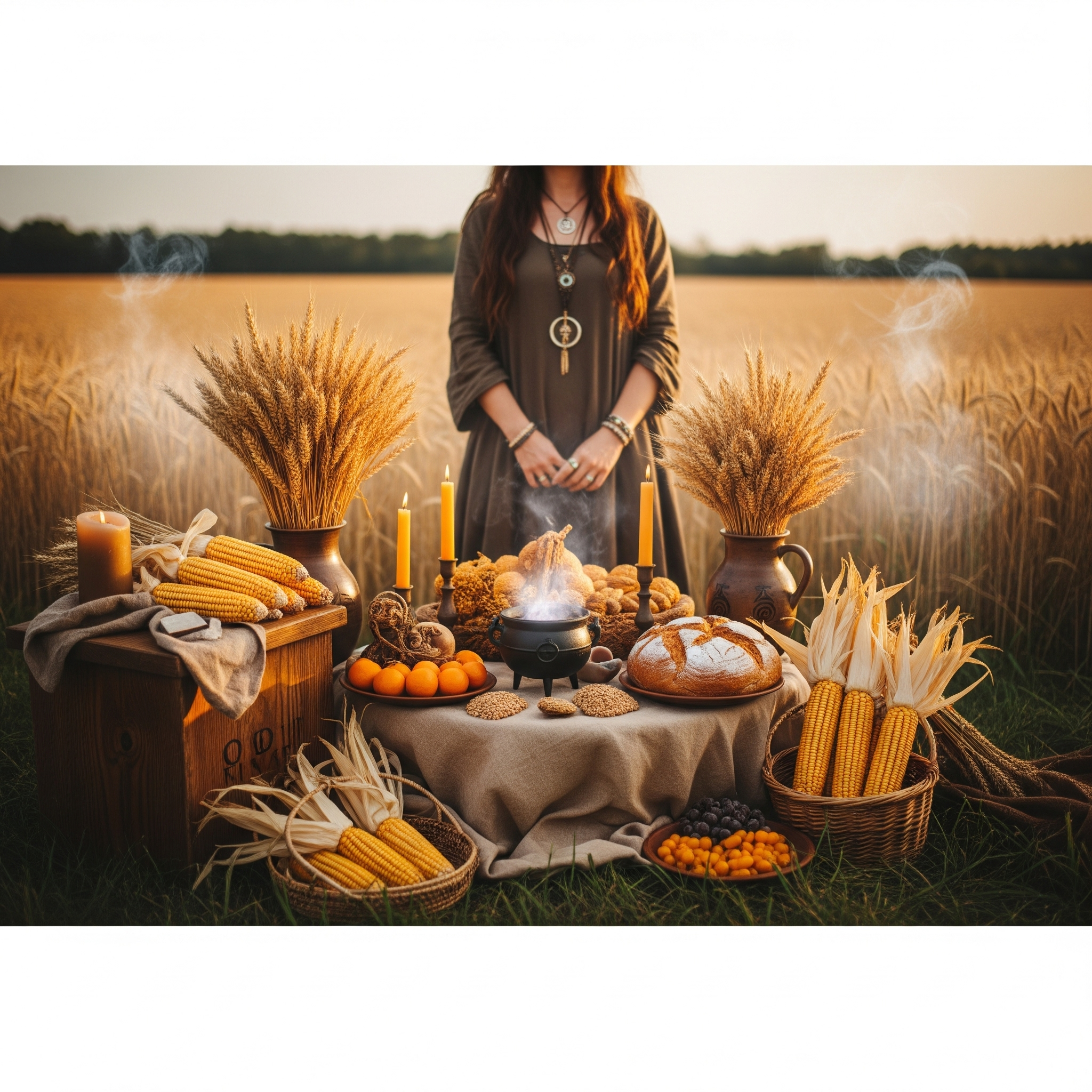
How to Create a Lammas Altar

  • Choose a central cloth: Opt for colors like gold, orange, or a rich green to set the tone.
  • Feature grains prominently: Place sheaves of wheat, stalks of corn, or a small bowl of mixed grains.
  • Add baked goods: A freshly baked loaf of bread (especially one you’ve made yourself with intention) is central to a Lammas altar. Honey cakes or other grain-based treats are also wonderful.
  • Include seasonal fruits and vegetables: Arrange a bounty of apples, berries, plums, or any other fruits and vegetables that are ripe in your area.
  • Incorporate solar symbols: Yellow, orange, or red candles are perfect for representing the sun’s power. Sunflowers or marigolds can also be added.
  • Place crystals: Arrange your chosen Lammas crystals (Carnelian, Citrine, etc.) to amplify the energy of abundance and gratitude.
  • Add images or representations of deities: If you work with specific harvest deities like Lugh, Demeter, or Ceres, include their images or symbols.
  • Include tools of the harvest: A small sickle (if you have one), miniature baskets, or even a symbolic corn doll can represent the work of the harvest.
  • Personal touches: Add anything that resonates with you and signifies abundance, hard work, or gratitude. This could be a journal to write down your blessings, or a small offering bowl for nature.
  • Activities to Celebrate Lammas
    Lammas is a wonderful time for celebration, reflection, and connecting with the Earth. Here are some activities you can do:
  • Bake Bread: This is perhaps the most iconic Lammas activity. Bake a loaf of bread from scratch, infusing it with gratitude for the harvest. Share it with loved ones.
  • Visit a Farmer’s Market: Support local farmers and enjoy the bounty of the season by purchasing fresh, seasonal produce.
  • Make Corn Dolls: Crafting corn dolls from dried corn husks is a traditional Lammas craft, representing the spirit of the grain.
  • Harvesting & Foraging: If you have a garden, gather your harvest. If not, go berry picking or find a safe place to forage for wild edibles (with proper identification!).
  • Feast of Abundance: Prepare a meal featuring seasonal ingredients, especially grains, fruits, and vegetables. Share it with friends and family, expressing gratitude for all you have.
  • Nature Walk: Spend time in nature, observing the ripening fields and the vibrant colors of late summer. Offer thanks to the Earth.
  • Journaling for Gratitude: Reflect on your accomplishments and blessings from the year so far. What “seeds” have you planted that are now coming to fruition?
  • Crafting & Creativity: Channel Lugh’s energy by engaging in a creative pursuit, whether it’s pottery, woodworking, writing, or any other craft.
  • Example Lammas Ritual: The Loaf of Thanks
    This simple ritual can be performed alone or with a small group to honor the essence of Lammas.
    Materials:
  • A freshly baked loaf of bread (homemade is ideal)
  • A chalice of water or mead
  • A yellow or gold candle
  • A small offering bowl
  • Optional: A small sprig of wheat or corn
    Preparation:
  • Set up your Lammas altar with your chosen correspondences.
  • Cleanse your space and yourself as you normally would before ritual.
  • Center and ground yourself.
    The Ritual:
  • Light the Candle: Light the yellow or gold candle, saying:


Your Lammas altar is a sacred space to honor the harvest and express gratitude. Here’s how to create one:

“Flame of the Sun, giver of life, I light this flame to honor your strength and your sacrifice, which brings forth the harvest.”

  • Hold the Bread: Take the loaf of bread in your hands, feeling its warmth and weight. Focus on the journey of the grain from seed to sustenance. Say:
    “From the Earth, through sun and rain, comes this sacred grain. Transformed by hand and fire, it becomes our nourishment. I give thanks for the abundance, for the cycle of life, death, and rebirth.”
  • Offer a Piece: Break off a small piece of the bread and place it in the offering bowl, saying:
    “To the Earth Mother, to Lugh, and to all spirits of the harvest, I offer this first gift of your bounty. May our gratitude be received.”
  • Share the Bread (if with others) or Eat a Piece (if alone):
  • With Others: Pass the loaf around, with each person breaking off a piece, saying what they are grateful for.
  • Alone: Take a bite of the bread, savoring its taste and truly feeling the gratitude.
  • Raise the Chalice: Lift your chalice of water or mead.
    “As the waters quench our thirst, so too does the harvest sustain us. May this abundance continue, and may we remember our connection to the land.”
    Take a sip.
  • Reflection: Take a few moments to sit in quiet contemplation. Reflect on what you have harvested in your life this year – not just physically, but also in terms of personal growth, relationships, and wisdom gained.
  • Closing: Thank the deities, the elements, and the Earth.
    “The harvest is blessed, and our hearts are full. We honor the cycle, and give thanks for all gifts. So mote it be.”
  • Extinguish the Candle: Safely extinguish the candle. You may leave the offering outside for the animals or return it to the Earth.
  • Lammas is a powerful time to acknowledge the fruits of your labor and the generosity of the Earth. May your celebration be filled with gratitude, abundance, and connection!

Lammas is a powerful time to acknowledge the fruits of your labor and the generosity of the Earth. May your celebration be filled with gratitude, abundance, and connection.

Blessed Be!

Ivyjaded Wyldfyre